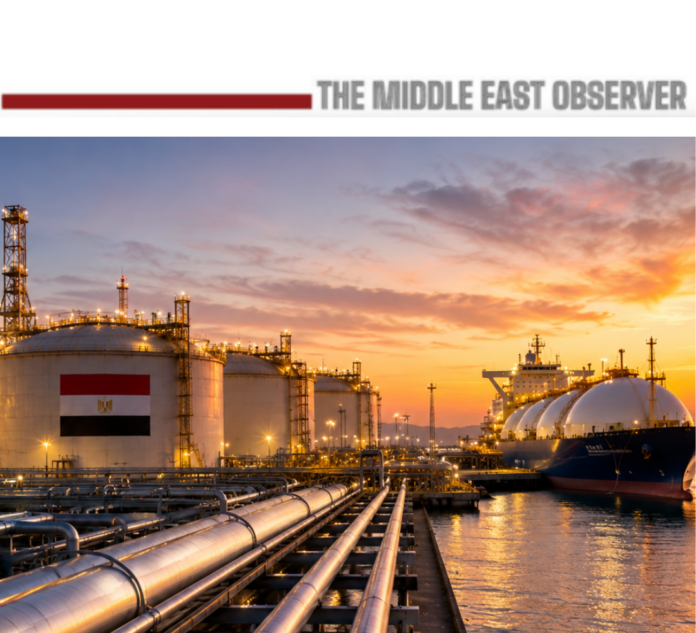
Egypt has allocated an estimated $5.5 billion within its 2026/2027 state budget to secure fuel imports, according to a government official cited by Asharq Business, reflecting mounting pressure from rising global oil prices and continued instability across regional energy markets linked to the Iran conflict.
The reported allocation for the upcoming fiscal year represents an increase of approximately 37.5% compared with current fiscal year targets, highlighting the growing burden of fuel procurement costs on the Egyptian economy amid elevated crude prices and rising import requirements.
According to the official, Egypt plans to import nearly 2.22 million tonnes of diesel fuel at a projected cost of around $2 billion, alongside 1.65 million tonnes of liquefied petroleum gas (LPG) valued at roughly $1.05 billion, in addition to approximately 1.83 million tonnes of high-octane gasoline 95 estimated at $1.62 billion.
The imports are intended to bridge the gap between domestic production and increasing local demand, particularly across the electricity, industrial, and transportation sectors, especially ahead of peak seasonal summer consumption.
Egypt consumes an estimated 55 million tonnes of petroleum products annually and continues to rely partially on imports to cover domestic demand despite ongoing expansion in refining capacity and natural gas production.
The developments come as global energy markets remain under pressure following disruptions linked to tensions surrounding the strategic Strait of Hormuz, a critical transit route for global oil and gas supplies, while crude prices continue trading at elevated levels compared with pre-conflict averages.
In March, Egypt raised domestic fuel and natural gas prices by between 14% and 30%, marking the third increase within 12 months. At the time, the government attributed the decision to “exceptional conditions” affecting global energy markets.
President Abdel Fattah el-Sisi stated earlier this year that Egypt’s annual spending on petroleum products reaches nearly $20 billion, equivalent to almost one trillion Egyptian pounds, noting that a substantial portion of fuel consumption is directed toward electricity generation rather than transportation alone.
Analysts note that sustained increases in fuel import costs could place additional pressure on Egypt’s fiscal position, foreign currency reserves, inflation levels, and subsidy reform efforts, particularly if global crude prices remain elevated for an extended period.
The rising import bill also reinforces the strategic importance of Egypt’s ongoing efforts to expand renewable energy projects, improve energy efficiency, and increase domestic production capacity in order to reduce long-term exposure to external energy market volatility.
As The Middle East Observer notes, the latest fuel procurement allocations within Egypt’s FY2026/27 budget underscore how geopolitical tensions across the Gulf are increasingly shaping fiscal planning and energy policy in major importing economies, where higher oil prices continue to influence subsidy costs, inflation risks, and broader economic reform calculations.