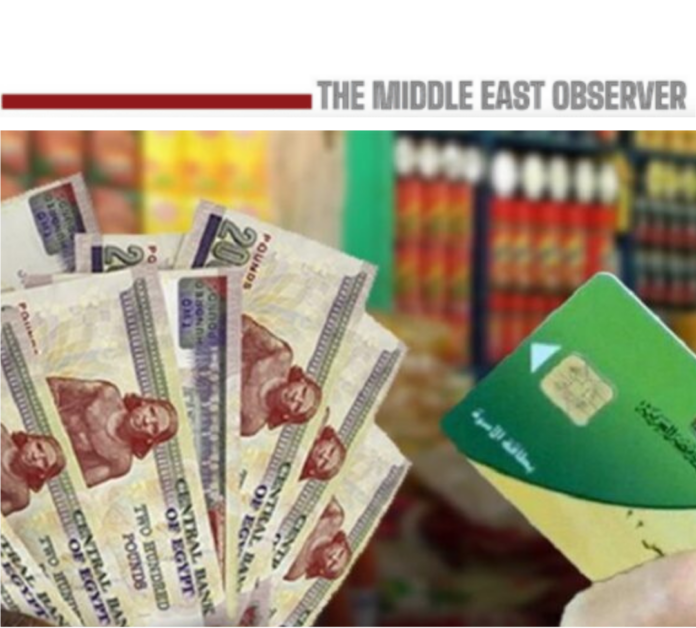
CAIRO — Mostafa Madbouly announced that Egypt is preparing to gradually shift from its longstanding commodity subsidy system to a direct cash-support model for low-income citizens, with implementation steps expected to begin during the 2026/2027 fiscal year.
Speaking during the government’s weekly press conference in Cairo, Madbouly said details of the new system would be announced within the coming two months, describing the reform as part of broader efforts to improve the efficiency of state support programmes and better target eligible beneficiaries.
Egypt’s current subsidy system relies heavily on providing food commodities at reduced prices through state-supported outlets, with the government covering the difference between market costs and subsidised consumer prices.
However, officials and economists have long been arguing that the existing model faces structural inefficiencies linked to supply chains, distribution mechanisms, and leakage of subsidies beyond intended recipients.
According to figures presented within Egypt’s draft 2026/2027 budget, allocations for food commodity subsidies are set to rise by 11% year-on-year to EGP 178.3 billion, accounting for roughly 38% of total state subsidy allocations estimated at EGP 468 billion.
Government officials say the proposed transition toward direct cash support could improve spending efficiency and provide households with greater flexibility, while helping authorities better control subsidy targeting through digital and financial inclusion systems already being expanded nationwide.
The reform discussion comes as Egypt continues implementing broader economic restructuring measures supported by international financial institutions, including fiscal consolidation, subsidy rationalisation, and social protection expansion programmes such as “Takaful and Karama.”
At the same time, the proposal has triggered debate among economists and market observers regarding its potential impact on inflation and consumer purchasing power, particularly amid ongoing pressure on food prices and living costs.
Separately, Prime Minister Madbouly announced that the government is studying a new housing model involving private-sector participation in developing residential units for youth and low-income citizens. Under the proposal, developers would receive serviced land in exchange for constructing housing units to be transferred to the state, while recovering investments through associated commercial units within the projects.
Egyptian officials described the initiative as part of efforts to expand affordable housing availability without placing additional construction costs on the state budget.
As The Middle East Observer notes, the planned transition toward cash-based subsidies represents one of the most significant social-policy shifts in Egypt’s modern economic framework, reflecting Cairo’s broader attempt to balance fiscal reform, social protection, and economic efficiency amid persistent inflationary and budgetary pressures.