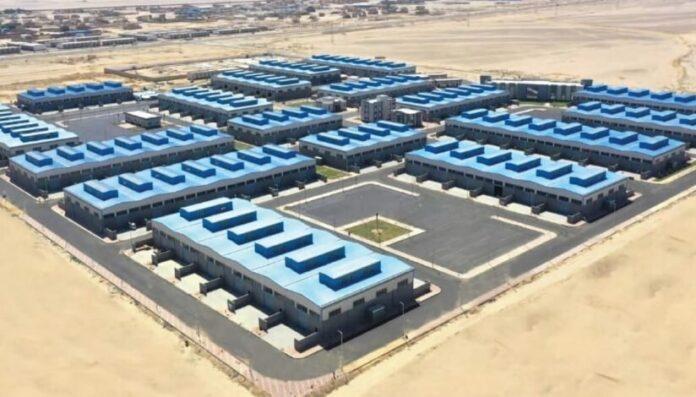
Egypt’s Ministry of Industry and Transport has announced the launch of 332 fully equipped industrial units across 10 governorates, eight of which are located in Upper Egypt. The initiative, set to open for applications between May 1 and May 15 via the government’s online portal www.madein.eg, marks a significant drive to localize production, boost job creation, and decentralize industrial development.
The announcement comes as part of President Abdel Fattah El-Sisi’s national directives to expand domestic manufacturing and support serious entrepreneurs—particularly in underserved areas such as Upper Egypt—with easier access to infrastructure, financing, and training.
“These facilities are turnkey—fully serviced, ready for immediate production, and available under both ownership and rental models,” said Transport and Industry Minister Kamel El-Wazir. He added that the government will offer financing options of up to 100% of the unit’s value, along with additional funding for equipment and input supplies.
Unit sizes range from 144 to 792 square meters and span diverse sectors including engineering, food processing, textiles, chemicals, and furniture. In a notable move to promote local entrepreneurship, 146 units in the Al-Geneina and Al-Shabak complex in Aswan are specifically allocated for entrepreneurs from Nasr El-Nuba.
Applicants can benefit from a streamlined 10-step digital application process, with priority given to businesses seeking expansion and those able to pay upfront. Financial perks include waived study fees, reduced document pricing, low-interest bank loans, and simplified licensing through partnerships with Egypt’s Industrial Development Authority (IDA).
Beyond financing, the initiative offers a full suite of non-financial support, including marketing guidance, training programs, and advisory services—a strategy that experts say could solidify Egypt’s role as a competitive manufacturing hub in the global supply chain.
According to an MEO source within the ministry, this is part of a broader industrial strategy being quietly expanded to include larger-scale export-oriented zones. “The 332 units are just the beginning,” the source noted. “We’re seeing interest from Gulf investors in co-developing regional SME hubs focused on supply chain resilience.”