
Egypt and Rwanda are moving to deepen cooperation in artificial intelligence, digital transformation and technology skills, as both countries seek to shape a more coordinated African approach to emerging technologies.
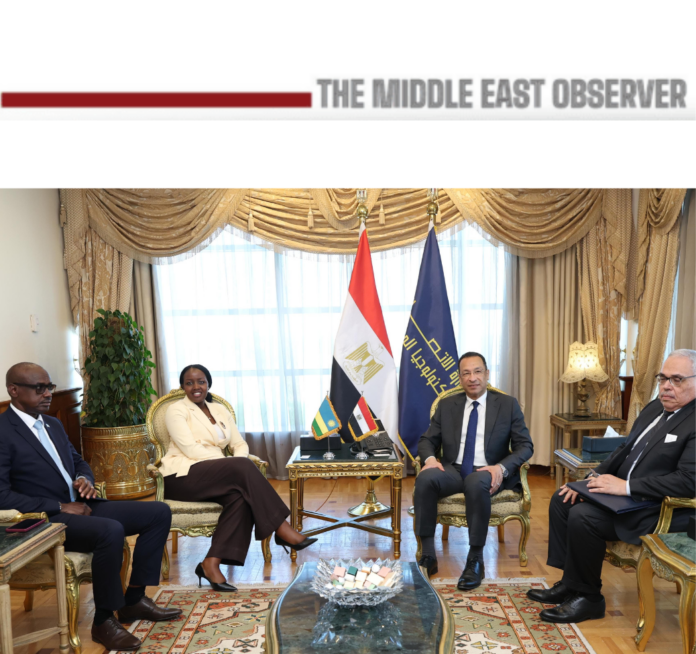
Egypt’s Minister of Communications and Information Technology, Raafat Hindi, received Rwanda’s Minister of ICT and Innovation, Paula Ingabire, in Cairo to discuss joint action on responsible AI, digital government, capacity building and innovation. The meeting was attended by Rwanda’s Ambassador to Egypt, Dan Munyuza, alongside senior officials from Egypt’s ICT ministry.
The talks focused on developing a shared African vision for artificial intelligence that is responsible, inclusive and development-oriented. Both sides discussed pilot projects using AI in priority sectors including healthcare, agriculture, local languages and government services, with the aim of producing measurable and practical outcomes rather than limiting cooperation to policy dialogue.
The two ministers also reviewed ways to connect government institutions, universities, research bodies and innovation centres in both countries. Potential areas of cooperation include Egypt University of Informatics, the Applied Innovation Center, the Information Technology Institute and digital government bodies.
The two sides agreed to work towards signing a memorandum of understanding between the Egyptian and Rwandan ICT ministries during the coming period, creating a formal framework for cooperation in communications and information technology.
Egypt’s participation in the African Union’s AI working group
Hindi said Egypt was committed to strengthening technology cooperation with African countries, particularly in AI, and to using digital tools to support the continent’s development priorities. He pointed to Egypt’s participation in the African Union’s AI working group and its contributions to working groups under the Smart Africa Alliance’s AI Council.
He added that Egypt had made notable progress under its national AI strategy, which aims to expand the use of artificial intelligence across economic and public-service sectors while preparing specialised talent capable of supporting long-term digital transformation.
Ingabire said Rwanda was keen to expand cooperation with Egypt in ICT, digital transformation, AI and digital skills development, reflecting the close relations between the two countries and their shared interest in strengthening Africa’s technology capabilities.
The meeting also addressed coordination in regional and international forums concerned with AI governance. Both sides discussed the importance of developing common African positions on responsible AI, data governance and the ethical use of emerging technologies.
The role of the Applied Innovation Center in developing AI-based solutions for public benefit
Egyptian officials presented the role of the Applied Innovation Center in developing AI-based solutions for public benefit, as well as the ministry’s programmes for digital capacity building, technology innovation and support for freelancers. The Information Technology Institute’s role in preparing specialised talent, particularly in AI, was also highlighted.
The discussions reflect a broader shift in Africa’s digital policy agenda. Governments are increasingly seeking to move from technology adoption to technology governance, ensuring that AI is not only imported but adapted to local priorities, languages, public services and development challenges.
For Egypt, the partnership supports its ambition to play a larger role in shaping Africa’s digital transformation agenda. For Rwanda, it complements Kigali’s efforts to position itself as a continental innovation hub focused on digital government, AI adoption and skills development.
If translated into concrete projects, the proposed cooperation could help create a practical model for African AI collaboration: one based on shared talent development, public-sector use cases and coordinated regional governance rather than fragmented national initiatives.
The significance of the Egypt-Rwanda talks therefore extends beyond bilateral cooperation. They point to a wider African challenge: ensuring that the continent participates in shaping the rules, skills and applications of artificial intelligence, rather than remaining only a consumer of technologies developed elsewhere.
Related news:
Egypt Leads Africa in AI Readiness, Ranks 51st Worldwide
AI Becomes Europe’s New Weapon in Africa’s Critical Minerals Race
Read also:
UAE Deploys AI-Generated Spokesperson in Digital Government Push
