
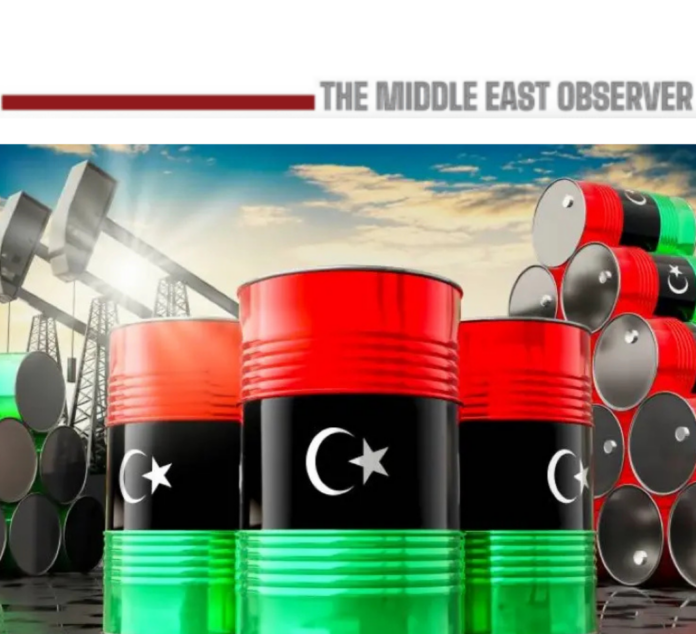
Libya has raised crude oil production to its highest level in 13 years, underscoring a revival of its energy sector after more than a decade of political turmoil, infrastructure disruptions, and underinvestment.
Masoud Suleiman, chairman of Libya’s National Oil Corporation (NOC), said crude production has climbed to 1.43 million barrels per day (bpd), while condensate output has reached approximately 49,000 bpd, bringing total liquids production close to 1.5 million bpd. “We are steadily approaching the 1.5 million bpd threshold,” Suleiman said.
The milestone marks Libya’s strongest production performance since 2013 and highlights the recovery of a sector that remains the backbone of the country’s economy. As Africa’s largest holder of proven oil reserves and a member of OPEC, Libya relies on hydrocarbons for the overwhelming majority of government revenues, export earnings, and foreign currency inflows.
At current oil prices of around $70 per barrel, production of 1.43 million bpd represents potential gross oil revenues exceeding $100 million per day, underlining the strategic importance of the sector for Libya’s fiscal stability and economic reconstruction.
Unlike several OPEC members constrained by production quotas, Libya has historically benefited from exemptions due to prolonged domestic instability, allowing it greater flexibility to increase output as operating conditions improve. This has enabled the country to emerge as one of the few producers capable of delivering meaningful production growth without breaching OPEC supply-management commitments.
The recovery reflects improving operational stability across key producing regions and growing confidence among international energy companies despite Libya’s continuing political fragmentation. In February, the country launched its first oil and gas licensing round in more than 17 years, attracting interest from major international players including Chevron, Eni, QatarEnergy and the Turkish Petroleum Corporation.
The renewed exploration drive forms part of a broader strategy to increase crude production capacity, develop gas resources, and attract foreign investment into one of the world’s least explored hydrocarbon provinces. Recent discoveries and plans to restart the Ras Lanuf refinery further signal growing momentum across Libya’s energy sector.
For global markets, Libya’s production recovery offers an additional source of Mediterranean crude at a time when energy security, supply diversification, and upstream investment remain key concerns. It also comes as international oil companies intensify competition for new reserves across North Africa and emerging energy frontiers including Namibia, Guyana, and East Africa.
For investors, Libya increasingly represents one of the most significant untapped growth opportunities in the global energy industry. With production approaching 1.5 million bpd, Africa’s largest proven oil reserves, and renewed interest from international majors, the country’s ability to sustain operational stability and policy continuity may determine whether it can reclaim its position among the Mediterranean region’s leading hydrocarbon producers and move closer to its longer-term ambition of producing 2 million barrels per day.
