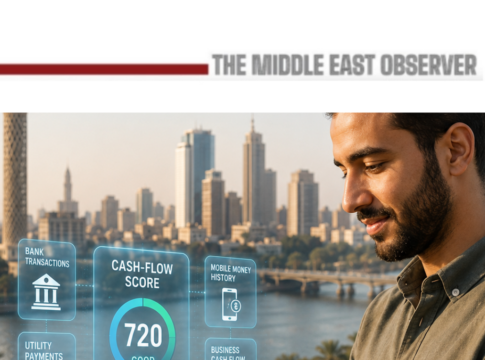
A new partnership between Fair Isaac Corporation and Plaid Inc. to integrate cash-flow data into credit scoring models is drawing growing attention across the global banking sector, potentially offering a framework that could carry significant implications for financial institutions in Egypt and the wider Middle East.
The initiative expands beyond traditional credit evaluation methods, which largely depend on loans, credit cards, and borrowing histories, by incorporating broader banking behaviour such as salary inflows, account balances, recurring payments, and spending patterns. The model is primarily aimed at “thin-file” consumers — individuals with limited formal credit histories despite maintaining relatively stable financial behaviour.
For Egypt and several Middle Eastern markets, the approach could hold particular relevance due to the large number of underbanked consumers, informal workers, freelancers, and younger users who often remain outside conventional lending frameworks despite increasing participation in digital financial services.
As The Middle East Observer notes, traditional credit scoring systems across much of the region still rely heavily on formal borrowing histories and banking relationships, limiting financing access for many individuals and small businesses operating within cash-based or partially informal economies. In high-population markets such as Egypt, this challenge becomes even more significant given the rapid growth of fintech platforms, digital banking services, and mobile-based financial transactions.
Regional financial institutions may increasingly view cash-flow analysis as a potential tool for widening responsible lending while improving financial inclusion. By analysing real-time income consistency and transaction behaviour rather than solely past borrowing records, banks could gain a more dynamic understanding of consumer financial health, particularly among younger demographics and gig-economy workers.
The model may also support broader economic formalisation efforts. As more transactions move through digital banking channels, financial institutions could gradually build stronger data-driven lending ecosystems capable of integrating millions of previously underserved users into formal credit markets.
However, analysts note that implementing such systems in Egypt and the wider region would require significant regulatory and technological preparation. Expanded use of alternative financial data raises questions surrounding data privacy, cybersecurity, digital identity verification, open banking frameworks, and consumer consent regulations.
Several Gulf countries have already accelerated investment in digital banking infrastructure, fintech regulation, and open-finance systems as part of broader financial modernisation programmes. Egypt has also expanded digital banking regulation and financial inclusion initiatives in recent years, potentially creating a foundation for more advanced credit-assessment models in the future.
As The Middle East Observer notes, the broader significance of cash-flow-based credit scoring may ultimately lie not simply in improving loan approvals, but in reshaping how financial institutions evaluate economic participation itself. In economies where large segments of the population remain financially active yet formally under-documented, alternative credit assessment models could gradually transform access to banking, SME financing, and consumer credit across the region.