Tarek Atrissi Describes the Museum’s Visual Identity as “A Global Cultural Project” and “A Journey Into the Depth of History”
CAIRO — The Grand Egyptian Museum has received major international praise from The Times, which described the landmark cultural project as Egypt’s “fourth pyramid” and one of the “new wonders of the world,” highlighting the museum’s scale, architectural sophistication, and unparalleled collection of ancient Egyptian antiquities.
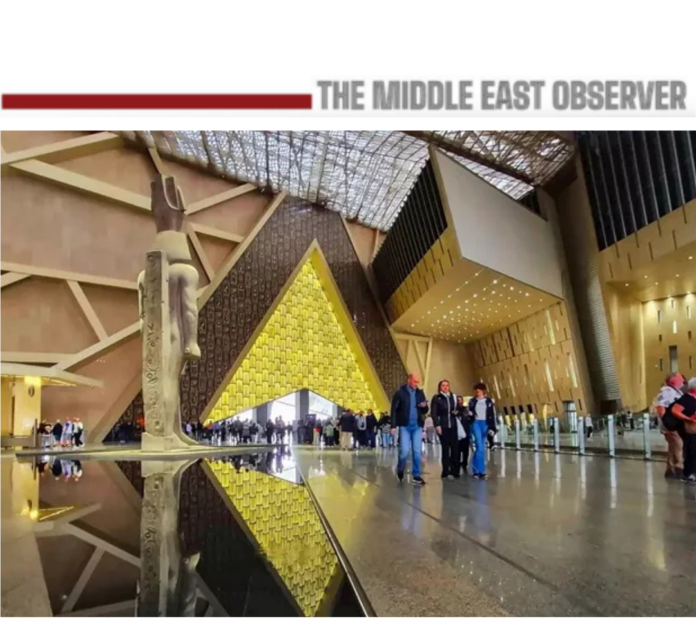
In its coverage of the museum, the British newspaper said entering the Grand Egyptian Museum resembles stepping into a vast contemporary cultural gateway filled with treasures spanning more than 5,000 years of history. The report particularly highlighted the museum’s immense sunlit Grand Hall, dominated by the colossal statue of Ramesses II beneath a ceiling engineered to allow sunlight to align with the statue’s face twice annually, echoing the famous solar phenomenon at the Abu Simbel Temples.
Located near the Giza Pyramids plateau, the museum extends across six levels displaying statues, royal artifacts, and historical collections spanning from prehistoric eras through the Greco-Roman period. The Times noted that the museum’s vast glass façades overlooking the pyramids create what it described as a monumental civilizational panorama blending ancient heritage with modern architectural design.
According to Egyptian officials, the Grand Egyptian Museum houses more than 100,000 archaeological objects, with approximately 50,000 artifacts currently displayed through chronologically organized galleries designed to narrate the evolution of ancient Egyptian civilization.
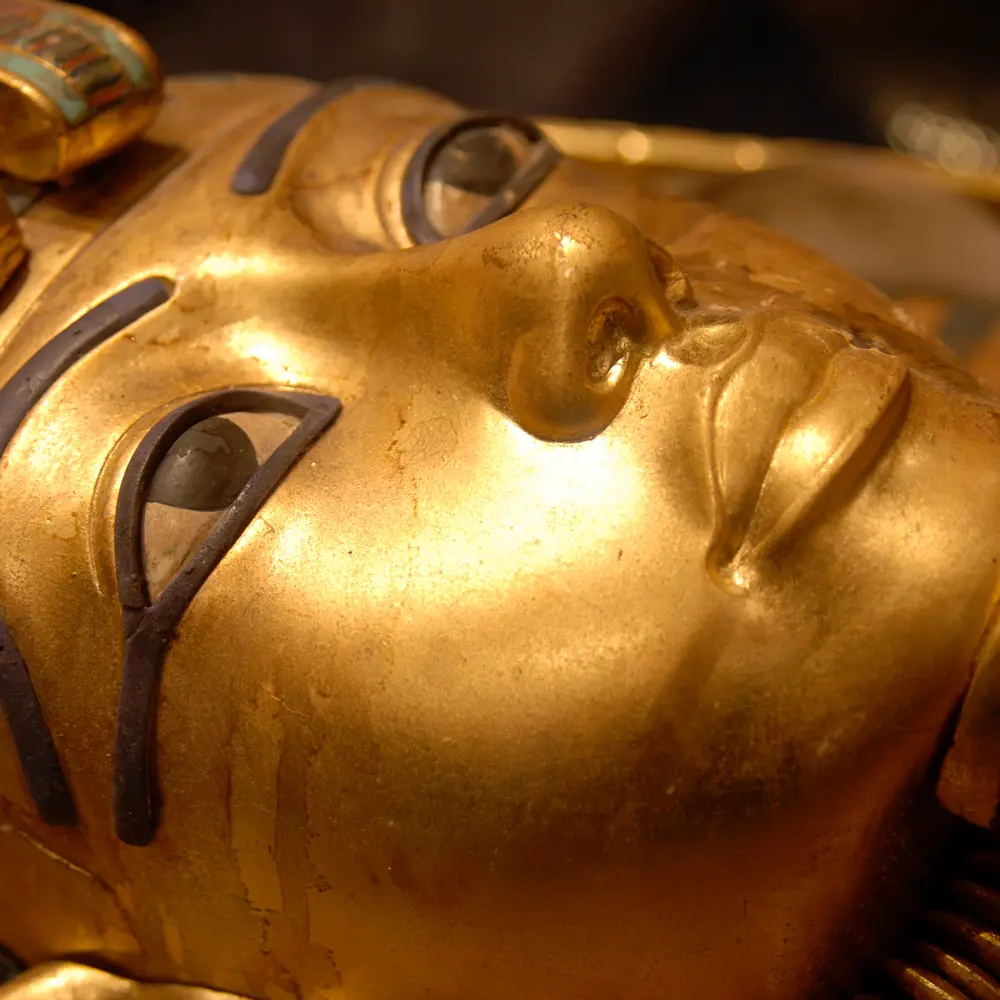
A major centerpiece of the museum is the complete funerary collection of Tutankhamun, comprising 5,398 artifacts exhibited together for the first time since the discovery of the young pharaoh’s tomb in 1922.
The British newspaper also praised the museum’s visitor-experience design and technological integration, noting that despite accommodating up to 15,000 visitors daily, the museum maintains an immersive and comfortable atmosphere through expansive galleries, intelligent digital displays, virtual reality sections, and carefully designed exhibition spaces.
Adding another cultural dimension to the project, internationally renowned Dutch-Lebanese designer Tarek Atrissi recently described the visual identity of the Grand Egyptian Museum as a “global cultural project” and “a journey into the depth of history,” revealing details behind the creation of the museum’s branding and visual concept.
Speaking during an appearance on the Arabic cultural programme “POPCAST,” Atrissi said the project represented one of the most exceptional milestones in his professional career due to its connection with Egypt’s historical and civilizational significance. He noted that the museum attracted widespread international attention following its official opening in November 2025, describing it as “a historical and cultural symbol for Egypt and the world.”
Atrissi explained that designing the identity of a museum fundamentally differs from commercial or corporate branding, as it requires deep immersion into the institution’s historical and cultural context. He described the creative process not simply as developing a logo or visual system, but as a research-driven journey of cultural discovery and historical interpretation.
Officials from Egypt’s Ministry of Tourism and Antiquities have repeatedly described the Grand Egyptian Museum as one of the world’s largest cultural and archaeological projects dedicated to a single civilization, positioning it as a cornerstone of Egypt’s tourism-development and cultural-diplomacy strategy.
The museum forms part of Cairo’s broader efforts to strengthen tourism revenues, elevate Egypt’s global cultural profile, and attract larger international visitor flows through major heritage and infrastructure investments.
As The Middle East Observer notes, the growing international recognition surrounding the Grand Egyptian Museum reflects how Egypt is increasingly leveraging its civilizational heritage not merely as a cultural asset, but as a pillar of its long-term tourism economy, soft power projection, and international cultural influence in the 21st century.