
Cairo — Egypt’s Ministry of Tourism and Antiquities has announced a new archaeological discovery in the Moharram Bek district of Alexandria, offering fresh insights into the city’s urban development across multiple historical periods.
The discovery was made by a rescue excavation mission affiliated with the Supreme Council of Antiquities, operating in the central Alexandria area.
According to an official statement, the excavation revealed a continuous sequence of occupation spanning the Ptolemaic, Roman, and Byzantine eras, underscoring the long-term urban continuity of the site.
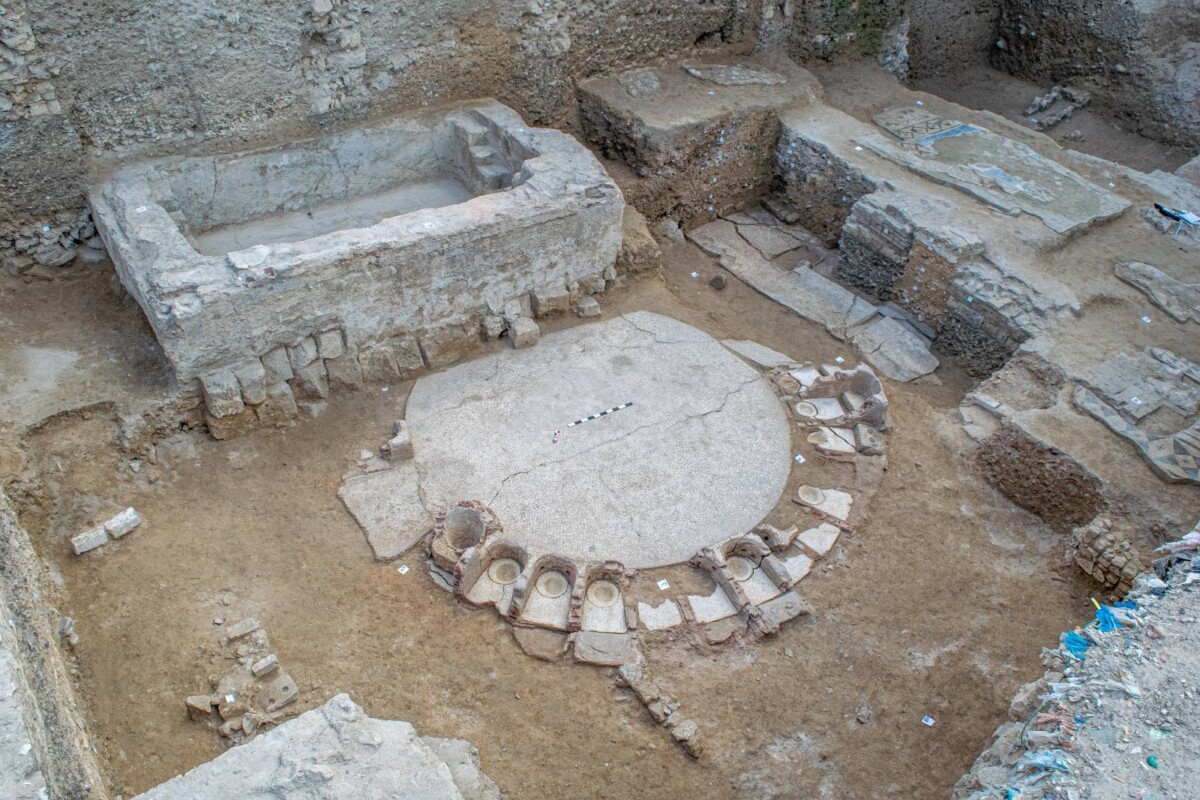
Among the most prominent findings is a circular public bath structure of the “Tholos” type, dating to the late Ptolemaic period. The mission also uncovered remains of a Roman residential villa featuring multi-style mosaic flooring, indicating a high level of architectural sophistication and domestic comfort.
Officials noted the presence of advanced water management systems, including a small bathing basin associated with the villa, reflecting developed engineering practices in ancient Alexandria.
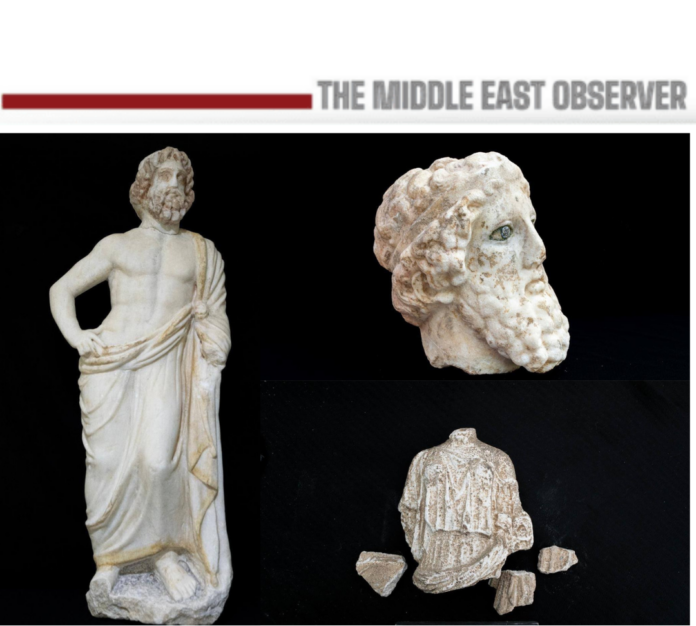
Further discoveries include a range of movable artefacts such as marble statues believed to depict deities including Bacchus and Asclepius, in addition to a headless figure tentatively identified as Minerva. The site also yielded coins, oil lamps, pottery vessels, and stamped amphora fragments, pointing to active commercial and cultural exchanges across the Mediterranean.
The Ministry stated that the findings contribute to a refined understanding of Alexandria’s historical urban layout, building on earlier reconstruction efforts, including those by Mahmoud Bey El-Falaki, whose 19th-century work remains foundational in mapping the ancient city.
Officials added that the area appears to have remained within the urban footprint of Alexandria until the Byzantine period, before experiencing a decline in prominence due to subsequent shifts in urban planning.
Preliminary conservation work has begun, with plans under review to display selected artefacts at the Greco-Roman Museum in Alexandria, while excavation efforts at the site are expected to continue.
As The Middle East Observer notes, the discovery not only enriches Alexandria’s archaeological record but also reinforces the city’s enduring role as a cultural and commercial nexus of the ancient Mediterranean—highlighting how layered urban development continues to shape both historical interpretation and modern heritage strategy in Egypt.
