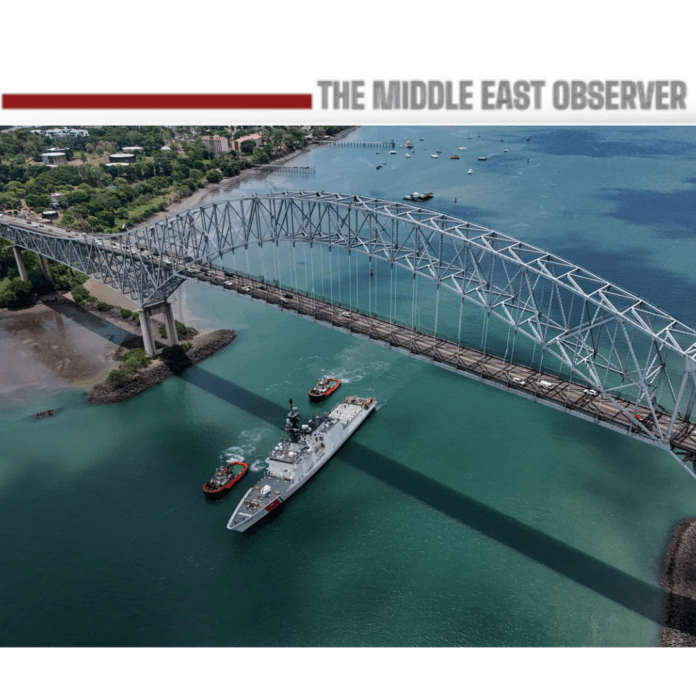
Global trade is undergoing a sharp and costly realignment as companies reroute shipments away from the disrupted Strait of Hormuz, driving unprecedented demand—and prices—at the Panama Canal, according to officials and industry analysts.
Businesses are reportedly paying up to $4 million for priority transit slots, far above standard crossing fees, as vessels seek safer and more reliable routes amid escalating geopolitical tensions in the Gulf. Under normal conditions, canal transit costs range between $300,000 and $400,000, with expedited passage historically costing an additional $250,000 to $300,000. Recent disruptions, however, have pushed auction-based premiums to over $400,000 on average, with exceptional cases reaching multi-million-dollar levels as companies compete to avoid delays.
Officials from the Panama Canal Authority said these elevated costs reflect urgent, last-minute rerouting decisions, rather than structural pricing changes, as operators prioritize speed and supply chain continuity in an increasingly volatile environment.
The shift is being driven by instability affecting the Strait of Hormuz, a critical artery for global energy and trade flows. Heightened risks in the region have forced shipping lines and energy companies to redirect cargo—including fuel shipments—across alternative corridors, despite higher costs and longer transit times.
Analysts say the trend reflects a broader recalibration of global supply chains, with companies increasingly willing to absorb higher logistics costs to mitigate geopolitical risk and maintain delivery schedules.
At the same time, the disruption is contributing to rising energy prices, with Brent crude briefly exceeding $107 per barrel, reinforcing inflationary pressures across global markets.
The Middle East Observer notes that the surge in Panama Canal demand highlights a structural vulnerability in global trade architecture, where reliance on key chokepoints can rapidly translate into systemic disruption. The Middle East Observer further observes that the shift is accelerating investment in route diversification, strategic reserves, and alternative logistics corridors, as governments and companies seek to build long-term resilience.
From a strategic perspective, increased reliance on alternative routes is generating higher revenues for transit hubs, while reinforcing the need for expanded port capacity, multimodal transport systems, and real-time logistics management.
In parallel, the crisis is intensifying calls for long-term investment in diversified trade corridors, including overland routes and expanded maritime capacity, to reduce dependency on single chokepoints.
Authorities and industry stakeholders continue to monitor developments closely, with shipping costs and route dynamics expected to remain closely tied to geopolitical conditions in the Gulf.