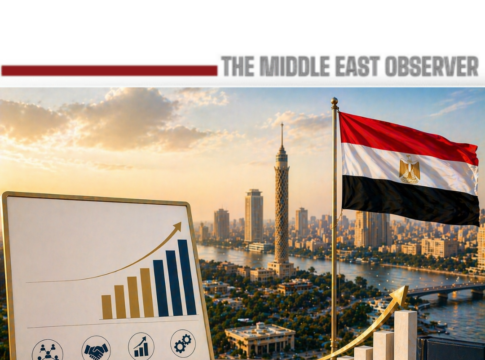
Cairo — Egypt’s economy is projected to reach EGP 24.5 trillion in nominal GDP in FY 2026/27, up from an estimated EGP 21.2 trillion this fiscal year, as part of a medium-term growth trajectory extending to EGP 36.8 trillion by 2029/30, Planning Minister Ahmed Rostom told parliament.
Presenting the government’s economic and social development plan, the minister highlighted that agriculture, industry, construction, and wholesale and retail trade will remain the primary growth drivers, collectively contributing around 62% of GDP, with agriculture and industry leading sectoral output.
Total investments are expected to reach EGP 3.7 trillion in FY 2026/27, with a notable shift toward private sector participation. Official projections indicate 59% of investments will come from the private sector, compared to 41% from public spending, reflecting ongoing policy efforts to enhance private sector-led growth.
This aligns with broader economic reforms aimed at improving capital allocation efficiency and rationalising public investment. Data from the Central Bank of Egypt and recent government statements suggest increasing private inflows and gradual recovery in key sectors, despite ongoing regional and global uncertainties.
The Middle East Observer notes that the rising share of private investment signals a structural shift in Egypt’s growth model, with authorities prioritising market-driven expansion and reduced reliance on state-led spending. The Middle East Observer further observes that sustained growth will depend on maintaining investment momentum while managing external risks, including geopolitical pressures and global economic volatility.
The plan positions investment and sectoral diversification as central pillars of Egypt’s medium-term economic strategy, reinforcing the country’s focus on sustainable growth and private sector development.