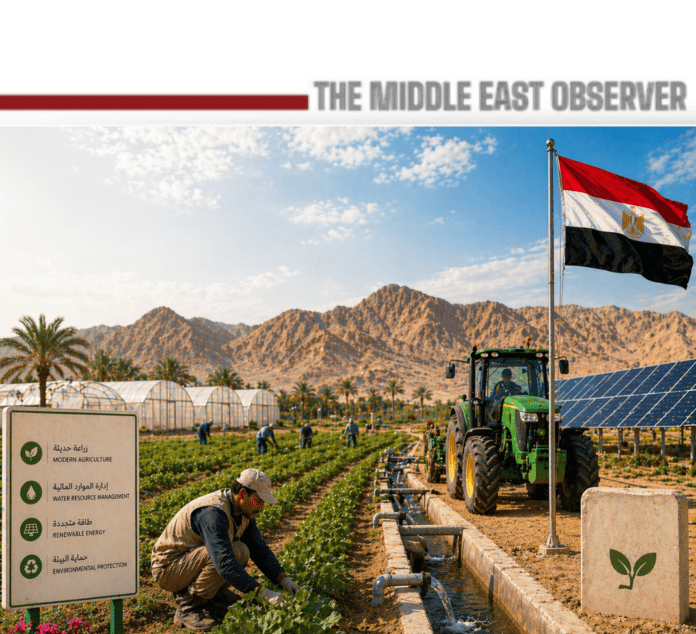
Cairo — Egypt is intensifying efforts to transform Sinai into a sustainable agricultural and development hub, as part of a broader national strategy to enhance food security and regional integration, according to an official statement by the Ministry of Agriculture and Land Reclamation .
Minister Alaa Farouk outlined a year-long programme (April 2025–April 2026) implemented through the Desert Research Center, highlighting expanded agricultural clusters covering 11,000 feddans and supporting more than 2,100 families. The initiative includes the distribution of 350,000 olive seedlings and 2,000 date palms, alongside subsidised inputs and mechanisation support to boost productivity.
The programme also reflects increased collaboration with international and financial partners. Agreements with Food and Agriculture Organization and QNB Egypt have supported farmer training, small-scale project financing, and livestock development, benefiting over 1,200 farmers and rural households.
Infrastructure development remains central to the strategy, with new agricultural service centres, water desalination initiatives, and a regional gene bank aimed at improving resource management and crop resilience. Digital advisory tools and field-based extension programmes have also been deployed to enhance farmer capabilities and modernise agricultural practices.
The government has further prioritised social and economic inclusion, allocating funding to support women-led enterprises and launching training programmes to strengthen local participation in agricultural value chains.
The Middle East Observer notes that the Sinai programme reflects a shift toward integrated rural development models, combining infrastructure, financing, and technology transfer. The Middle East Observer further observes that such initiatives are critical to stabilising frontier regions while expanding Egypt’s agricultural capacity in line with Vision 2030.
The developments come as Egypt continues to invest in desert agriculture and climate-resilient farming systems, positioning Sinai as a strategic pillar in the country’s long-term food security and regional development framework.