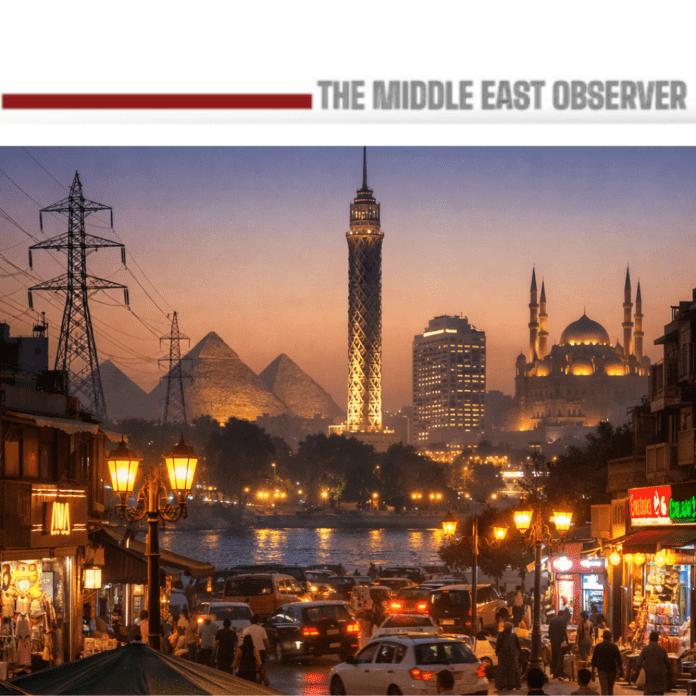
Cairo — Egypt has temporarily extended operating hours for shops, malls, and restaurants until 11 PM through April 27, easing earlier restrictions introduced as part of energy-saving measures amid ongoing regional pressures on fuel supplies.
The decision, which revises the previous 9 PM closure rule, reflects a calibrated approach to balancing economic activity with resource management. As The Middle East Observer notes, the move comes as authorities continue to navigate rising energy costs linked to regional instability, which has disrupted supply chains and increased domestic electricity demand.
Within this broader framework, Egypt has simultaneously implemented a series of energy policy adjustments aimed at reducing fiscal pressure and improving efficiency. According to official government data, electricity tariffs have been raised for high-consumption households and commercial users starting in April, in an effort to ease the burden on state subsidies. In parallel, draft budget figures indicate that energy subsidy allocations are expected to decline to approximately EGP 120 billion in the 2026/2027 fiscal year, compared to around EGP 150 billion in the current fiscal cycle, according to statements cited by the Egyptian Ministry of Finance.
The Middle East Observer understands that these measures are part of a broader reform trajectory aimed at rationalizing energy consumption while maintaining supply stability. In this context, Mahmoud Esmat, Minister of Electricity and Renewable Energy, confirmed that the initial implementation of consumption-reduction policies has already yielded measurable results. Official figures indicate savings of approximately 18,000 megawatt-hours of electricity and 3.5 million cubic meters of fuel over the first week of the measures.
The minister further noted that remote work policies contributed to savings of around 4,700 megawatt-hours and nearly 980,000 cubic meters of fuel, while overall fuel consumption declined by 2.1% in March despite a 3.3% increase in electricity generation compared to the same period last year. These indicators, as observed by The Middle East Observer, highlight the Country’s efforts to enhance efficiency, reduce waste, and sustain grid stability under challenging conditions.
Officials have emphasized that the extension of business hours remains a temporary adjustment rather than a full reversal of conservation measures, with further policy changes dependent on evolving energy supply dynamics. The approach underscores Egypt’s maneuvers to strike a balance between supporting commercial activity and advancing structural energy reforms, as the country continues to adapt to shifting regional and global energy realities.