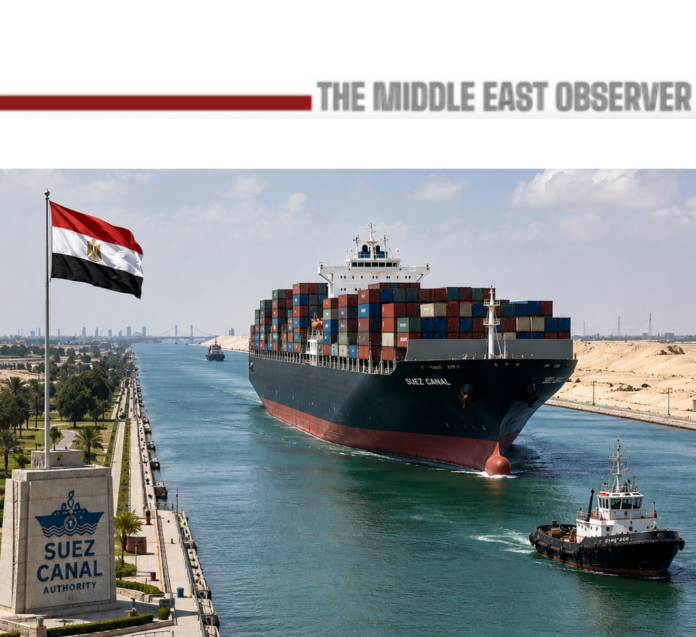
Revenue recovery is emerging as the defining theme of Egypt’s Suez Canal strategy after the Suez Canal Authority announced a broad increase in temporary vessel surcharges, including the first additional levy ever imposed on container ships, as Cairo seeks to maximise returns from improving shipping activity and evolving global trade routes.
The new measures, effective from mid-July, raise additional charges on crude oil tankers, LNG and LPG carriers, dry bulk vessels, car carriers and general cargo ships. Most significantly, the authority will introduce a 12% surcharge on container vessels for the first time, marking an important shift in the canal’s pricing structure and revenue model.
The decision comes as the canal records positive growth in vessel traffic for a third consecutive quarter, reflecting a gradual recovery from the disruption caused by the Red Sea shipping crisis and the wider geopolitical tensions that reshaped global maritime routes over the past two years.
Recovery in Shipping Flows Creates New Pricing Opportunities
According to the Suez Canal Authority, vessel traffic expanded by 23.6% for a third successive quarter as shipping operators increasingly returned to routes linking Asia, Europe and the Mediterranean through the canal.
The recovery follows a prolonged period during which many carriers diverted vessels around the Cape of Good Hope to avoid security risks in the Red Sea, adding significant costs and transit times to global supply chains. As regional conditions gradually stabilised, more operators resumed using the Suez route, helping restore traffic volumes.
Recent developments in the Gulf have also influenced shipping decisions. Reports that the United States and Iran are moving closer to a peace agreement that could fully reopen the Strait of Hormuz have improved market sentiment, although uncertainty remains over the timing and final implementation of any deal. Multiple international reports indicate negotiations are at an advanced stage, but Iranian officials continue to caution that key details remain unresolved.
For the Suez Canal, a fully reopened Hormuz would likely support a broader recovery in energy shipments and regional maritime trade, although it could also reduce some of the extraordinary routing adjustments that have recently benefited alternative corridors.
Why Container Ship Charges Matter
The introduction of a 12% surcharge on container vessels is arguably the most important element of the new pricing package.
Container ships represent the canal’s most strategically valuable traffic segment, carrying a disproportionately large share of global trade between Asia and Europe. While the canal handles roughly 15% of global merchandise trade, its importance in container shipping is substantially higher, making pricing decisions in this category particularly significant.
Historically, the authority relied heavily on incentives and targeted discounts to preserve container traffic. The decision to introduce a surcharge for the first time suggests growing confidence that shipping demand and route economics can absorb higher costs without significantly undermining competitiveness.
The revised fee structure also raises surcharges on crude oil and petroleum-product tankers to 37% from 25%, increases LNG carrier surcharges to 19% from 7%, and lifts charges on LPG and chemical carriers to 32% from 20%. Dry bulk vessels will face a 22% surcharge, while general cargo, heavy-lift and roll-on/roll-off ships will pay 26%.
Beyond Transit Fees: Building a Maritime Services Economy
The surcharge increases are part of a broader effort to restore and expand canal revenues after a period of disruption. The authority has previously signalled ambitions to surpass $10 billion in annual revenue as shipping activity normalises and new revenue streams emerge.
Yet the longer-term opportunity extends well beyond toll collection.
Egypt increasingly views the Suez Canal Economic Zone as a platform for industrial investment, logistics services, ship maintenance, bunkering, green fuels and export-oriented manufacturing. In leading global maritime hubs, value-added services often generate economic returns that rival or exceed those derived from transit fees alone.
At the same time, competitive risks remain. Shipping lines remain highly sensitive to freight rates, fuel costs and route economics. If geopolitical conditions stabilise fully and freight markets weaken, operators could once again compare Suez transit costs with longer voyages around the Cape of Good Hope.
The canal’s challenge therefore is not simply to raise revenues, but to balance pricing power with long-term competitiveness. The latest measures suggest the authority believes improving traffic volumes provide room for higher charges. Whether that confidence is sustained will depend on the durability of the shipping recovery, the future of regional security and the canal’s ability to evolve from a transit waterway into a fully integrated maritime and logistics hub.