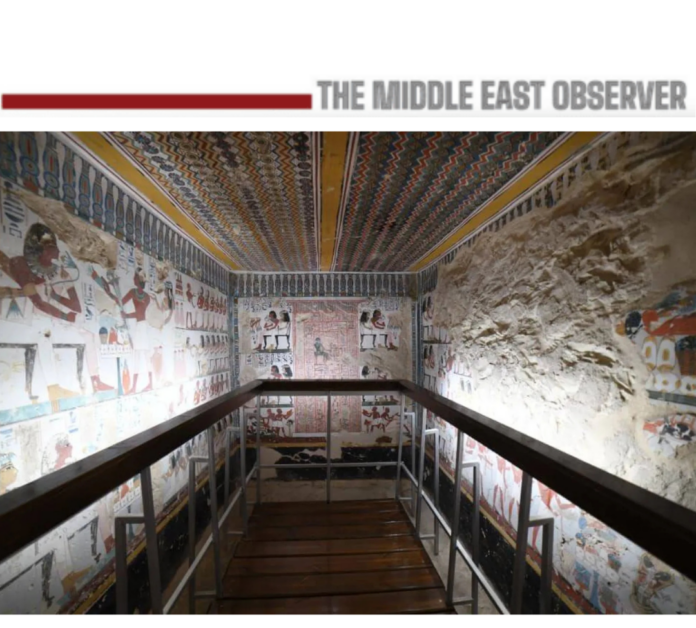
Egypt has inaugurated two newly restored New Kingdom tombs on Luxor’s West Bank, adding a fresh cultural attraction to the country’s archaeological tourism sector.
The tombs of Amenhotep “Rabuya” (TT416) and his son Samut (TT417) were officially opened by Sherif Fathy and Abdel Mottaleb Emara following extensive restoration works that included structural conservation, restoration of inscriptions and colours, upgraded lighting systems, and improved visitor facilities.
The two tombs date back to Egypt’s 18th Dynasty during the reigns of Thutmose III and Thutmose IV — a period widely regarded as one of the peaks of ancient Egyptian political, military, and cultural power. Thutmose III, often described by historians as the “Napoleon of Ancient Egypt,” significantly expanded Egypt’s empire through major military campaigns across the Near East and Nubia, helping establish Egypt as a dominant regional power. His successor, Thutmose IV, is best known for restoring the Great Sphinx of Giza and strengthening diplomatic ties across the ancient region during a comparatively stable reign.
The restored tombs contain scenes depicting agriculture, fishing, banquets, funerary rituals, and a rare image of the goddess Renenutet nursing a royal child.
Minister Sherif Fathy stated that heritage preservation remains a strategic priority for Egypt, noting that the tourism sector recorded growth of 15.6% during the first quarter of 2026 despite ongoing regional tensions.
As The Middle East Observer notes, the reopening reflects Egypt’s continued efforts to combine archaeological preservation with tourism development while reinforcing Luxor’s standing as one of the world’s premier open-air museums.