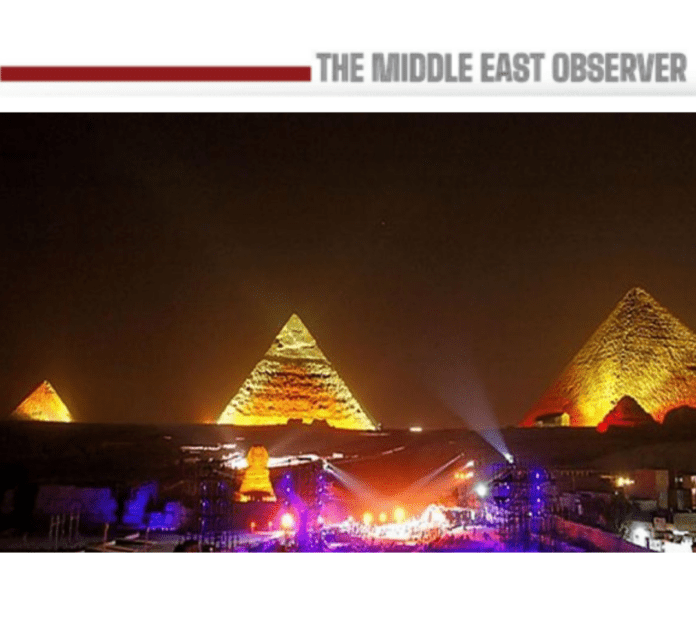
Cairo — The striking nighttime illumination of the Pyramids of Giza and the Grand Egyptian Museum (GEM) is increasingly positioning Egypt’s most iconic heritage corridor as a high-value global destination for premium events, conferences, and cultural gatherings, industry observers say.
Recent lighting initiatives—ranging from symbolic global observances to refined architectural illumination—have transformed the Giza Plateau into a visually compelling stage capable of hosting world-class experiences, blending ancient heritage with modern presentation standards. The interplay between the illuminated pyramids and GEM’s contemporary façade creates a unique experiential landscape unmatched globally, offering a powerful marketing asset for Egypt’s tourism sector.
Tourism and investment specialists argue that this visual transformation should be leveraged beyond symbolism, calling for a structured strategy to activate the surrounding desert spaces as curated venues for international events. These include high-profile conferences, destination weddings, cultural festivals, corporate summits, and luxury brand activations—segments that generate significant revenue and global visibility.
Experts highlight that Egypt possesses a comparative advantage in “heritage-based event tourism”, where historic landmarks are integrated into modern hospitality offerings. However, unlocking this potential requires targeted investment in infrastructure, event zoning, licensing frameworks, and international marketing campaigns, ensuring that the Giza corridor can accommodate large-scale, high-end gatherings without compromising preservation standards.
From an economic standpoint, expanding event-driven tourism around the pyramids and GEM could deliver high-yield visitor segments, extend average stay durations, and diversify tourism revenues beyond traditional sightseeing. Global benchmarks—from desert festivals in the Gulf to heritage-based events in Europe—demonstrate that well-curated venues can evolve into recurring international platforms, attracting multinational participation and annual flagship events.
Industry stakeholders also emphasize the importance of public–private partnerships to develop integrated event ecosystems, including luxury accommodation, transport connectivity, digital infrastructure, and specialized event services. Such an approach would position the Giza Plateau not only as a historical destination but as a global experiential hub capable of hosting year-round international programming.
As Egypt continues to expand its tourism strategy, analysts note that maximizing the commercial and cultural value of its iconic landscapes—particularly through controlled, high-quality event utilization—will be critical in enhancing competitiveness and reinforcing the country’s position on the global tourism map.
In this context, the illuminated skyline of the pyramids and GEM is no longer merely symbolic—it represents a strategic asset, capable of anchoring a new era of tourism investment centered on experience, exclusivity, and global engagement.