

By Ahmed Moawad
In geopolitics, wars are traditionally measured in terms of territory, deterrence, or diplomatic leverage. Yet the ongoing confrontation with Iran is increasingly being defined by a more immediate and fragile metric: economic pressure—particularly within the United States itself.
At the outset, the escalation appeared to reinforce President Donald Trump’s long-standing “maximum pressure” doctrine. Military moves, combined with sanctions and maritime restrictions, were intended to compel Tehran into concessions. However, developments on the ground have revealed a more complex reality, where the conflict has extended beyond military theaters into fuel prices, financial markets, and domestic political sentiment.
Central to this dynamic is the Strait of Hormuz, through which roughly one-fifth of global oil supply transits. Repeated disruptions to this corridor have translated directly into rising oil prices, renewed inflationary pressures, and heightened economic sensitivity in the United States and beyond.
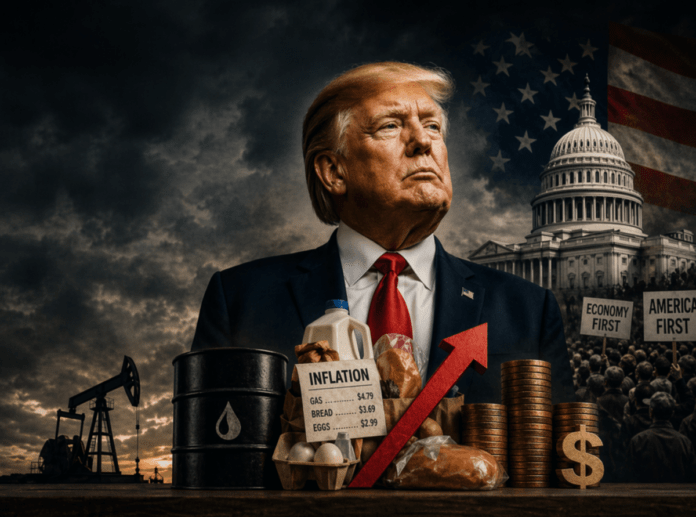
For Washington, the implications are immediate. Higher fuel costs and broader inflation are impacting American consumers, placing additional strain on the domestic economic environment. In democratic systems, such pressures often carry political consequences, particularly during periods of heightened electoral sensitivity.
Despite these challenges, the United States retains structural advantages. Its position as a leading energy producer has helped mitigate supply shocks, while financial markets have demonstrated resilience, supported by expectations of potential de-escalation. Nevertheless, such buffers do not eliminate risk; they merely defer the broader economic and political impact.
The unfolding situation underscores a fundamental reality: economic leverage in modern conflicts is inherently reciprocal. While U.S. policy aims to exert pressure on Iran through sanctions and containment measures, Tehran retains the ability to influence global markets through energy disruptions. Each escalation in the Gulf reverberates across supply chains and financial systems, reinforcing the dual nature of the conflict as both military and economic.
Moreover, the crisis highlights the constraints of coercive strategies within an interconnected global economy. Efforts to isolate Iran intersect with global energy dependencies and market sensitivities, amplifying volatility and raising concerns over wider economic spillovers.
In this context, the strategic calculus becomes increasingly complex. Measures designed to pressure Iran may simultaneously generate domestic economic costs, creating a delicate balance between external objectives and internal stability. Over time, the center of gravity in the conflict risks shifting from regional waterways to domestic economic conditions.
Ultimately, the confrontation is testing not only military capability and diplomatic resolve, but also economic endurance and political resilience. The central question is no longer solely whether pressure can be applied effectively—but which side can sustain its consequences over the longer term.
