
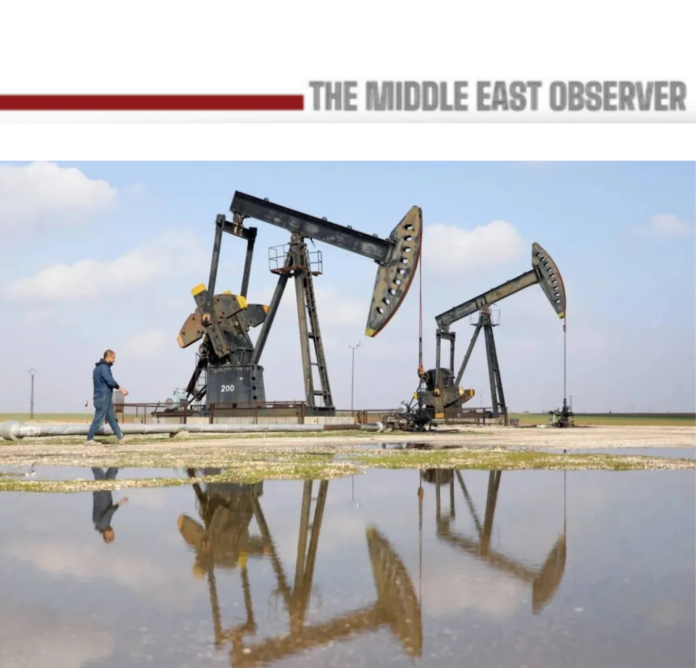
US-based HKN Energy has begun operations in Syria‘s northeastern Rmeilan oil region under a long-term agreement with the Syrian government, marking one of the most significant foreign energy investments in the country since years of conflict disrupted its petroleum sector.
The agreement forms part of Damascus’s broader efforts to revive oil and gas production, attract international investment and restore critical energy infrastructure following changes in the country’s political landscape and the gradual easing of international restrictions on economic engagement.
Located in Al-Hasakah province, the Rmeilan complex is among Syria’s most important hydrocarbon-producing regions, containing hundreds of wells and accounting for a substantial share of the country’s pre-war oil output. Before the conflict, Syria produced nearly 400,000 barrels of oil per day, generating a major source of government revenue. Current production is estimated at less than a quarter of that level, leaving the country heavily dependent on imported fuel and external energy support.
HKN’s entry reflects growing international interest in Syria’s energy sector as authorities seek to rebuild production capacity and reduce dependence on fuel imports. The move is also geopolitically significant, representing one of the first major US energy-sector investments in Syria in years and signalling a cautious return of international business interest in the country’s economic recovery prospects.
The agreement comes as Syria seeks to re-establish itself within a highly competitive regional energy landscape, where countries including Iraq, Libya and producers across the Eastern Mediterranean are also competing to attract upstream investment and development capital.
Syria’s oil and gas output is critical to improve energy security and generate export revenues
For Syria, restoring oil and gas output is critical not only to improving energy security but also to generating export revenues, easing fiscal pressures and financing wider reconstruction efforts. The agreement therefore represents more than a commercial transaction; it is an early test of whether foreign investment can play a meaningful role in rebuilding the country’s productive economy after more than a decade of conflict.
While operational, political and security risks remain significant, the arrival of HKN Energy underscores the gradual re-emergence of Syria’s energy sector onto the regional investment agenda. For investors, the project will serve as an important indicator of whether Syria can translate improving stability into commercially viable energy opportunities. For Damascus, success could provide a blueprint for attracting further foreign investment into sectors central to long-term economic recovery.
Related news:
US Approaches Net Crude Exporter Status as Global Energy Flows Shift
Iran War Costs Global Companies Over $25 Billion as Energy and Shipping Pressures Intensify
Fitch Sees Brent at $70 as Hormuz Reopening Reshapes Oil Outlook
Read also:
Trump Pledges Fair Nile Settlement During Talks with El-Sisi
Egypt Launches Trade Intelligence Platform to Drive $100bn Export Ambition