
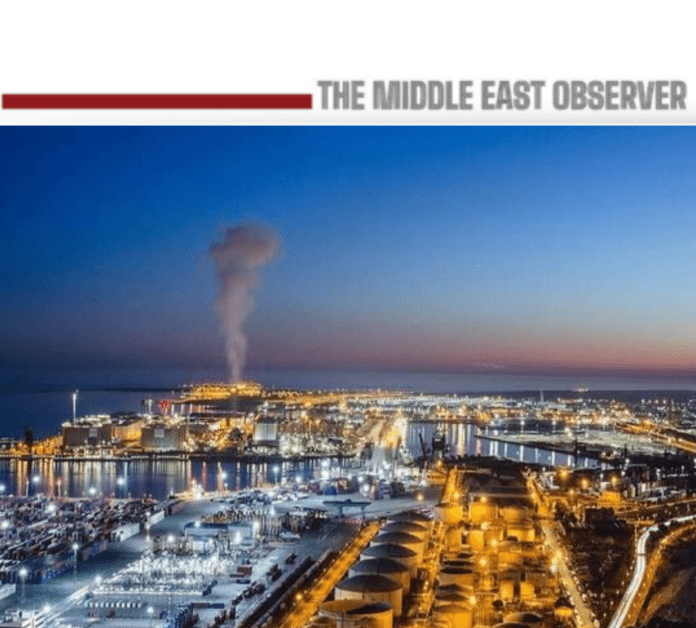
CAIRO — Egypt is moving forward with plans to establish a large-scale petroleum storage and trading zone on the Mediterranean coast, in a project valued at more than $600 million, according to government officials cited by Asharq Business.
The proposed development will be located within the Greater Alexandria Port project and forms part of a broader national strategy to position Egypt as a regional energy trading hub, leveraging its geographic advantage and expanding logistics infrastructure.
Officials indicated that the first phase of the project will cover approximately 300,000 square metres and include a 900-metre marine berth, designed to facilitate the handling, storage, and circulation of petroleum products.
The initiative is currently in its final contractual stage, with both the Egyptian Ministry of Transport and the Egyptian Ministry of Petroleum and Mineral Resources working to finalise agreements. These include determining land usufruct arrangements with the Alexandria Port Authority, which owns the site, as well as structuring a financing model combining both foreign currency and local funding sources.
A full announcement detailing partnership structures and shareholder allocations is expected in the near term, according to officials familiar with the process.
The Alexandria project aligns with Cairo’s long-term objective of transforming the country into a regional centre for energy trade and logistics, capitalising on its proximity to key global shipping routes and its integrated maritime infrastructure.
As The Middle East Observer has consistently noted in its energy coverage, Egypt’s strategy is anchored in expanding storage capacity, enhancing port efficiency, and deepening partnerships with international energy players to capture a larger share of global oil and petroleum product flows.
Egypt’s current petroleum storage capacity across major ports is estimated at around 29 million barrels, reinforcing its attractiveness to global oil traders and storage operators. The country operates 19 commercial ports, with 14 currently undergoing development, reflecting a sustained infrastructure upgrade programme.
In parallel, the government has invested heavily in domestic storage capabilities. Between 2014 and 2023, approximately 79 petroleum depots were either constructed or upgraded at a total cost of EGP 2.35 billion, aimed at strengthening strategic reserves and supply security.
In a further step to maximise logistics assets, Egypt recently offered 10 oil storage facilities for lease at Ain Sokhna and Ras Badran ports on the Red Sea, according to officials cited in March 2026.
The government is also expanding international cooperation in the sector. Notably, Egypt has pursued partnerships with global energy hubs such as Fujairah, including agreements linked to the development of the Al-Hamra petroleum port, underscoring a broader push to integrate into global energy supply chains.
The Alexandria petroleum logistics zone represents a significant addition to Egypt’s evolving energy infrastructure landscape. Once operational, it is expected to enhance the country’s capacity to store, trade, and re-export petroleum products, further consolidating its role as a strategic node between European, African, and Middle Eastern energy markets.
With contracts nearing completion and investment structures taking shape, the project signals a continued acceleration in Egypt’s ambition to reposition itself at the centre of regional energy flows.
