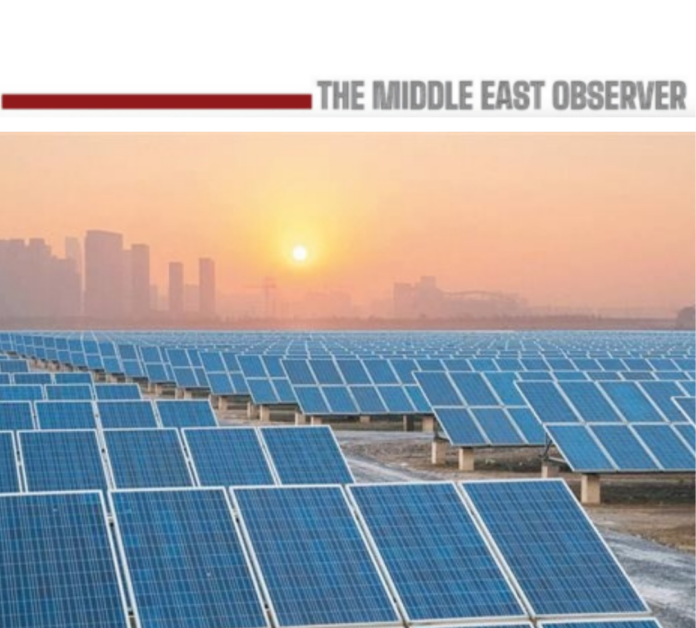
Egypt is accelerating efforts to expand rooftop solar adoption as part of a broader strategy to diversify the country’s electricity mix, reduce dependence on fossil fuels, and strengthen long-term energy security through wider deployment of decentralized renewable-energy systems.
The latest policy push follows statements by Mansour Abdel Ghani, spokesperson for Egypt’s Ministry of Electricity and Renewable Energy, who confirmed that citizens are now exempt from several previous procedural requirements when installing rooftop solar panels for self-consumption purposes. Coordination with electricity distribution companies remains necessary only for systems connected to the national grid through Egypt’s net-metering framework.
Speaking to AlHayah TV, Abdel Ghani said the move forms part of the government’s wider strategy to encourage households, residential buildings, and private facilities to participate more actively in clean-energy generation.
The announcement comes as Egypt intensifies efforts to expand renewable-energy capacity amid rising electricity demand, summer consumption pressures, fuel-cost volatility, and growing regional focus on energy diversification. Earlier this week, President Abdel Fattah El-Sisi met with Prime Minister Mostafa Madbouly, Electricity Minister Mahmoud Esmat, and presidential financial adviser Ahmed El-Shazly to review the progress of renewable-energy projects and the state’s strategy for increasing reliance on clean power sources within Egypt’s electricity system.
Egypt has repeatedly reaffirmed its goal of increasing renewable energy’s contribution to the electricity mix to 42% by 2030, while recent ministry statements have suggested even higher ambitions as the country seeks to accelerate the pace of energy transition. Reuters previously reported that solar, wind, and hydropower accounted for around 11.5% of Egypt’s electricity generation, underlining the scale of investment, transmission upgrades, and grid modernization still required to meet long-term targets.
A central component of the strategy is Egypt’s net-metering system, which allows households and businesses generating electricity from renewable sources to exchange energy with the national grid through bidirectional electricity meters. Under this framework, excess electricity generated during peak solar production can be exported to the grid and later offset against electricity consumed during lower-production periods, effectively allowing the grid to function as a balancing mechanism for distributed solar generation.
Abdel Ghani stated that the Ministry of Electricity increased the country’s net-metering target from 300 megawatts to 1,000 megawatts last year, reflecting growing official support for decentralized clean-energy systems. Ministry figures cited during the interview showed that just over 200 megawatts of renewable-energy capacity are currently connected to the national grid under the net-metering framework.
Industry specialists increasingly view distributed solar generation as an important complement to large-scale renewable-energy projects. Unlike utility-scale solar farms, rooftop systems can help reduce pressure on national grids during peak demand periods, lower transmission losses, improve localized energy resilience, and partially ease long-term fuel-consumption pressures.
Egypt’s Electricity Regulatory Agency continues to maintain technical and regulatory frameworks governing grid-connected solar systems, including installation standards, contractual procedures, and bidirectional metering requirements.
Officials also highlighted economic incentives designed to improve the financial viability of rooftop solar investments. Imported solar equipment currently benefits from reduced customs treatment, with officials citing duties of around 2% under the existing framework. Abdel Ghani added that a residential building consisting of six floors and approximately 12 apartments could require an investment of roughly EGP 1.3 million to establish a rooftop solar system capable of generating around 10,000 kilowatt-hours of electricity, although actual costs remain dependent on technical specifications, financing structures, and equipment pricing.
Analysts note that the long-term economics of rooftop solar increasingly depend on electricity pricing trends, financing accessibility, maintenance networks, and system efficiency. While initial installation costs remain relatively high for middle-income households, supporters argue that gradual reductions in equipment costs, customs incentives, and localized manufacturing could improve affordability over time.
The government is also seeking to localize parts of the renewable-energy supply chain. Abdel Ghani noted that cooperation is underway between the Egyptian Electricity Holding Company and the Arab Organization for Industrialization to establish local solar-panel manufacturing capacity aimed at reducing import dependence and lowering installation costs over the long term.
At the same time, Egypt’s broader renewable-energy expansion continues to face infrastructure and financing challenges. Reuters reported previously that the pace of renewable-capacity growth slowed after the launch of the Benban solar complex in 2019, while analysts stressed the importance of transmission-grid upgrades and financing mechanisms to support large-scale clean-energy integration.
Electricity Minister Mahmoud Esmat stated in April that Egypt plans to add approximately 2,500 megawatts of renewable-energy capacity to the unified national grid during 2026 as part of efforts to improve efficiency, diversify energy sources, and support a more balanced electricity mix.
For households and residential developers, rooftop solar increasingly represents both an energy-efficiency opportunity and a practical test case for Egypt’s broader transition toward decentralized electricity generation. The long-term success of the strategy will likely depend on regulatory clarity, financing accessibility, local manufacturing capacity, maintenance infrastructure, and the economics of electricity pricing as Egypt continues reforming its energy sector.
For Egypt, however, the policy extends beyond residential rooftops alone. The expansion of distributed solar systems forms part of a wider national effort to reduce exposure to fuel-price volatility, attract green investment, modernize electricity infrastructure, and strengthen Egypt’s position as a regional renewable-energy hub linking Africa, the Middle East, and Europe.