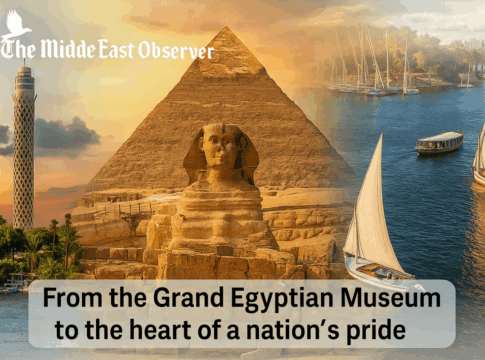
Last Saturday, Egyptians sat closely watching the opening ceremony of the Grand Egyptian Museum—a moment generations had awaited. Families gathered around their screens, children wide-eyed with wonder as Egypt unveiled not only its largest museum, but humanity’s own museum of history. Amid the music, the monuments, and the memories reborn, one phrase came quietly to mind— “If I weren’t an Egyptian, I would have wished to be an Egyptian.”
Few words in Egypt’s modern history have lived as long—or burned as bright—as Mustafa Kamil Pasha’s timeless declaration. And few moments, perhaps, have embodied its spirit as vividly as that night: a nation looking upon its own story with renewed pride, unity, and gratitude.
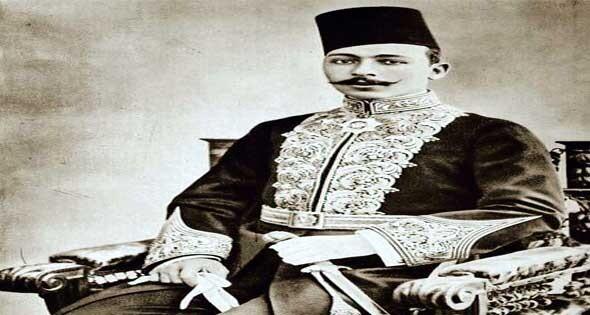
Born in Cairo in 1874, at a time when Egypt’s dignity was bruised under foreign occupation, Mustafa Kamil Pasha rose to become the fiery conscience of his nation. Trained in law in Cairo and France, he was no ordinary student; he was a force of conviction wrapped in eloquence. At only nineteen, he burst into public life by leading a protest against a pro-British newspaper—his first act of defiance against the language of submission. From that moment on, the pen and podium became his weapons of liberation.
Kamil believed that Egypt’s independence could not be demanded through violence, but earned through education, order, and pride. Fluent in French, he charmed Europe’s intellectual salons and turned Egypt’s cause into an international conversation.
In 1895, he stood before the French Chamber of Deputies, petitioning the government to pressure Britain to end its occupation. He wasn’t just appealing to politics—he was appealing to the world’s conscience. In eloquent French, he accused colonial authorities of deliberately keeping Egypt uneducated, declaring, “They claim we are incapable, yet they deny us the means to prove otherwise.”
His words found a home in the hearts of both Egyptians and Europeans. In France, he was celebrated as the voice of a young nation striving to reclaim its dignity; in Egypt, he became a living symbol of wataniyya—patriotism rooted in pride and intellect.
Kamil admired the republican ideals of France and later the disciplined transformation of Japan—but not as imitation. He saw in them living proof that national revival begins with education and moral strength. His celebrated 1904 book, The Rising Sun, praised Japan’s modernization as an Eastern triumph and a model for Egypt’s own awakening.
To Kamil, patriotism was both spiritual and practical. He founded Al Liwaʾ (“The Standard”) newspaper to awaken Egyptians through words rather than weapons, promoting unity between Muslims, Christians, and Jews. He preached that love of al-watan (the homeland) was the foundation of all faiths.
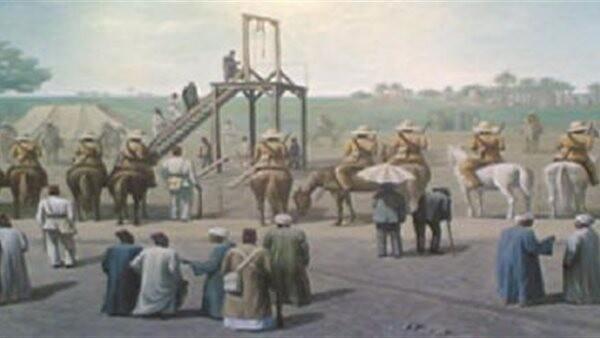
Then came June 1906—and the spark that would ignite a nation. As documented by Britannica, a group of British officers entered the small Nile Delta village of Dinshaway (now Denshawai), hunting pigeons for sport—unaware or unconcerned that these birds were the villagers’ vital source of food and livelihood. The shooting angered the residents, and a scuffle broke out. In the chaos, an officer’s gun went off, wounding a woman, which further enraged the villagers.
One officer fled the scene under the scorching noontime sun, running back toward the British camp. He collapsed and died of what was likely a heatstroke. A villager who came upon the fallen man tried to help him, but when British troops found the villager beside the officer’s body, they assumed he was the killer—and killed the villager on the spot.
In the aftermath, the British authorities established a special tribunal to try the villagers for murder. The prosecution accused them of a deliberate attack, while the defense—among them the reformist lawyer Aḥmad Luṭfī al-Sayyid—argued it had been an accident born of confusion. But justice was never the intent.
The tribunal delivered swift and brutal sentences: four villagers were condemned to death by hanging, and others to imprisonment, hard labor, and public flogging. The punishments and executions were carried out in Denshawai itself, in front of the victims’ families, underlining the empire’s message of dominance and fear.
What the British intended as a show of control became, instead, a national awakening.
When news reached Cairo, Mustafa Kamil transformed grief into action. He wrote a searing exposé in Le Figaro titled “A Tragic Affair in the Delta,” declaring that the incident had “touched the conscience of humanity.” His words spread across Europe’s newspapers, confronting readers with the cruelty of colonial justice.
Determined to speak directly to power, Kamil traveled to London, addressing a captivated audience at the Carlton Hotel. There, in precise English, he denounced the Dinshaway tribunal:
“This tribunal follows no law but vengeance. Its existence is an outrage against the humanity and civil rights of the Egyptian people.”
His campaign transformed Dinshaway from a remote tragedy into a symbol of resistance. The outrage it generated across Europe and Egypt contributed to the resignation of Lord Cromer, the British administrator who had ruled Egypt for decades. It was a triumph not of arms, but of intellect and moral courage.
The Dinshaway affair united peasants and intellectuals, Muslims and Copts, under a shared conviction that Egypt must stand as one nation. Riding this wave, Kamil founded the National Party (Al-Hizb Al-Watani) in late 1907, crystallizing Egypt’s first organized political movement for independence.
He called on Egyptians not to hate their occupiers, but to love their country more. “Our liberation,” he wrote, “begins with our belief in our own worth.” His message was as moral as it was political—a call for dignity, knowledge, and national pride.
In February 1908, just months after founding the National Party, Mustafa Kamil died suddenly at the age of thirty-three. Cairo fell silent in grief. His funeral became a sea of humanity—hundreds of thousands of mourners filling the streets to bid farewell to the man who had given Egypt its modern voice.
Today, his mausoleum near the Citadel stands not merely as stone and inscription, but as a symbol of conscience. Inside rests the young lawyer who convinced a colonized nation to believe in itself.
His words outlived him—echoing through revolutions, classrooms, and anthems. Egypt’s national song Bilady, Bilady, Bilady drew its spirit from his speeches. And his immortal declaration— “If I weren’t an Egyptian, I would have wished to be an Egyptian.” remains Egypt’s most enduring love letter to its homeland.