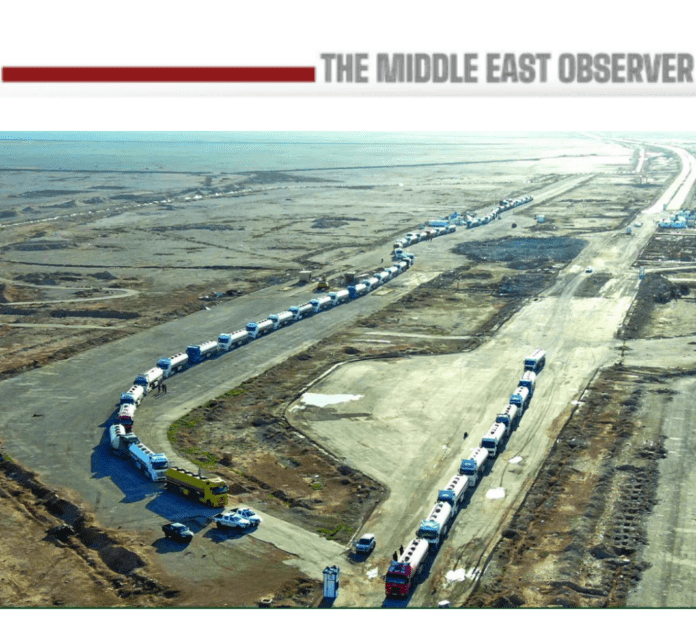
Baghdad — Iraq has begun exporting crude oil via tanker trucks through Syria, opening an alternative export corridor as regional tensions disrupt traditional maritime routes, according to statements from the Iraqi Ministry of Oil and Syrian officials.
The move comes amid severe instability affecting shipments through the Strait of Hormuz, a critical artery for Gulf energy exports, where heightened geopolitical tensions have constrained traffic and forced producers to seek contingency routes. Iraq, a key member of OPEC, relies on oil exports for roughly 90% of state revenues, amplifying the urgency of maintaining export continuity.
According to official statements, Iraq has initiated shipments by road into Syria, where authorities have pledged to ensure safe transit and facilitate onward export operations. Syrian officials confirmed that the crude is being transported to the Baniyas refinery terminal on the Mediterranean coast, where it is offloaded and transferred onto seaborne tankers for international export.
Industry sources cited by international agencies indicated that 178 tanker trucks carrying fuel oil have already arrived at Baniyas as part of an initial shipment plan totaling 299 trucks, with deliveries proceeding in phases. The shipments are entering Syria عبر the Al-Tanf border crossing, marking the first operational use of this route for Iraqi crude exports under current conditions.
The development follows Iraq’s recent efforts to diversify export channels. Last month, Baghdad announced the resumption of limited exports via Turkey’s Ceyhan port, with flows estimated at around 250,000 barrels per day, partially restoring northern export capacity.
Energy analysts note that while trucking volumes remain modest compared to Iraq’s typical export scale—exceeding several million barrels per day—the initiative underscores a broader regional shift toward logistical flexibility and route diversification in response to supply chain disruptions. The reliance on land transport, though costlier and less efficient, provides a short-term workaround to sustain export flows and mitigate fiscal pressures.
The use of Syrian transit infrastructure also signals a reconfiguration of regional energy corridors, as producers adapt to evolving geopolitical risks affecting maritime chokepoints. However, specialists caution that such routes are unlikely to replace traditional export channels at scale, serving instead as supplementary mechanisms during periods of acute disruption.
Overall, Iraq’s move reflects the heightened fragility of global energy logistics, where geopolitical shocks are increasingly forcing producers to deploy unconventional export strategies to maintain market access and revenue stability.