Free trade fuels a growing partnership with Egypt
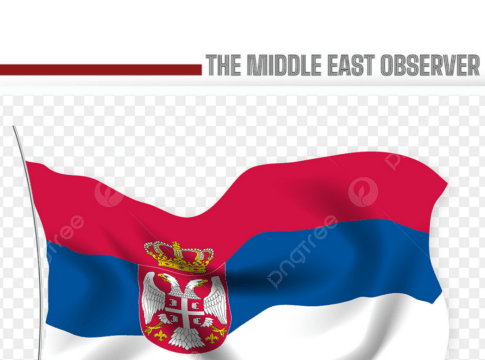
The Republic of Serbia marks its National Day on February 15 and 16, 2026, an occasion known as Statehood Day, commemorating a defining chapter in the country’s modern history. The annual celebration honours the adoption of Serbia’s first constitution in 1835 and reflects the nation’s long struggle for independence from Ottoman rule—a milestone that laid the foundations of the modern Serbian state.
Observed over two days, Statehood Day is both a historical commemoration and a forward-looking moment of national reflection. Official ceremonies, state visits, and cultural events highlight Serbia’s heritage, unity, and continued pursuit of progress, underscoring the values that have shaped its political and economic development.
Located at the crossroads of Southeast and Central Europe, Serbia is a landlocked Balkan nation bordering Hungary, Croatia, Bosnia and Herzegovina, Bulgaria, and others. With a population of around 6.6 million, its capital Belgrade stands as the country’s political and economic centre, alongside key hubs such as Novi Sad and Niš. Serbia’s economy is classified by the World Bank as a middle-income economy, transitioning steadily from state dominance toward a market-driven model.
Manufacturing remains a central pillar of Serbia’s economy, with strengths spanning machinery, automotive components, energy, and mining. Its export base is diversified across base metals, furniture, chemicals, tyres, and pharmaceuticals, making the country deeply integrated into European trade networks and highly dependent on international commerce.
Against this backdrop, Serbia’s National Day also provides an opportunity to reflect on the strength of its international partnerships—chief among them, its growing strategic relationship with the Arab Republic of Egypt.
Bilateral relations between Egypt and Serbia are grounded in long-standing friendship and political alignment. This relationship was elevated to the level of a strategic partnership during President Abdel Fattah El-Sisi’s visit to Serbia in 2022, marking a turning point in diplomatic and economic cooperation.
Momentum accelerated further during the Serbian President’s visit to Egypt in 2024, when the two countries signed a Free Trade Agreement (FTA)—a landmark step that came into force on 1 September 2025. Early indicators suggest the agreement is already delivering tangible results. In 2025, bilateral trade expanded by 37.5% compared with the same period in 2024, with Serbian exports rising by 30.6% and Egyptian exports increasing by 41%.
According to UN COMTRADE data, Egypt’s exports to Serbia were valued at USD 43.82 million in 2024. Key Egyptian exports included iron and steel, edible vegetables and fruits, inorganic chemicals, articles of steel, plastics, glass, cement-related materials, and cotton—products that reflect Egypt’s industrial and agricultural depth.
Serbia’s exports to Egypt reached approximately USD 41 million during the same period. These were led by tobacco products, machinery, paper, vehicles, rubber, pharmaceuticals, mineral fuels, chemical products, and electrical equipment—highlighting Serbia’s strengths in manufacturing, processing industries, and value-added goods.
The trade structure underscores the complementarity between the two economies: Egypt offers scale, geographic reach, and access to Middle Eastern and African markets, while Serbia brings manufacturing expertise, technical standards aligned with Europe, and competitive industrial capacity.
Looking ahead, the Egypt–Serbia partnership holds promise well beyond current trade volumes. Opportunities exist in industrial joint ventures, pharmaceutical manufacturing, agribusiness and food processing, construction and infrastructure, and logistics. Serbia’s position as a European manufacturing gateway pairs naturally with Egypt’s role as a regional production and export hub linking Africa, the Middle East, and global maritime routes.
As Serbia celebrates its National Day—honouring sovereignty, resilience, and statehood—the strengthening relationship with Egypt stands as a testament to how shared interests and strategic vision can translate historical friendship into concrete economic progress. In a changing global landscape, the partnership reflects a forward-looking model of cooperation built on mutual strengths, open markets, and long-term opportunity.