
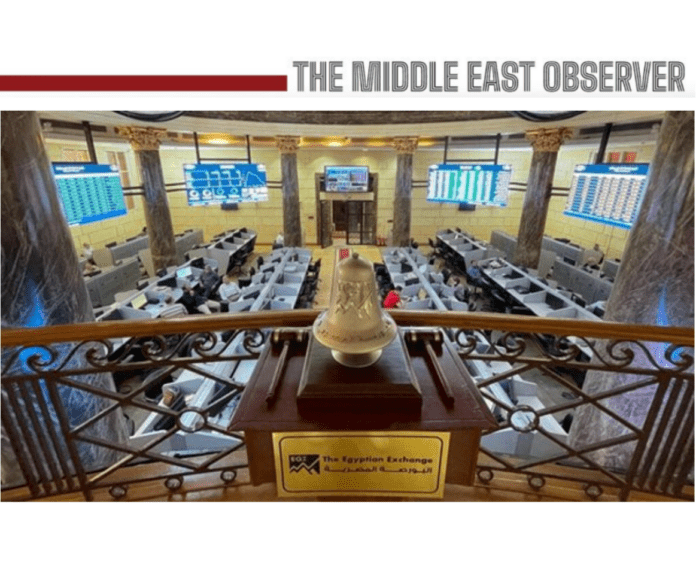
Egypt will enter the derivatives arena on 1 March 2026, as the Egyptian Exchange (EGX) begins trading futures contracts tied initially to the EGX30 index. The move marks the most significant structural reform of the country’s capital markets in years, expanding beyond cash equities into leveraged, risk-managed instruments aligned with global exchange standards.
The launch follows formal licensing from the Financial Regulatory Authority (FRA), alongside approval of dedicated trading, clearing and settlement rulebooks. Operationally, the exchange has implemented a derivatives platform developed by Egypt for Information Dissemination, with real-time integration between execution and clearing systems. Settlement will operate under a Central Counterparty (CCP) framework in coordination with Misr for Clearing Settlement and Central Depository, positioning the clearing house as the guarantor to both sides of each transaction — a critical safeguard against counterparty default.
The initial contracts will track the EGX30, with three- and six-month maturities. Subsequent phases are expected to include futures on the EGX70 index and eventually single-stock futures, contingent on market readiness and liquidity conditions.
For institutional investors, index futures offer:
- Portfolio hedging against downside risk
- Tactical exposure without transacting in underlying equities
- More efficient capital allocation through margin-based leverage
- Enhanced price discovery mechanisms
For Egypt’s market structure, the introduction of derivatives has broader implications. Futures trading can deepen liquidity, reduce volatility driven by panic selling, and improve arbitrage efficiency between spot and derivative markets — provided participation is sufficiently broad.
Egypt’s move brings it closer to regional peers such as Saudi Arabia and the UAE, where derivatives markets have gradually expanded over recent years. However, successful derivatives ecosystems typically depend on three core pillars: liquidity depth, institutional participation, and disciplined margin supervision.
While Egypt’s regulatory architecture now mirrors international practice, the real question is whether domestic and foreign investors will generate enough trading volume to sustain a functional market.
Historically, derivatives markets in emerging economies have struggled where underlying cash markets lack depth or where retail dominance drives speculative behavior. Egypt’s equity market has experienced volatility episodes tied to currency movements, inflation cycles and foreign capital flows — factors that may either stimulate hedging demand or deter leveraged participation.
Liquidity concentration in a limited number of blue-chip stocks could initially restrict arbitrage efficiency. Without active market makers and consistent institutional flows, spreads may widen and contract rollover activity could remain shallow.
The exchange’s emphasis on readiness and technological integration is important — but liquidity is not a technological variable; it is behavioral and institutional.
The CCP model and real-time margining framework significantly mitigate counterparty risk. Daily mark-to-market settlement and collateral management mechanisms should contain systemic exposure. However, derivatives can amplify short-term price swings if leverage is excessive or if margin calls trigger forced liquidations during volatile sessions.
Regulators will likely monitor:
- Margin adequacy levels
- Open interest concentration
- Cross-market volatility spillover
- Broker risk exposure
If managed prudently, futures trading can enhance market resilience. If mismanaged, it can exacerbate instability.
From a capital-markets development perspective, the introduction of futures trading represents:
- A step toward financial market sophistication
- A signal to foreign investors of regulatory modernization
- A potential boost to institutional portfolio strategies
- Foundation groundwork for eventual options and sector derivatives
Yet structural reform alone does not guarantee structural transformation. Adoption by pension funds, asset managers and foreign institutional investors will ultimately determine whether Egypt’s derivatives market becomes a meaningful risk-management tool or remains a symbolic reform.
In the near term, trading volumes and open interest levels will serve as key indicators of success. If liquidity builds steadily and volatility remains contained, Egypt could gradually expand into more complex derivative instruments, strengthening its position within emerging market capital flows.
For now, the infrastructure is ready. The regulatory framework is aligned. The operational testing is complete.
The next phase will test whether investor behavior matches institutional ambition.
