
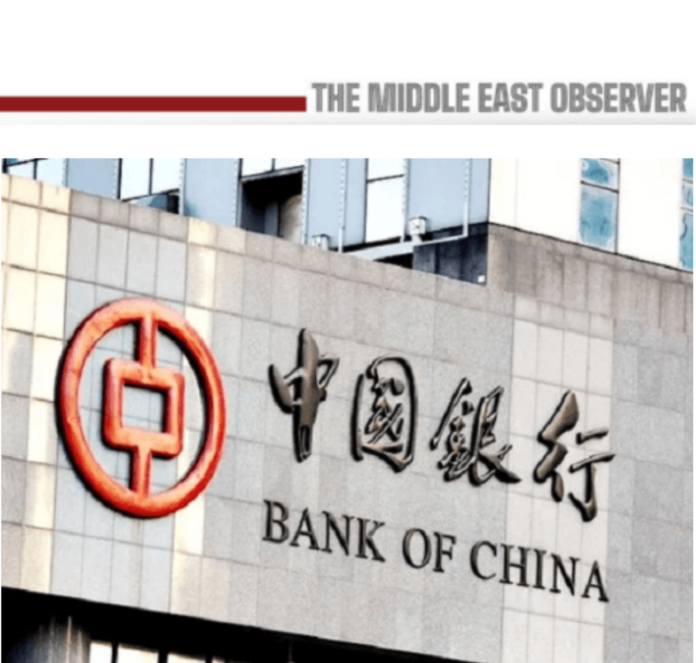
China has further consolidated its position at the pinnacle of global banking, with seven Chinese lenders occupying the world’s top 10 positions by Tier 1 capital, including the world’s four largest banks, according to The Banker’s Top 1000 World Banks 2026. Compiled annually by The Banker, a Financial Times publication, the ranking is widely regarded as the industry’s leading benchmark of banking strength, measuring institutions primarily by Tier 1 capital—the internationally recognised indicator of a bank’s financial resilience and its ability to absorb unexpected losses while supporting future lending. China’s dominance reflects more than two decades of rapid balance-sheet expansion, state-backed capital accumulation and the sheer scale of the country’s domestic banking market. Although Chinese lenders continue to face pressure from slower economic growth, a prolonged property-sector downturn and narrowing interest margins, their capital strength remains unrivalled. The United States retains a formidable presence with JPMorgan Chase, Bank of America and Citigroup completing the global top 10, underscoring the continued influence of the world’s two largest economies over international finance.
Against this backdrop, the Middle East and North Africa (MENA) has reinforced its position as one of the world’s strongest regional banking markets. Collectively, Arab lenders account for dozens of institutions within the global Top 1000, with the Gulf Cooperation Council (GCC) representing the overwhelming majority of the region’s Tier 1 capital. Saudi Arabia and the United Arab Emirates continue to dominate the regional rankings, benefiting from prudent regulation, strong sovereign backing, robust profitability and ambitious economic diversification programmes that have strengthened both capital adequacy and international competitiveness.
Saudi Arabia Consolidates Regional Leadership
Saudi Arabia further strengthened its position as the Middle East’s largest banking market, with Saudi National Bank (SNB) ranked 36th globally, making it the region’s highest-ranked lender. The Kingdom also has four banks among the world’s top 100, with Al Rajhi Bank, Riyad Bank and Banque Saudi Fransi joining SNB in the global rankings.
The breadth of Saudi Arabia’s banking industry reflects the scale of Vision 2030 investments, sustained credit expansion and one of the strongest capital positions among emerging markets. Mega-projects spanning infrastructure, tourism, logistics, mining, manufacturing and renewable energy continue to generate substantial financing opportunities, reinforcing banks’ balance sheets while expanding their regional and international influence.
UAE Reinforces Its Position as a Global Financial Centre
The United Arab Emirates remains the region’s second-largest banking market, led by First Abu Dhabi Bank (FAB), ranked 46th globally. It is joined by Emirates NBD, Abu Dhabi Commercial Bank (ADCB) and Dubai Islamic Bank, reflecting the depth and diversity of the UAE’s financial system.
Dubai and Abu Dhabi continue to consolidate their status as the Middle East’s leading international financial centres, benefiting from vibrant capital markets, wealth management, trade finance and cross-border investment. UAE banks have accelerated their expansion across the Middle East, Africa and Asia while maintaining strong profitability and capital generation supported by a diversified domestic economy.
Qatar, Kuwait and Oman Maintain Strong Fundamentals
Qatar National Bank (QNB) remains Qatar’s flagship financial institution and one of the Middle East’s largest international banking groups, supported by a diversified overseas network and conservative capital management.
Kuwait continues to be represented by Kuwait Finance House (KFH), whose regional acquisitions have reinforced its standing among the world’s leading Islamic financial institutions.
Meanwhile, Bank Muscat remains Oman’s highest-ranked lender, reflecting the Sultanate’s stable regulatory environment and prudent financial supervision.
Egypt Continues Building Banking Resilience
Egypt remains one of Africa’s largest banking markets and an increasingly important financial gateway between the Gulf and the African continent. Commercial International Bank (CIB) continues to rank as the country’s highest-placed lender internationally, followed by National Bank of Egypt, Banque Misr, QNB Alahli Egypt and Banque du Caire, demonstrating the growing depth of Egypt’s banking industry.
Although Egyptian banks remain smaller than their Gulf counterparts in Tier 1 capital, the sector has benefited from stronger capital buffers, accelerating digital transformation, improving foreign currency liquidity and resilient deposit growth. Continued banking reforms and expanding financial inclusion initiatives have further strengthened long-term fundamentals and investor confidence.
Morocco, Jordan, Bahrain, Lebanon and Iraq
Beyond the Gulf, Attijariwafa Bank continues to strengthen Morocco’s financial influence through its expanding presence across West and Central Africa, while Arab Bank remains Jordan’s flagship international lender with one of the region’s broadest cross-border networks.
Bahrain’s banking industry continues to be led by National Bank of Bahrain (NBB), reflecting the Kingdom’s longstanding role as a regional financial centre. Despite Lebanon’s prolonged financial crisis, Bank Audi remains the country’s highest-ranked institution, while Trade Bank of Iraq continues to represent Iraq within the global rankings.
Islamic Finance Continues to Shape Regional Banking
The latest rankings also underline the growing international importance of Islamic finance. Several of the world’s largest Sharia-compliant banking institutions are headquartered in Saudi Arabia, the United Arab Emirates and Kuwait, reflecting the Gulf’s leadership in one of the fastest-growing segments of global financial services. Continued innovation in Islamic banking products and sukuk markets is expected to strengthen the region’s competitive position further.
Why Gulf Lenders Continue to Outperform
According to The Banker, the Gulf’s sustained performance reflects conservative regulatory oversight, strong capitalisation, abundant liquidity, relatively low levels of non-performing loans and continued government-led investment programmes. Large-scale infrastructure projects, sovereign wealth fund activity and economic diversification strategies continue to generate robust demand for corporate and retail financing while reinforcing banks’ profitability and resilience.
Although geopolitical uncertainty remains an important consideration for investors, the region’s leading institutions enter this period from positions of considerable financial strength, supported by healthy capital ratios, disciplined risk management and resilient earnings.
Outlook
The 2026 rankings highlight a broader shift in the geography of global finance. China has firmly established itself as the world’s dominant banking power by capital strength, while the United States continues to host several of the world’s most influential financial institutions. Across the Middle East, Saudi Arabia and the United Arab Emirates have emerged as the region’s undisputed banking leaders, reflecting the wider economic transformation under way across the Gulf.
As regional economies continue investing in infrastructure, artificial intelligence, advanced manufacturing, clean energy and digital finance, Gulf banks are becoming increasingly important providers of capital not only throughout the Middle East but also across Africa and Asia. The latest rankings suggest that the centre of banking influence is becoming progressively more diversified, with the Gulf establishing itself as a strategically important pillar of the global financial system alongside the traditional banking centres of North America, Europe and East Asia.
Related news:
ADB’s Asia Outlook Shows Why Middle East Stability Has Become a Global Economic Variable
Ecobank and XTransfer Join Forces to Enhance Africa-China Trade
Read also:
Apple Sues OpenAI Over Alleged Trade Secrets Theft in AI Hardware Dispute
Ancient Tomb Discovery in Minya Reveals Early Evolution of Egyptian Funerary Architecture
