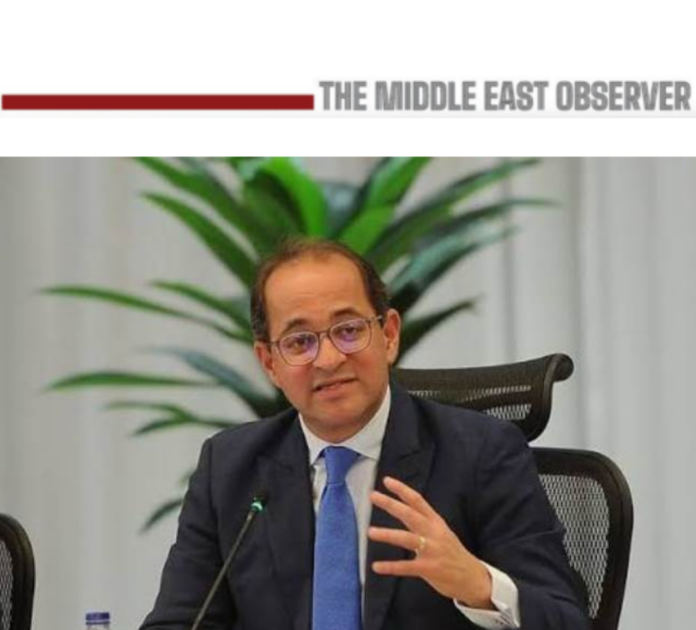
Egypt’s FY2026/27 state budget marks a significant stage in the country’s economic reform journey, combining ambitious fiscal targets with increased investment in public services and social protection while pursuing a gradual reduction in debt burdens.
Approved by parliament this week, the budget projects total expenditure of EGP5.178tn, up from EGP 4.574tn in FY 2025/26, while total financing requirements, including debt repayments and financial transactions, rise to EGP 8.176 tn.
The government’s fiscal framework is built around three key assumptions: an average exchange rate of EGP47 per US dollar, an average oil price of $75 per barrel, and the achievement of a 5% primary surplus. Together, these variables will determine whether Egypt can sustain fiscal consolidation while expanding support for households, strengthening public services and creating additional space for private-sector-led growth.
Investing in Public Services and Human Capital
A central feature of the new budget is the increase in allocations for healthcare, education, social protection, wages and productive investment, reflecting the government’s objective of supporting living standards while preserving fiscal discipline.
Healthcare remains one of the government’s priority sectors as Egypt continues expanding Universal Health Insurance coverage and upgrading medical infrastructure. Official budget data indicate that health-sector allocations are rising by approximately 25%, with spending increasing from around EGP246.2bn in FY 2025/26 to levels expected to exceed EGP300bn in FY 2026/27.
The additional funding will support hospital modernisation, treatment-at-state-expense programmes, pharmaceutical supplies, medical equipment procurement and healthcare workforce development. However, the gains must be assessed against Egypt’s annual urban inflation rate of 14.6% in May 2026, meaning that real spending increases will be more modest than headline figures suggest.
Education spending is also expected to rise by roughly 20%, from approximately EGP 315.1bn in FY 2025/26 to nearly EGP378bn in FY 2026/27. The increase will support school construction, teacher recruitment, digital learning initiatives, curriculum development and technical and vocational education programmes designed to align workforce skills more closely with labour-market requirements.
Support for lower-income households remains a key pillar of government policy. Allocations for subsidies, grants and social benefits rise to EGP 832.3bn, compared with approximately EGP742bn in FY 2025/26, representing an increase of more than EGP90bn. The funding covers food subsidies, electricity support, pension obligations and social programmes such as Takaful and Karama.
Public-sector compensation increases to EGP822.8bn from roughly EGP679bn, reflecting recently announced salary adjustments and efforts to support household purchasing power while maintaining the effectiveness of public services.
Meanwhile, public investment rises to EGP 553.7bn, compared with approximately EGP496bn in the current fiscal year. Funding will be directed towards transportation, utilities, energy infrastructure, industrial development and digital transformation projects, while continuing the government’s policy of prioritising investments with stronger economic returns and encouraging greater private-sector participation.
Debt Service Remains the Defining Constraint
Despite increased allocations for public services, debt service continues to absorb the largest share of public resources and remains the defining challenge facing fiscal policy.
Interest payments are projected to reach EGP2.419 tn, up from EGP2.298tn in FY 2025/26, while repayments of domestic and external debt rise to EGP2.808tn from EGP2.085 tn. Combined debt-service obligations therefore exceed EGP5.2tn, illustrating the scale of resources still required to service borrowing accumulated over previous years.
Nevertheless, policymakers point to an encouraging trend. Interest costs are increasing more slowly than overall expenditure, allowing their share of total spending to decline from around 50% to 46.7%. While still exceptionally high by international standards, the shift supports the government’s objective of gradually freeing resources for development priorities.
The Importance of the Record 5% Primary Surplus
At the centre of the fiscal strategy is the government’s target of achieving a primary surplus equivalent to 5% of GDP, compared with a 4% target in FY 2025/26 and an estimated 3.5% achieved in FY 2024/25.
A primary surplus measures revenues against expenditures before interest payments are taken into account and is widely regarded as one of the clearest indicators of fiscal discipline. For Egypt, the surplus is intended to generate sufficient fiscal savings to reduce debt levels without undermining spending on development priorities and social support.
The target is particularly notable when viewed internationally. Countries facing comparable debt and financing pressures—including Pakistan, Ghana and South Africa—are generally pursuing primary surpluses in the range of 1% to 2% of GDP. Egypt’s 5% objective therefore ranks among the most ambitious fiscal-consolidation programmes currently being pursued by a major emerging economy.
The IMF has endorsed sustained primary surpluses as a cornerstone of debt sustainability, while encouraging continued progress on tax reform, state-asset divestment and private-sector development. The World Bank has similarly highlighted improvements in Egypt’s fiscal performance and debt dynamics, while noting that debt-service costs continue to limit the resources available for development spending.
The government’s medium-term objective is to reduce public debt towards 78% of GDP by June 2027 while lowering external debt by $1bn-$2bn annually.
What Could Shape the Outcome
The success of the budget will depend largely on whether its underlying assumptions prove accurate.
A weaker exchange rate than the assumed EGP47 per dollar would increase the local-currency cost of servicing foreign debt and financing imported energy. Oil prices significantly above the budget assumption of $75 per barrel would place additional pressure on fuel subsidies, electricity costs and inflation. Likewise, slower-than-expected revenue growth could make it more difficult to achieve the targeted primary surplus.
Should such pressures emerge, policymakers retain several options, including accelerating state-asset sales, extending debt maturities, increasing reliance on concessional financing, strengthening tax-administration measures and slowing selected non-priority expenditure.
While such measures could help preserve fiscal stability, they may also delay the pace at which additional resources become available for development priorities.
From Stabilisation to Sustainable Growth
The FY2026/27 budget is ultimately a transition plan. It seeks to convert the gains achieved through economic stabilisation into a more sustainable model of growth while gradually reducing the burden of debt.
For the government, success will be measured by its ability to achieve the targeted 5% primary surplus, reduce debt towards 78% of GDP, lower external obligations, maintain exchange-rate stability and continue bringing inflation lower from its current 14.6% level.
For citizens, the benchmarks are more tangible: better healthcare and education services, stronger job creation, rising real incomes and a more manageable cost of living.
If the government’s core assumptions—an exchange rate close to EGP47 per dollar, oil prices around $75 per barrel and the delivery of a 5% primary surplus—are maintained, Egypt would be positioned to accelerate debt reduction, strengthen investor confidence and gradually redirect resources from debt service towards healthcare, education, infrastructure and productive investment.
If these assumptions are challenged by currency volatility, higher energy prices or weaker revenue performance, the reform process is likely to continue, but at a slower pace and with greater pressure on fiscal resources.
The coming fiscal year will therefore serve as an important test of whether fiscal consolidation can evolve into durable economic progress—one capable of strengthening public finances while delivering broader benefits across the economy. Success will ultimately be judged not only by budget balances and debt ratios, but by the extent to which greater fiscal stability translates into improved public services, stronger economic opportunity and a more resilient foundation for long-term growth.
Related news:
Fitch forecasts Egypt’s Economy Doubling in a Decade Despite Short-Term Pressures
Egypt’s Export Economy Flourishes: Petroleum, Apparel, and Food Products Lead the Charge
Read also:
Egypt, Morocco Drive Historic Arab-African World Cup Push
WE Expands Smart Infrastructure Push Through VIE Partnership