Cairo — Egypt has signed new agreements with Harbour Energy and Eni aimed at accelerating exploration activity, attracting fresh investment and boosting domestic natural gas production as Cairo seeks to strengthen energy security and reduce reliance on imported fuel.
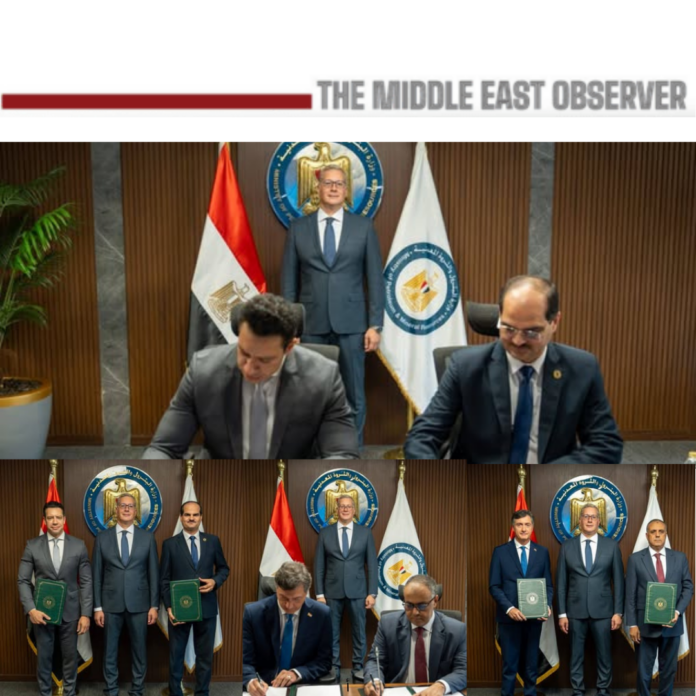
Petroleum and Mineral Resources Minister Karim Badawi witnessed the signing of a revised concession agreement with Harbour Energy covering the onshore Desouk area in the Nile Delta, alongside a memorandum of principles with Italy’s Eni relating to the offshore Port Fouad development area in the Mediterranean.
Under the Desouk agreement, Harbour Energy will add two new blocks to its concession area and commit to drilling two exploration wells and carrying out maintenance work on an existing producing well. Initial investments are estimated at $6 million, with total spending potentially rising to $18 million if commercial discoveries are made.
The expansion follows recent exploration success in the area, where the Azz-1 and Azz-2 wells, drilled during the 2025/26 fiscal year, added an estimated 35 billion cubic feet of gas reserves. Harbour Energy plans to drill three additional exploration wells during fiscal year 2026/27.
Separately, the memorandum signed with Eni aims to renew and enhance development activities in the offshore Port Fouad area, creating a framework to attract new investment, evaluate undeveloped discoveries and maximise the use of existing infrastructure. Eni remains one of Egypt’s most important energy partners and was responsible for the landmark discovery of the Zohr field, the largest gas discovery ever made in the Mediterranean, which transformed Egypt into a major regional gas producer.
The agreements come at a pivotal time for Egypt’s energy sector. Domestic gas output has faced pressure from natural declines in mature fields, while demand from power generation, industry, petrochemicals and fertiliser producers continues to grow. As a result, the government has intensified efforts to accelerate exploration, bring new discoveries online more quickly and secure additional investment from international operators.
Rather than relying solely on giant discoveries, Egypt is increasingly pursuing an infrastructure-led production strategy focused on near-field exploration, incremental reserve additions and the rapid development of smaller discoveries that can be tied into existing processing facilities and pipeline networks. The approach reduces development costs, shortens project timelines and enables faster production growth.
The latest agreements reflect this strategy, leveraging existing infrastructure in both the Nile Delta and Mediterranean while encouraging further exploration in proven hydrocarbon provinces. Officials believe the model can help sustain production levels, improve energy security and reinforce Egypt’s ambition to remain a leading natural gas hub in the Eastern Mediterranean.