
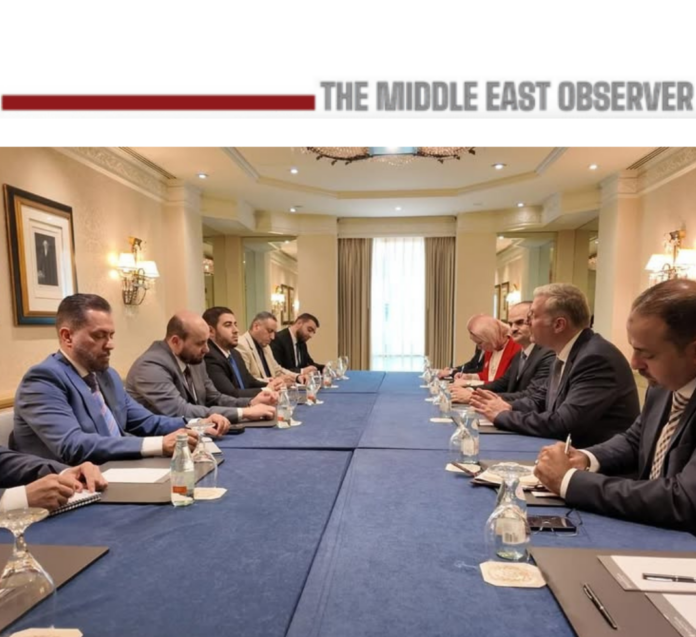
Egypt and Syria have moved to strengthen their energy partnership through discussions aimed at supporting Energy Recovery efforts in Syria, highlighting a broader push for regional cooperation in natural gas, infrastructure rehabilitation and technical expertise as Damascus seeks to rebuild a sector heavily impacted by years of conflict.
During a meeting held on the sidelines of Egyptian Petroleum Minister Karim Badawi’s visit to the United States, Badawi and Syrian Energy Minister Mohammad al-Bashir reviewed opportunities to expand bilateral cooperation in oil, natural gas and energy infrastructure. The talks also assessed progress on implementing a memorandum of understanding between the two countries covering natural gas cooperation and the potential resumption of gas supplies through the Arab Gas Pipeline.
The discussions come at a time when governments across the Middle East are increasingly viewing energy connectivity as a tool for economic recovery, regional integration and long-term stability. For Egypt, the talks reinforce its ambition to position itself as a regional energy hub and provider of technical expertise. For Syria, they represent another step toward restoring critical infrastructure and rebuilding energy capacity needed to support economic recovery.
Arab Gas Pipeline Returns to the Agenda
A central focus of the meeting was the Arab Gas Pipeline, one of the region’s most significant cross-border energy infrastructure projects.
The pipeline was originally designed to transport Egyptian natural gas through Jordan and Syria, with connections extending toward Lebanon. Although geopolitical tensions and years of conflict disrupted operations and limited utilization, the network remains one of the few existing energy corridors capable of supporting large-scale regional gas flows without requiring major new construction.
Officials from both countries reviewed procedures related to natural gas supply arrangements through the pipeline and explored mechanisms for advancing implementation of previously agreed cooperation frameworks.
The renewed attention to the project reflects a broader regional trend toward maximizing existing infrastructure assets amid rising energy demand and growing pressure to improve energy security.
For Syria, restored gas flows could help alleviate supply constraints affecting electricity generation and industrial activity. For Egypt, the initiative could further strengthen the strategic role of its natural gas production, transmission and processing infrastructure within the Eastern Mediterranean and wider Arab energy landscape.
Egyptian Expertise in Focus
Beyond gas supplies, the discussions highlighted opportunities for Egyptian companies to contribute to the rehabilitation and modernization of Syria’s energy infrastructure.
Officials specifically referenced the capabilities of Egyptian engineering and project-management firms, particularly Enppi and Petrojet, both of which have extensive experience delivering large-scale energy projects across the Middle East and Africa.
Over the past decades, Egyptian petroleum-sector companies have participated in the construction of pipelines, gas processing facilities, refineries, petrochemical complexes and offshore infrastructure across multiple markets. Their involvement in future Syrian projects could provide Damascus with access to established technical expertise while creating new business opportunities for Egyptian contractors.
The two sides also discussed technical training, capacity building and knowledge-transfer programmes designed to support the development of Syria’s energy workforce.
Such initiatives have become an increasingly important component of regional energy cooperation, particularly in countries seeking to rebuild institutional and operational capabilities following periods of economic disruption.
Economic and Strategic Implications
The meeting reflects a growing recognition that energy recovery and economic recovery are closely intertwined.
Syria’s energy sector has experienced a sharp contraction since the outbreak of conflict in 2011. Before the war, the country produced around 380,000 barrels of oil per day and generated sufficient electricity to support industrial activity and domestic demand. More than a decade later, oil and gas production remain well below pre-conflict levels, while damage to energy infrastructure and fuel shortages continue to constrain economic activity, manufacturing output and public services, according to international energy assessments.
Syria’s energy sector faces substantial challenges, including damaged infrastructure, reduced production capacity and significant investment requirements across oil, gas and electricity networks. Restoring these systems is widely viewed as a prerequisite for broader industrial recovery, improved public services and increased private-sector activity.
For Egypt, supporting energy projects in neighboring countries aligns with a broader strategy of expanding the international footprint of its petroleum sector while creating new opportunities for engineering, construction and technical services exports.
The country has spent years developing an extensive energy ecosystem that includes gas transportation networks, processing facilities, liquefied natural gas infrastructure and specialized engineering companies. Leveraging those capabilities beyond Egypt’s borders offers potential economic benefits while strengthening Cairo’s role in regional energy diplomacy.
The discussions also underscore the growing importance of infrastructure-led cooperation in the Arab world. Rather than focusing exclusively on commodity trade, governments are increasingly exploring partnerships that combine investment, technical expertise, capacity building and long-term operational support.
Opportunities and Challenges
The potential benefits of deeper Egyptian-Syrian cooperation are significant.
For Syria, access to Egyptian expertise could accelerate infrastructure rehabilitation efforts and help address critical energy shortages. Improved energy availability would support industrial production, commercial activity and broader reconstruction initiatives.
For Egypt, participation in future projects could create new revenue streams for engineering and energy-service companies while reinforcing the country’s position as a provider of regional energy solutions.
At the same time, challenges remain.
Rehabilitating aging and conflict-affected infrastructure will require substantial capital investment, careful project execution and long-term policy coordination. Financing mechanisms, operational requirements and technical assessments will all play important roles in determining the pace of implementation.
The future utilization of the Arab Gas Pipeline will likewise depend on commercial viability, infrastructure readiness and broader regional energy market dynamics.
Despite these challenges, the discussions indicate a shared willingness to pursue practical cooperation in areas where both countries see mutual economic and strategic benefits.
The Egyptian-Syrian discussions also fit within a wider regional trend toward greater energy connectivity. Over recent years, countries across the Middle East have advanced cross-border electricity interconnections, natural gas transportation projects and energy-trade initiatives aimed at improving supply security and reducing infrastructure costs. The revival of cooperation through the Arab Gas Pipeline would complement these efforts by leveraging existing regional infrastructure rather than relying solely on new capital-intensive projects.
A Regional Energy Integration Model
The meeting between the two ministers reflects a wider shift taking place across the Middle East as governments seek to strengthen regional connectivity through energy infrastructure.
In recent years, cross-border electricity links, gas pipelines and renewable-energy initiatives have increasingly been viewed not only as commercial projects but also as instruments of economic resilience and regional integration.
Egypt’s experience is particularly relevant. The country has invested heavily in developing natural gas infrastructure and positioning itself as a hub connecting production, transportation and export markets. Extending that expertise to regional partners offers an opportunity to generate economic returns while supporting broader development goals.
For Syria, energy-sector rehabilitation remains one of the most important foundations for future economic recovery. Reliable energy supplies are essential for industry, transportation, public services and investment attraction, making cooperation with experienced regional partners increasingly valuable.
Looking ahead, the success of the Egyptian-Syrian energy partnership will depend less on political declarations and more on the implementation of tangible projects. Whether through the Arab Gas Pipeline, infrastructure rehabilitation or technical cooperation programmes, the next phase will be measured by the ability of both countries to convert strategic intent into operational outcomes.
If successful, the initiative could serve as a model for how regional energy cooperation contributes not only to energy security but also to economic recovery, reconstruction and long-term integration across the Middle East.
Related news:
Shell Starts Drilling $180 Million Deepwater Gas Well in Egypt’s Mediterranean Waters
Gas Misr Revenues Surpass EGP 2 Billion as Q1 Profits Rise 11.6%
Read also:
Egypt, Sudanese Refugees and the Missing Contex
Cairo Pilot Cuts Fuel Use by 62% in Push for Digital Resource Management