
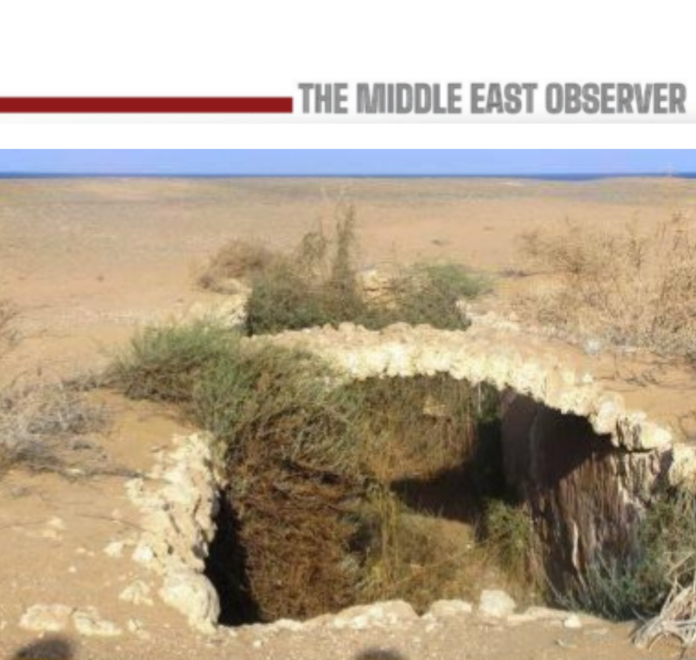
New discoveries at the ancient port of Aydhab in Halayeb are reopening a forgotten chapter of Egypt’s history, when a remote Red Sea settlement served as one of the Islamic world’s great crossroads. Perched on Egypt’s far southeastern coast where the Eastern Desert meets the Red Sea, Aydhab connected Cairo to Mecca, India, China and the Swahili Coast, enabling the movement of pilgrims, merchants, gold and luxury goods across vast maritime and desert trade networks. The latest archaeological finds are revealing how this seemingly isolated outpost became a critical link between Africa, Arabia and Asia, helping shape Egypt’s rise as a commercial and cultural power during the medieval era.
The newly discovered reservoirs at Aydhab, near modern Halayeb, are more than water installations. They are the surviving infrastructure of a vanished port that once served pilgrims on their way to Mecca, merchants sailing to India, gold traders from Nubia, sailors from Yemen, caravans from Cairo and vessels moving through the wider Indian Ocean economy.
An Egyptian archaeological mission from the Supreme Council of Antiquities has uncovered a large central reservoir measuring more than 15 metres in length, built from sandstone and coral stone and lined with lime plaster to prevent leakage. Several smaller reservoirs, residential structures, watchtowers and service buildings were also found.
The discoveries confirm that Aydhab was not a minor coastal settlement. It was a carefully organised maritime station, designed to sustain ships, caravans, pilgrims and merchants in one of the harshest environments along the Red Sea.
Minister of Tourism and Antiquities Sherif Fathy said the discovery reflects the advanced infrastructure that supported trade and pilgrimage, while reinforcing Egypt’s long-standing role as a bridge between Africa, Arabia and Asia.
But the real story of Aydhab is larger than archaeology. It is the story of how a remote desert port became one of the medieval world’s great crossroads.
Cairo’s Southern Door to the World
Aydhab mattered because Cairo needed it.
From the Fatimid period onward, Egypt’s capital was becoming one of the richest cities of the Islamic world. Its markets consumed spices, aromatics, textiles, gemstones, ivory, incense, porcelain and luxury goods arriving from the Indian Ocean. Its merchants financed caravans. Its rulers taxed trade. Its pilgrims needed a route to the Holy Cities.
Aydhab helped make that possible.
Goods arriving from Yemen, India and East Africa were unloaded on the Red Sea coast, carried by camel caravans across the Eastern Desert, and then moved into the Nile Valley through routes leading toward Aswan, Qus and Cairo. From there, commodities could continue north to Alexandria and the Mediterranean.
In this sense, Aydhab was one of medieval Cairo’s external lungs. It allowed the capital to breathe into the Indian Ocean.
A spice merchant in Cairo’s markets, a Fatimid tax official, a Mamluk financier, a pilgrim from Morocco and a sailor from Aden were all connected through this remote coastal city. Aydhab transformed Cairo from a Nile capital into a Red Sea and Indian Ocean power.
Long before the Suez Canal made Egypt indispensable to modern shipping, Aydhab helped make Egypt indispensable to medieval trade.
The Pilgrims’ City
Every year, pilgrims from Egypt and North Africa moved toward Aydhab on their way to Mecca.
They came from Cairo, Fustat, Alexandria, Tripoli, Tunis, Tlemcen and Fez. Some had crossed deserts and mountains for months before reaching Egypt. Others joined organised caravans from the Nile Valley. At Aydhab, they waited for ships to carry them across the Red Sea to Jeddah and onward to the Holy Cities.
The Andalusian traveller Ibn Jubayr, who journeyed through the region in the 12th century, described the hardships of Red Sea pilgrimage travel. His account captures a world of overcrowded ships, anxious travellers, difficult crossings and powerful local intermediaries who controlled access to vessels and supplies.
Later, Ibn Battuta, the great Moroccan traveller of the 14th century, also passed through the wider Red Sea pilgrimage world. His journeys remind us that these routes were not simply religious corridors. They were channels of knowledge, language, commerce and culture.
At the pilgrimage season, Aydhab must have been transformed.
Camels would have gathered near the harbour. Water sellers, grain merchants, ship captains, guides and money changers would have served the crowds. Pilgrims waited for winds, sailors inspected vessels, and officials monitored movement across the sea.
The newly uncovered reservoirs make this world visible. In a region where water meant survival, these installations were the hidden machinery of pilgrimage. Without them, faith could not move at scale.
Gold from the Desert
Aydhab’s prosperity was also built on gold.
The port stood near trade routes connected to Wadi Allaqi and the mineral-rich regions of Egypt’s Eastern Desert and Nubia. From these landscapes came gold that entered the monetary and commercial systems of the Islamic world.
For Cairo, this mattered deeply.
Gold supported coinage, taxation, military spending and long-distance trade. It helped finance dynasties and sustain the purchasing power of Egypt’s ruling elites. Aydhab therefore functioned not only as a port but as an outlet for wealth drawn from Africa’s interior.
This made the city strategically sensitive.
Whoever influenced Aydhab could influence the flow of pilgrims, bullion and Indian Ocean goods into Egypt. That explains why the port attracted the attention of rulers, merchants, tribal groups and military powers across several centuries.
The Beja: Guardians of the Desert Road
One of Aydhab’s least told stories is that of the Beja peoples of the Eastern Desert.
They were not marginal figures in the history of the port. They were central to it.
The Beja knew the desert routes, wells, mountain passages and seasonal movements that made travel between the Nile and the Red Sea possible. Merchants and pilgrims depended on their knowledge. Caravans needed their cooperation. Rulers in Cairo could not simply command the desert from afar.
At times, the relationship between Egyptian authorities and Beja groups involved alliance, taxation and mutual benefit. At other times, it produced tension and conflict.
This is one of the most intriguing dimensions of Aydhab’s history: the city was not merely an Egyptian port facing the sea. It was also an African frontier city shaped by desert societies whose power came from mobility, geography and local knowledge.
In the official histories of great capitals, such communities are often pushed to the margins. Yet without them, the caravans linking Cairo to Aydhab could not have functioned.
The reservoirs now uncovered at the site therefore tell a double story. They speak of state-backed infrastructure, but also of a world in which local desert peoples, merchants and travellers negotiated the terms of movement across land and sea.
The Swahili Connection
Aydhab was also part of the western Indian Ocean world.
Through the Red Sea, Egypt was connected to East African ports such as Mogadishu, Mombasa, Kilwa and Zanzibar. These Swahili Coast cities were among the most dynamic commercial centres of the medieval period, linking Africa’s interior to Arabia, Persia, India and beyond.
From East Africa came ivory, gold, hides, aromatics and other commodities. From across the ocean came textiles, beads, ceramics and metal goods. Arab, Persian, Indian and African merchants moved through a maritime system shaped by monsoon winds and seasonal navigation.
Aydhab formed the northern gateway of this wider network.
Its merchants did not live in isolation from the African coast. They were part of a commercial world in which a ship might sail from East Africa to Aden, from Aden to the Red Sea, and from the Red Sea to Egypt’s desert ports. Goods could then cross into the Nile Valley and reach Cairo’s markets.
This connection gives the Halayeb discovery special importance today.
Modern debates often describe Egypt’s African, Arab and Mediterranean identities as separate spheres. Aydhab shows that, historically, they were deeply intertwined. Medieval Egypt was not only a Nile civilisation or a Mediterranean power. It was also a Red Sea and African trading state.
The Chinese Bowl That Crossed the World
Among the most evocative discoveries at Aydhab are fragments of imported Chinese ceramics.
Their presence on Egypt’s Red Sea coast is a quiet but powerful sign of early globalisation.
Imagine a porcelain bowl fired in a kiln in China. It may have travelled by river and sea to a southern Chinese port, passed into the hands of maritime traders, crossed the South China Sea, moved through the Indian Ocean, changed ownership in an Indian or Arabian harbour, and finally reached the Red Sea.
By the time it arrived at Aydhab, it had crossed languages, religions, currencies and empires.
Such ceramics were not ordinary objects. They were signs of taste, status and distance. To possess Chinese porcelain in medieval Egypt was to hold an object that carried the prestige of a faraway world.
The fragments found at Aydhab therefore speak with unusual force. They show that this remote port was not peripheral. It was plugged into a commercial network stretching from China to Cairo.
A broken shard in Halayeb becomes evidence of a journey spanning thousands of kilometres.
Saladin, Raynald and the Red Sea Shock
One of the most dramatic episodes in Aydhab’s wider world came during the Crusades.
In 1182, Raynald of Châtillon, lord of Transjordan and one of Saladin’s most provocative enemies, launched an extraordinary raid into the Red Sea. His forces transported vessels overland toward the Gulf of Aqaba and attacked Muslim shipping.
The raid shocked the Islamic world.
For centuries, the Red Sea had been viewed as a secure Muslim maritime corridor linking Egypt, Arabia, Yemen and the pilgrimage routes. Raynald’s campaign threatened not only trade but also the Hajj.
For Saladin, this was more than a military nuisance. It was a direct challenge to his legitimacy as defender of the Holy Cities and protector of Muslim pilgrims.
The Ayyubid response was decisive. Saladin’s forces, including commanders operating under his brother Al-Adil, moved to eliminate the threat. The raid was eventually crushed, but its impact was profound. It revealed that control of the Red Sea was inseparable from political authority, religious legitimacy and economic security.
Aydhab’s importance must be understood against this background. Ports along the Red Sea were not passive trading stations. They were strategic assets in a world where commerce, faith and war met on the same waters.
A City That Disappeared
Despite its wealth and importance, Aydhab eventually declined.
Trade routes shifted. Political rivalries intensified. Other ports gained influence. The Mamluk period brought new patterns of control over Red Sea commerce, and the city’s strategic position became increasingly difficult to sustain.
By the 15th century, Aydhab had faded from the commercial map.
A city that had once welcomed pilgrims from North Africa, merchants from India, sailors from Yemen and goods from China was gradually abandoned. Sand, wind and silence replaced the noise of caravans and harbour markets.
Its disappearance is part of the tragedy and fascination of Red Sea history.
Great ports can vanish when routes change. Commercial capitals can become ruins. Infrastructure that once sustained empires can disappear beneath desert soil.
The Tale Beneath the Reservoirs
The most intriguing story at Aydhab may not belong to a ruler or a famous traveller, but to the unknown people who waited there.
A pilgrim from Fez who had sold part of his property to afford the journey.
A Beja guide leading a caravan through the desert.
A merchant from Aden guarding a cargo of spices.
A sailor watching the winds before crossing to Jeddah.
A Cairene trader waiting for porcelain and pepper.
A local worker repairing the lime plaster of a reservoir before the next pilgrimage season.
These lives rarely appear in royal chronicles. Yet they are the people who made Aydhab work.
The newly discovered reservoirs bring them closer. They remind us that history is not only written in palaces and battlefields. It is also preserved in water systems, storage rooms, harbour walls and broken pottery.
Aydhab’s reservoirs were not monuments of grandeur. They were monuments of necessity.
They kept people alive.
Rediscovering Egypt’s Red Sea Memory
The excavation forms part of broader efforts by Egypt’s Ministry of Tourism and Antiquities to study remote and border sites that have long remained overshadowed by the country’s Pharaonic landmarks.
That makes Aydhab especially important.
It tells a different Egyptian story: not of pyramids and temples, but of ports, pilgrims, merchants, caravans and global exchange.
It reveals an Egypt that looked simultaneously toward Cairo, Mecca, Nubia, Yemen, India, East Africa and China. It shows that Egypt’s role as a bridge between continents did not begin with modern shipping lanes. It was built over centuries through desert roads, Red Sea crossings and maritime trade.
Today, as the Red Sea again stands at the centre of global commerce and geopolitical tension, Aydhab offers a deep historical echo.
Long before container ships crossed the Suez Canal, the foundations of Egypt’s role as a connector of worlds were already being laid at ports such as Aydhab.
The reservoirs uncovered in Halayeb are therefore not merely remnants of a forgotten town. They are traces of the commercial, religious and cultural networks that helped shape the medieval world — and of Egypt’s enduring place at the meeting point of Africa, Arabia, Asia and the Mediterranean.