
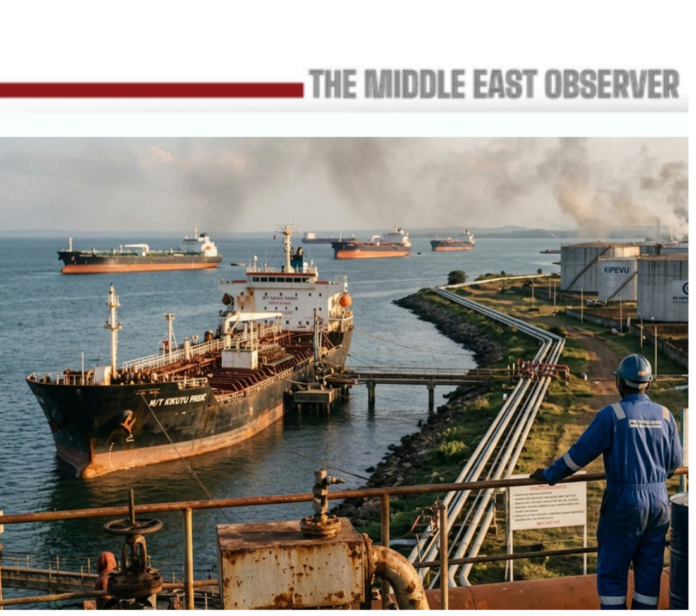
For much of the conflict between Iran, the United States and Israel, global markets have focused on oil. Every military escalation has triggered speculation about energy supplies, while every ceasefire report has pushed crude prices lower. Yet a quieter market may be delivering a more important signal about the war’s economic consequences.
Insurance.
Over the past three months, war-risk premiums for ships operating in and around the Gulf have surged by as much as 1,000%, transforming insurance from a routine operating expense into one of the most significant costs facing global trade. While oil prices have fluctuated with headlines, insurers have continued to price for the physical risks of moving vessels, cargo and aircraft through one of the world’s most strategically important transport corridors.
From 0.25% to 3%: The Repricing of Risk
Before the conflict erupted in late February, war-risk insurance for vessels transiting the Strait of Hormuz typically cost around 0.25% of a vessel’s value. As attacks spread and insurers reassessed exposure, premiums rapidly climbed.
By early March, maritime brokers were reporting war-risk rates of around 3% of vessel value, representing a more than tenfold increase in insurance costs. For a tanker valued between $200 million and $300 million, that translated into a war-risk premium of approximately $7.5 million per voyage, compared with roughly $625,000 before the conflict.
As tensions intensified, insurers widened designated high-risk zones across Gulf waters, cancelled some existing war-risk policies and increasingly shifted to voyage-by-voyage coverage. The result was a dramatic repricing of maritime trade through the region.
By April, war-risk premiums had increased by as much as 1,000% in some cases, prompting governments to intervene. India announced plans for a $1.5 billion sovereign guarantee programme alongside a $300 million industry-backed claims fund to support insurers and maintain shipping flows.
Even after ceasefire discussions emerged, insurers remained cautious. Market participants report that war-risk rates continue to range between 3% and 8% of vessel value on certain Gulf routes, compared with approximately 0.25% before the conflict.
Why Insurers Are More Concerned Than Investors
One of the most striking features of the conflict has been the divergence between financial markets and insurance markets.
Oil markets have repeatedly rallied on ceasefire hopes and diplomatic progress. Insurers, by contrast, continue to price elevated risk.
The difference reflects the nature of their business. Investors price expectations. Insurers price physical exposure.
Even as negotiations continue, insurers remain focused on the possibility of missile strikes, drone attacks, vessel damage, port disruptions and renewed threats to shipping routes. Fitch Ratings noted that maritime war-risk premiums have at times risen to as much as twenty times normal levels, highlighting the sector’s assessment that underlying risks remain materially higher than before the conflict.
The persistence of elevated premiums suggests insurers remain unconvinced that diplomatic progress has materially reduced underlying risks. While financial markets often react to the latest ceasefire headline, insurers continue to assess the probability of physical disruption to trade, transport and energy infrastructure.
The Cost Is Spreading Through Global Trade
The impact extends well beyond the insurance industry.
As insurance premiums rose, freight rates surged. Tanker earnings on some Gulf routes climbed above $500,000 per day during the most severe disruptions, while energy shipments through the Strait of Hormuz fell sharply from pre-war levels.
The aviation sector has experienced similar pressures. The disruption of traditional fuel supply routes forced jet-fuel cargoes onto longer and more expensive routes spanning thousands of additional miles. Industry estimates suggest that rising fuel and logistics costs have added billions of dollars to airline operating expenses this year.
The consequences are increasingly visible across supply chains. Manufacturers have reported higher input costs, transport expenses have risen, and humanitarian organisations have warned that increased insurance premiums and logistics costs are delaying the delivery of essential supplies.
In effect, what begins as an insurance surcharge on a tanker crossing the Gulf eventually reappears as higher freight rates, more expensive fuel, increased airline costs and ultimately higher prices throughout the global economy.
The Immediate Beneficiaries
The immediate beneficiaries are specialty insurers and selected Lloyd’s market underwriters capable of maintaining exposure while charging significantly higher premiums.
Marine war-risk cover, political violence insurance, aviation war-risk policies and trade-credit insurance have all undergone substantial repricing since the conflict began. For insurers able to manage risk effectively, the increase in premium income may support underwriting profitability despite heightened exposure.
However, the industry’s gains remain conditional. Higher premiums are boosting revenues for specialty insurers, but their willingness to maintain coverage reflects a belief that losses will remain manageable. A wider conflict involving major energy infrastructure, ports or export terminals could quickly reverse those gains and generate claims that outweigh additional premium income.
Some governments have also benefited indirectly. The disruption of Gulf energy flows has helped drive higher demand for alternative suppliers, contributing to stronger export opportunities for energy producers outside the region.
The Losers
Shipping companies, cargo owners and logistics operators have borne the greatest costs.
Beyond insurance, many operators have faced rerouting expenses, longer transit times and operational delays. In some cases, the issue has not been the cost of insurance but its availability. As several insurers withdrew or restricted coverage, some shipowners chose to keep vessels at anchor rather than risk Gulf transit despite elevated freight rates.
Manufacturers dependent on global supply chains have also felt the effects. Rising transport and insurance costs have contributed to renewed inflationary pressures, particularly in economies heavily dependent on imported energy and internationally sourced industrial inputs.
Airlines, freight forwarders, commodity traders and ultimately consumers have all become indirect participants in a conflict occurring thousands of kilometres from many of the markets now absorbing its costs.
The Reinsurers Behind the Risk
Beyond frontline insurers, the conflict is increasingly drawing attention from the global reinsurance industry, which ultimately absorbs many of the largest losses generated by geopolitical events.
London remains the world’s leading marine insurance hub and one of the principal centres for global war-risk underwriting. While London-market insurers and Lloyd’s syndicates write much of the coverage, a significant portion of the risk is distributed through international reinsurers operating across Europe, Bermuda and other specialty insurance markets.
Marine, aviation war-risk, political violence, trade-credit and energy insurance have emerged as the most exposed segments should the conflict become prolonged or expand further. So far, reinsurers appear willing to provide capacity, reflecting a belief that the conflict remains within a scenario of elevated but manageable losses. However, a significant attack on major Gulf energy infrastructure, ports or export terminals could rapidly alter that assessment and trigger a broader reassessment of regional exposure.
For now, the continued availability of reinsurance capacity may be as important as the premiums themselves. It is one of the clearest indications that the market is pricing persistent instability rather than systemic collapse.
The New Trade Surcharge
Historically, tariffs were among the most important costs affecting international trade. Today, geopolitical risk is emerging as a new form of trade surcharge, with insurance increasingly acting as the mechanism through which those costs are transmitted.
Unlike tariffs, which are imposed by governments, war-risk premiums are imposed by markets. Every additional insurance charge attached to a tanker, cargo vessel or aircraft ultimately becomes part of the cost of moving goods around the world. Importers pay more for freight, manufacturers pay more for inputs, airlines pay more for fuel logistics and consumers ultimately absorb part of the increase through higher prices.
In that sense, insurance is becoming an increasingly important channel through which geopolitical tensions influence the real economy. The Iran conflict has demonstrated that even when oil continues to flow and trade routes remain open, the cost of using those routes can rise sharply.
The Next Phase
The insurance industry’s greatest concern is no longer the loss of an individual vessel. It is the possibility of simultaneous losses across shipping, aviation, energy infrastructure and trade-credit markets.
That scenario remains outside current market expectations. The continued availability of coverage—even at dramatically higher prices—suggests insurers still view the conflict as one of persistent instability rather than systemic collapse. Yet the industry’s message is becoming increasingly clear. While investors continue to focus on oil prices and ceasefire negotiations, insurers are pricing a different reality: a world in which geopolitical risk becomes a permanent cost of global commerce.
If that assessment proves correct, the most enduring economic legacy of the Iran war may not be found in energy markets at all. It may be found in the insurance bill attached to every ship, aircraft and cargo moving through the world’s most strategically important trade routes.
Oil markets are ultimately pricing the probability of peace. Insurance markets are pricing the cost of uncertainty. So far, it is insurers—not traders—who appear to be signalling that geopolitical risk is becoming a lasting feature of global trade rather than a temporary disruption. That distinction may prove to be one of the most important economic lessons of the conflict.
