For much of the past two decades, Europe’s influence in the global technology industry has stemmed less from the companies it produced than from the rules it imposed. While Silicon Valley created the world’s dominant digital platforms and China built a state-backed technology ecosystem of its own, Brussels became known primarily as the global regulator of privacy, competition and digital markets.
That balance is now beginning to change.
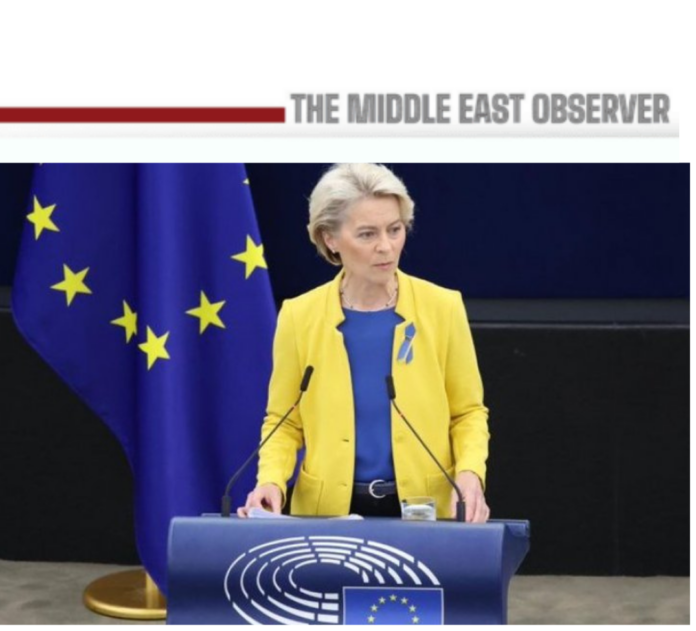
The European Commission’s newly unveiled Tech Sovereignty Package marks the clearest indication yet that Europe is attempting to move beyond regulation and towards technological self-reliance. The initiative combines a new Cloud and AI Development Act, a revised Chips Act, support for open-source technologies and measures designed to strengthen European digital infrastructure. Taken together, the proposals represent more than a collection of technology policies. They amount to an industrial strategy aimed at reducing Europe’s dependence on foreign technology providers and strengthening its ability to compete in the industries that will shape future economic growth.
The shift mirrors a broader transformation taking place across Europe. Just as Russia’s invasion of Ukraine prompted European governments to rethink long-held assumptions about defence and security, the rise of artificial intelligence, growing US-China technological competition and increasing concerns over digital dependence are forcing policymakers to reassess the foundations of economic sovereignty. The same logic driving higher defence spending, joint procurement initiatives and efforts to strengthen Europe’s strategic autonomy is increasingly being applied to technology.
At the heart of the debate lies a simple question: can Europe remain economically sovereign while relying on foreign companies for much of its digital infrastructure?
Today, the continent remains heavily dependent on American technology giants for cloud computing, artificial intelligence platforms, enterprise software and digital services. Amazon Web Services, Microsoft Azure and Google Cloud collectively dominate much of the infrastructure on which European governments, corporations and public institutions increasingly rely. At the same time, China continues to expand its technological capabilities across semiconductors, telecommunications equipment, electric vehicles and advanced manufacturing.
For European policymakers, technological dependence has evolved from an economic concern into a strategic one. The issue is no longer simply who builds the most successful technology companies. It is increasingly about who controls the infrastructure, data, computing power and intellectual property that underpin modern economies.
This concern helps explain why open-source technology has emerged as one of the most significant elements of Europe’s new strategy. Unlike proprietary platforms dominated by a small number of global technology companies, open-source ecosystems allow multiple organisations to collaborate, innovate and compete on shared foundations. Brussels increasingly views open source not merely as a software-development model but as a mechanism for reducing dependency on external providers and enabling European firms to compete collectively in areas where scale has traditionally favoured American and Chinese rivals.
In many respects, open source represents Europe’s alternative to the Silicon Valley model. Unlike the United States, Europe lacks a comparable concentration of venture capital, hyperscale cloud providers and trillion-dollar technology firms. Rather than attempting to replicate the structure of the American technology sector, policymakers are increasingly betting that universities, research institutions, start-ups, public agencies and established companies can collectively build competitive ecosystems around shared technological foundations. If Silicon Valley’s strength emerged from the concentration of capital and corporate scale, Europe’s strategy increasingly relies on collaboration, interoperability and distributed innovation.
The Commission’s semiconductor strategy reflects similar thinking. While the original European Chips Act focused heavily on manufacturing capacity, the revised approach seeks to create a complete ecosystem by stimulating demand for European-designed chips, particularly in artificial intelligence applications. Policymakers increasingly recognise that factories alone will not create a competitive technology sector unless they are supported by research institutions, software developers, data-centre operators and end users capable of sustaining long-term demand.
Importantly, Europe’s ambitions are no longer confined to public policy.
Private capital is beginning to move in the same direction.
The clearest recent example is SoftBank’s commitment to invest up to €75 billion in artificial-intelligence infrastructure in France, including the development of 5 gigawatts of data-centre capacity. Announced under President Emmanuel Macron’s “Choose France” initiative, the project ranks among the largest AI infrastructure investments ever proposed in Europe and signals growing international confidence in the continent’s digital ambitions.
The investment is part of a broader trend. Across Europe, governments are competing to attract data centres, semiconductor facilities, AI laboratories and advanced manufacturing projects. France has positioned itself as a leading destination for AI investment. Germany continues to expand support for semiconductor production and industrial digitisation. The Netherlands remains central to the global semiconductor supply chain through ASML, whose lithography systems have become indispensable to advanced chip manufacturing worldwide. Meanwhile, cloud providers such as OVHcloud are seeking to establish European alternatives in a market long dominated by American hyperscalers.
The emergence of companies such as Mistral AI in France and Aleph Alpha in Germany further illustrates Europe’s determination to develop indigenous artificial-intelligence capabilities. While neither company currently rivals the scale of OpenAI, Google or Anthropic, both represent a broader effort to ensure that Europe participates in the development of frontier AI technologies rather than merely consuming them.
Even symbolic decisions increasingly reflect this shift. The European Parliament’s decision to adopt the French search engine Qwant as its default search platform may have limited commercial impact on its own. Yet it illustrates a growing willingness among European institutions to support domestic digital alternatives in areas traditionally dominated by foreign providers.
Nevertheless, Europe’s technology strategy faces formidable challenges.
American technology companies continue to dominate cloud computing, AI models, venture-capital funding and software platforms. The United States retains deeper capital markets, greater concentrations of technology talent and a more integrated domestic market. Europe, by contrast, remains fragmented across languages, regulatory environments and financial systems. Many of its most successful entrepreneurs continue to seek funding, partnerships and expansion opportunities abroad.
This raises a critical question. Can Europe build a globally competitive technology ecosystem while simultaneously pursuing sovereignty objectives?
The answer remains uncertain. Technology ecosystems thrive on openness, scale and global integration, while sovereignty strategies often prioritise resilience, control and domestic capabilities. Balancing those objectives will require Europe to avoid replacing one form of dependency with another form of protectionism.
Yet dismissing Europe’s ambitions would be increasingly difficult.
The combination of sovereign cloud initiatives, semiconductor investments, open-source ecosystems, AI infrastructure projects and rising private-sector investment suggests that Europe is pursuing something far more ambitious than another round of digital regulation. What is emerging is a long-term effort to create the technological foundations of strategic autonomy, much as Europe is attempting to rebuild its defence-industrial base after decades of dependence on external security guarantees.
The significance of that effort extends well beyond Europe itself. For much of the digital age, the global technology industry has been shaped primarily by competition between American and increasingly Chinese firms. A successful European technology ecosystem would introduce a powerful third pole into that equation, reshaping investment flows, AI development, semiconductor supply chains, cloud computing and digital infrastructure markets worldwide. The result would not simply be greater European autonomy, but a more multipolar global technology landscape.
For years, Europe has demonstrated that it can regulate technology. The coming decade will determine whether it can build globally competitive technology companies and ecosystems with the same effectiveness. If it succeeds, the global technology industry may no longer be defined by a US-China duopoly. It may instead be shaped by three competing centres of innovation, each reflecting a different vision of how technology should be developed, governed and deployed in the twenty-first century.