
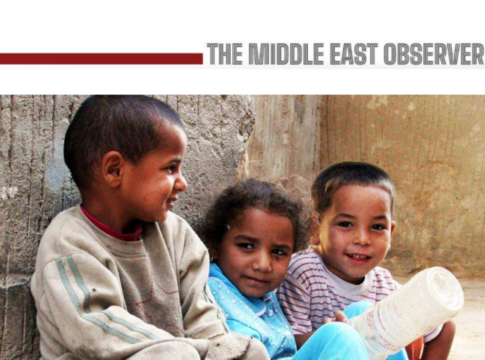
How many of us have felt a lump in our throats while watching vulnerable children, robbed of their childhood by hunger and poverty, searching through garbage bins for a piece of bread to survive, while society turns a blind eye and leaves them to an uncertain fate on the streets?
Street children are minors under the age of eighteen who have been deprived of the basic rights to safe shelter, family care, education, and protection. The phenomenon represents a serious strain on the social fabric of society, exposing children to severe health, psychological, and social dangers that require urgent and coordinated intervention.
Childhood is the most precious stage of life and the one most deserving of care, affection, and security. Yet harsh economic and social realities continue to force millions of children in Egypt and around the world to abandon their childhood and confront the streets alone. Street children are not criminals by nature; rather, they are victims of circumstances that have denied them their most fundamental rights to education, healthcare, and safety.
The causes behind this phenomenon are numerous and interconnected. Family disintegration — including divorce, domestic violence, the death of a breadwinner, or the absence of parental supervision — remains one of the primary drivers. Extreme poverty also forces many children into labour, begging, or life on the streets as families struggle to meet basic needs. According to UNICEF Egypt, millions of Egyptian children continue to face multidimensional poverty conditions affecting education, nutrition, healthcare, housing, and social protection.
Weak educational environments and rising school dropout rates further increase vulnerability. Children disconnected from formal education often become more exposed to exploitation, violence, or homelessness. According to UNICEF and Egypt’s Central Agency for Public Mobilization and Statistics (CAPMAS), school dropout and educational inequality remain closely linked to poverty and social exclusion in vulnerable communities. Some children also flee psychological pressure and abuse in search of escape from unstable home environments.
Street children face extremely dangerous living conditions that lack even the minimum standards of protection. Many suffer from malnutrition, lack of healthcare, exposure to infectious diseases, and psychological disorders including anxiety and depression. Others become victims of physical, sexual, or economic exploitation, while some are pushed toward illegal labour, drug abuse, or criminal activity as a means of survival or escape from reality. UNICEF-linked studies and humanitarian organisations have repeatedly warned that violence, abuse, and exploitation remain widespread among children living in street environments.
Addressing the phenomenon requires comprehensive efforts on multiple fronts. Psychological and social rehabilitation programmes are essential to reintegrate affected children into society. Expanding targeted social protection and cash-support programmes for vulnerable families could help reduce school dropout rates and prevent children from turning to the streets. Greater coordination between government institutions, NGOs, schools, and child-protection bodies is also needed to identify at-risk children before they become disconnected from society. At the same time, shelters and care institutions must provide safe accommodation, education, vocational training, healthcare, and rehabilitation services capable of rebuilding lives and restoring dignity.
The issue is also closely linked to broader economic pressures facing vulnerable communities. Rising living costs, inflation, unemployment, informal housing conditions, overcrowded urban areas, and unequal access to quality education continue to increase social pressures on low-income families, particularly in densely populated urban districts. According to CAPMAS data and development studies, children living in informal settlements remain among the groups most exposed to educational disruption, child labour, and social marginalisation.
In Egypt, estimates surrounding the number of street children have varied significantly for years due to differing methodologies and definitions. Government surveys conducted in previous years suggested figures in the tens of thousands, while UNICEF and several researchers have argued that the real numbers are substantially higher and difficult to measure accurately because many children remain outside official registration systems.
UNICEF studies on multidimensional child poverty and vulnerable children in informal settlements have linked school dropout, unstable family conditions, overcrowded housing, and economic hardship to increased child vulnerability and social exclusion.
More recent estimates from researchers and humanitarian organisations suggest that the number of homeless or street-connected children in Egypt could range between hundreds of thousands and several million when including children living in highly vulnerable informal settlements. The variation reflects the absence of a universally agreed definition distinguishing children permanently living on the streets from those partially connected to street life.
Ultimately, the issue of street children is a shared national responsibility. No society can achieve sustainable development while part of its younger generation remains neglected and abandoned. Saving one child from the streets means protecting an entire generation from marginalisation, violence, addiction, and crime. This responsibility requires cooperation between government institutions, civil society organisations, and individuals alike to restore hope, dignity, and a future to children whose childhood has been stolen too soon.
