Egypt has signed a new upstream oil and gas agreement worth a minimum of $208 million for the integrated Badr El Din concession in the Western Desert, as Cairo seeks to accelerate exploration activity, raise domestic production and attract further foreign investment into one of the country’s most important producing regions.
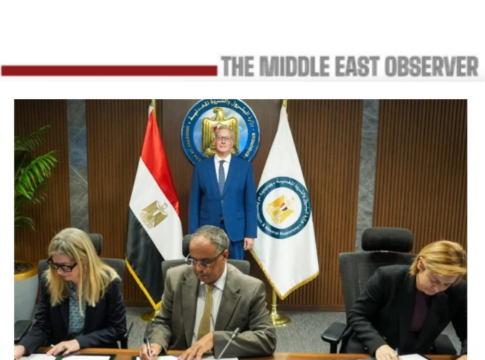
Minister of Petroleum and Mineral Resources Karim Badawi witnessed the signing of the agreement between the Egyptian General Petroleum Corporation, Cheiron Petroleum Corporation and Capricorn Energy, according to a statement reported by Egypt Oil & Gas and Amwal Al Ghad. The deal covers expanded exploration, development and production activities across the consolidated Badr El Din area.
The agreement includes a five-year work programme centred on drilling 44 exploration and production wells, with the objective of adding new reserves and supporting higher oil and gas output. It follows earlier Cabinet approval of the integrated Badr El Din concession agreement, which targeted monthly production of around 105,000 barrels of oil and 1.2 billion cubic feet of natural gas, according to Cabinet-linked reporting by Egypt Oil & Gas.
Under the new structure, eight Western Desert concession areas operated by Badr El Din Petroleum Company will be merged, alongside the addition of new exploration blocks. The combined exploration, development and production area will reach around 6,181 square kilometres, giving the partners a larger and more integrated platform for drilling, field development and infrastructure optimisation.
Capricorn Energy said on its official Egypt operations page that the consolidated concession model was designed to provide a catalyst for increased and sustained development activity, noting that its Egyptian assets are held jointly with Cheiron and that the joint venture has been active with multiple drilling rigs since the operational start of the integrated concession.
The work programme also includes upgrading production infrastructure, particularly the Badr-3 processing station, reprocessing seismic data and carrying out a 500-square-kilometre 3D seismic survey. These measures are intended to improve geological understanding, identify new drilling targets and maximise recovery from existing fields.
The Western Desert remains Egypt’s leading crude oil-producing region and one of the country’s most active areas for upstream investment. The agreement therefore comes at a critical moment for the petroleum sector, as Egypt works to offset natural field declines, narrow the gap between domestic energy demand and local production, and reduce pressure from fuel and LNG import costs.
The deal also fits within the ministry’s broader strategy to create a more attractive climate for foreign partners by offering integrated concession models, improving investment terms and encouraging companies to commit fresh capital to mature but still productive basins.
For Egypt, the Badr El Din agreement is more than a field-development deal. It represents a practical test of the country’s ability to revive upstream momentum through concession consolidation, targeted drilling, seismic re-evaluation and infrastructure upgrades — all essential steps for strengthening energy security and supporting domestic oil and gas production over the coming years.