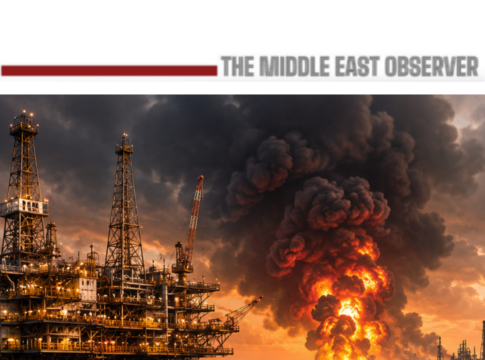
The ongoing conflict involving Iran has already imposed more than $25 billion in costs on global companies, according to a Reuters analysis, as soaring energy prices, disrupted shipping routes, and fractured supply chains continue pressuring industries across Europe, Asia, and North America.
Reuters reported that at least 279 companies have cited the conflict as a direct trigger for defensive financial measures, including production cuts, fuel surcharges, price increases, suspended dividends, reduced earnings guidance, and emergency cost-control programs.
The airline industry has absorbed the largest share of the financial hit, with estimated losses approaching $15 billion as carriers struggle with surging jet-fuel costs, rerouted flights, and operational disruptions tied to instability around the Strait of Hormuz — one of the world’s most strategically important maritime energy corridors.
Major multinational firms including Toyota Motor Corporation, Procter & Gamble, Whirlpool Corporation, and Continental AG have warned investors about mounting raw-material, transportation, and energy costs, with several companies revising profit expectations downward amid concerns over weakening consumer demand and inflationary pressures.
The Strait of Hormuz remains central to the disruption. Roughly one-fifth of global oil and liquefied natural gas flows normally transit through the waterway, making shipping disruptions there particularly sensitive for global energy markets, manufacturing costs, and international trade flows.
Reuters reported that oil prices have risen more than 50% from pre-war levels, with Brent crude trading above $100 per barrel during parts of the conflict. Rising freight insurance premiums, shipping delays, and energy-market volatility have further intensified pressure on industrial supply chains worldwide.
Economists warn that the conflict’s economic impact is increasingly extending beyond energy markets into broader inflation dynamics. Higher transportation and production costs are feeding into consumer prices globally, complicating expectations for interest-rate easing in major economies already struggling with fragile growth conditions.
Analysts also note that Europe and Asia remain among the regions most exposed to the fallout because of their dependence on imported energy and trade routes linked to the Gulf region. Manufacturing sectors reliant on petrochemicals, plastics, chemicals, fertilizers, and heavy logistics operations are considered particularly vulnerable if shipping disruptions persist.
While many companies remained profitable during the first quarter of 2026, Reuters noted that businesses increasingly expect stronger margin pressure during the second half of the year as rising operational costs begin outpacing pricing power and consumer demand weakens further.