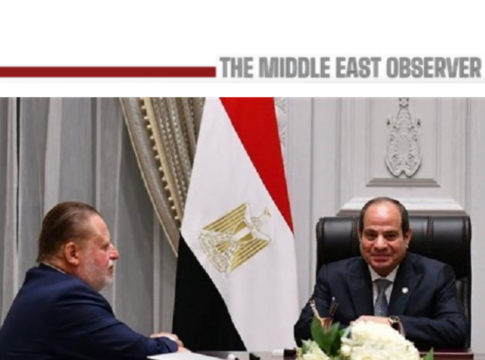
President Abdel Fattah El-Sisi met on Tuesday with Hassan Abdalla to review developments in Egypt’s economic performance, inflation trends, foreign currency reserves, and the impact of ongoing regional geopolitical tensions on the country’s financial stability and external balance.
According to Presidential Spokesman Ambassador Mohamed El-Shennawy, discussions focused on continued efforts to reduce inflation, strengthen foreign-currency inflows, maintain reserve adequacy, and preserve macroeconomic stability amid heightened regional volatility affecting global energy markets, trade routes, and capital flows.
President El-Sisi was briefed on progress achieved under Egypt’s economic reform program, including the decline in annual inflation from its previous peak of nearly 38% to around 11% prior to the latest escalation in regional tensions. The meeting also reviewed Egypt’s reserve position, with net international reserves reaching approximately $53 billion in April 2026 — a record level for the country — providing import coverage equivalent to roughly 6.3 months and representing nearly 158% of short-term external debt obligations.
The reserve growth comes as Egypt continues seeking to strengthen external financial buffers following a prolonged period of exchange-rate volatility, inflationary pressures, and external financing challenges linked to global monetary tightening, supply-chain disruptions, and regional geopolitical instability.
During the meeting, Hassan Abdalla reviewed the repercussions of current regional conflicts on inflation, foreign-exchange flows, and Egypt’s external accounts, while reaffirming the Central Bank of Egypt commitment to maintaining a flexible exchange-rate regime capable of absorbing external shocks and preserving market stability.
The flexible exchange-rate framework remains a central pillar of Egypt’s broader economic reform agenda supported by international financial institutions, particularly as authorities seek to improve investor confidence, attract foreign capital, and reduce distortions within the foreign-exchange market.
The meeting also addressed the impact of regional instability on capital flows and key foreign-currency revenue sources, including trade, tourism, and broader external-sector activity, as policymakers continue monitoring the economic implications of ongoing geopolitical tensions across the Middle East and Red Sea region.
Officials additionally reviewed preparations for Egypt’s hosting of the 33rd Annual Meetings of the African Export-Import Bank in El Alamein in June 2026 under presidential patronage. Hassan Abdalla stated that Egypt’s hosting of the event reflects Cairo’s continued commitment to supporting African economic integration, trade expansion, and sustainable development in partnership with Afreximbank.
President El-Sisi also directed continued efforts toward accelerating fiscal sustainability, strengthening fiscal discipline, and improving Egypt’s debt structure in order to direct larger portions of public spending toward development priorities, infrastructure, and human-capital investment.
The discussions come as Egypt continues balancing economic reform measures with mounting external pressures linked to regional conflicts, energy-market volatility, inflation risks, and fluctuating global financial conditions. Analysts note that maintaining reserve strength, exchange-rate flexibility, and inflation containment remains critical for preserving investor confidence and supporting broader economic stability during the current period of heightened regional uncertainty.