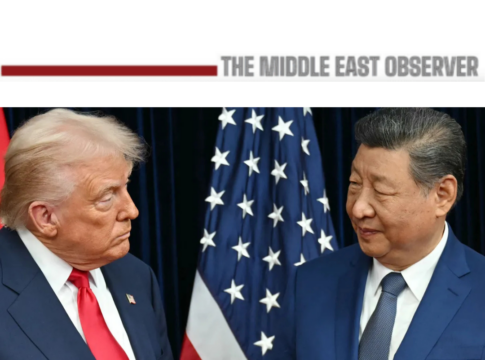
US President Donald Trump concluded his visit to China with both Washington and Beijing emphasizing strategic cooperation and global stability, although the summit stopped short of delivering the fully confirmed large-scale agreements many investors and markets had anticipated. Rather than producing immediate transformational breakthroughs, the summit appeared primarily designed to stabilise strategic competition and prevent further deterioration in relations between the world’s two largest powers.
Despite the notably warm reception extended by Chinese President Xi Jinping, the talks largely focused on rebuilding confidence and establishing a more controlled framework for managing rivalry between Washington and Beijing amid growing geopolitical tensions.
Following the summit, Trump stated aboard Air Force One that China had agreed to purchase 200 Boeing aircraft, with the possibility of additional future commitments. He also announced that Beijing would significantly expand purchases of American agricultural products, including billions of dollars worth of soybeans, presenting the understandings as a major boost for US farmers and manufacturing employment. US officials described the visit as producing important agricultural and aviation understandings that could support American exports and industrial jobs. However, Chinese authorities have not publicly confirmed the full scope of the commercial agreements announced by Trump, suggesting that several arrangements remain under negotiation and require further technical and political finalisation. If completed, the Boeing agreement would represent the company’s first major breakthrough in the Chinese market in nearly a decade after years of trade tensions restricted its access to the world’s second-largest aviation sector.
The White House also announced the establishment of a new “Board of Trade” mechanism intended to manage economic relations and reduce the need for repeated tariff disputes. Meanwhile, Chinese state media highlighted Xi Jinping’s pledge that China’s “doors will open wider” to foreign businesses, while encouraging expanded cooperation in trade, agriculture, healthcare, tourism, and law enforcement under what Beijing described as a “mutually beneficial” framework.
At the geopolitical level, Iran and the Strait of Hormuz emerged as central issues during the summit. China reiterated support for maintaining open maritime shipping routes and called for a “comprehensive and lasting ceasefire” to end the regional conflict, stressing the importance of energy security and global economic stability. Trump stated that Xi had expressed willingness to assist efforts aimed at preserving stability in the Hormuz corridor, through which a significant portion of China’s energy imports passes.
Taiwan remained the most sensitive issue discussed during the summit. According to Beijing’s official readout, Xi warned that Taiwan continues to represent the most dangerous point of tension in US-China relations and cautioned that mishandling the matter could lead to direct confrontation between the two powers. Chinese officials described the summit as establishing a framework of “constructive strategic stability” for future bilateral relations. The Taiwan issue has also become increasingly tied to semiconductor supply chains, Indo-Pacific military positioning, and broader US efforts to contain China’s technological rise.
Trump also indicated that he has not yet decided whether to proceed with major US arms sales to Taiwan following discussions with Xi. The proposed military packages, valued at approximately US$25 billion, still require formal presidential approval before moving forward. Trump stressed that Washington seeks to avoid another distant conflict, while Xi reiterated Beijing’s strong opposition to Taiwanese independence and continued US military support for Taipei. Analysts noted that Trump’s willingness to discuss the issue directly with Xi could raise questions regarding the longstanding US “Six Assurances” framework, which historically stated that Washington would not consult Beijing on arms sales to Taiwan. At the same time, observers believe Trump increasingly views the Taiwan arms file as a strategic bargaining tool within the broader framework of US-China trade and geopolitical negotiations.
The summit also touched upon nuclear arms control. Trump revealed that he proposed a future three-way nuclear agreement involving the United States, China, and Russia aimed at limiting strategic nuclear arsenals. While China has traditionally shown reluctance toward such arrangements, Trump claimed Xi responded positively to the proposal. The proposal comes after the expiration of the New START treaty earlier this year, leaving the world’s largest nuclear arsenals without formal limitations for the first time in decades. Pentagon estimates indicate that China’s nuclear arsenal could exceed 1,000 warheads by 2030. Analysts also noted the significance of Russian President Vladimir Putin preparing for a visit to China shortly after the summit, a development likely to add further strategic dimensions to the evolving geopolitical landscape.
Political analysts noted that although both governments portrayed the summit positively, many agreements remain preliminary and await detailed implementation frameworks. Nevertheless, the overall tone of the visit suggested a gradual shift away from open confrontation toward managed strategic competition, geopolitical balancing, and broader international stability between Washington and Beijing.
As The Middle East Observer notes, while the summit did not yet produce the fully realised “historic deals” anticipated by some American political and business circles, it nevertheless reflected an important diplomatic transition. Increasingly, US-China rivalry appears to be evolving into a broader search for strategic balance, controlled competition, and crisis management rather than unchecked escalation.
With the proposed September summit in Washington approaching, both powers now appear increasingly focused not on eliminating rivalry, but on managing it before it destabilises global trade, energy security, financial markets, and the wider international order. For Trump in particular, transforming the preliminary understandings reached in Beijing into concrete economic agreements by September could carry significant political importance ahead of the November midterm elections. Confirmed trade deals, expanded Chinese purchases of American goods, and visible industrial or agricultural gains would allow the White House to present the stabilisation of US-China relations as both an economic and geopolitical achievement at a sensitive domestic political moment.
At the same time, Beijing appears equally interested in maintaining strategic stability with Washington while preserving its core red lines on Taiwan, trade sovereignty, and regional security interests. The September meeting may therefore emerge not merely as a diplomatic continuation of the Beijing summit, but as a critical test of whether both powers can convert cautious confidence-building into a more sustainable framework for managing one of the world’s most consequential strategic rivalries.