CAIRO — Egypt signed a strategic partnership agreement with Trafigura to develop major expansions at the Nag Hammadi aluminium complex in Upper Egypt in a project valued at up to $900 million, as Cairo accelerates efforts to strengthen industrial localization, expand exports, and reposition itself within global manufacturing supply chains.
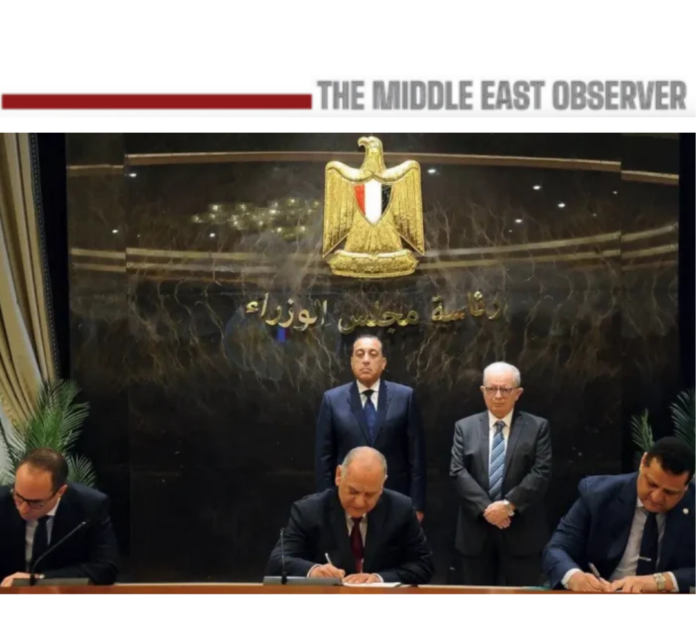
The agreement was signed at the government headquarters in the New Administrative Capital in the presence of Prime Minister Mostafa Madbouly and Deputy Prime Minister for Economic Affairs Hussein Eissa.
The deal brings together the Metallurgical Industries Holding Company, through its subsidiary Egyptalum, and Trafigura, one of the world’s largest commodity trading groups. Officials said the project will establish a fully integrated industrial expansion inside the existing Nag Hammadi aluminium complex.
According to government statements, the new expansion will add approximately 300,000 tonnes of annual aluminium production capacity, nearly doubling Egyptalum’s current output to around 600,000 tonnes per year.
Prime Minister Madbouly stated that the agreement reflects Egypt’s broader strategy to deepen local manufacturing, strengthen strategic industries, maximize the value of existing industrial assets, and increase exports through partnerships with the private sector and international investors.
Deputy Prime Minister Hussein Eissa described the project as a major step toward strengthening Egypt’s position within the global aluminium supply chain, emphasizing that Trafigura’s participation sends a strong international signal of confidence in Egypt’s investment climate and industrial potential.
Officials added that the project is expected to facilitate technology transfer, expand international marketing channels for Egyptian aluminium products, and support Egypt’s ambitions to become a regional industrial and export hub serving African, Middle Eastern, and European markets.
The financing structure will combine shareholder equity with international loans and financing packages arranged through global financial institutions, while EFG Hermes will serve as financial adviser for the project.
Executives from Egyptalum stated that Trafigura will also play a central role in securing raw-material supplies, particularly alumina, while supporting long-term marketing and export agreements designed to ensure stable cash flows and operational sustainability.
Government officials highlighted that the expansion comes at a time of tightening global aluminium supplies and rising international demand driven by electric vehicles, transportation industries, packaging, infrastructure, and energy-transition sectors.
The project is also expected to support economic development in Upper Egypt through job creation, industrial localization, export growth, and increased foreign-currency revenues, while utilizing modern technologies aimed at improving energy efficiency, reducing emissions, and aligning production with tightening international environmental and low-carbon manufacturing standards.
As The Middle East Observer notes, the Trafigura-Egyptalum agreement reflects Cairo’s wider industrial transformation strategy, where large-scale international partnerships are increasingly being leveraged to expand manufacturing capacity, strengthen supply-chain resilience, attract foreign investment, and position Egypt as a competitive regional industrial platform linking Africa, the Middle East, and global export markets.