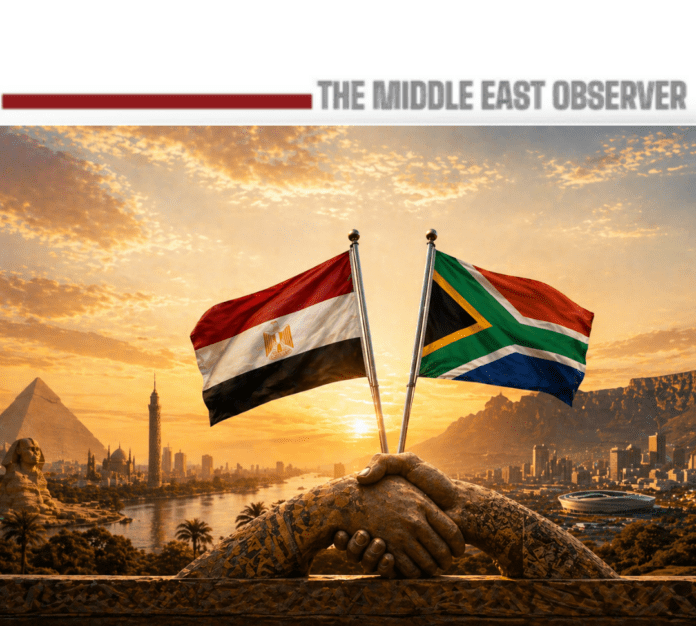
Each year on 27 April, Freedom Day stands as a defining moment in modern African history—commemorating South Africa’s first non-racial democratic elections in 1994 and the ascent of Nelson Mandela to the presidency. More than a national celebration, it is a reaffirmation of a nation’s triumph over apartheid, and a testament to the enduring principles of justice, equality, and human dignity.
Mandela’s journey—from 27 years of imprisonment to leading a united South Africa—remains one of the most profound political transformations of the 20th century. Yet, his legacy was not rooted in victory alone, but in reconciliation. Rather than marginalizing former adversaries, Mandela advanced a pragmatic model of national integration—absorbing the old regime into the economic and institutional fabric of the new South Africa. This approach ensured stability, continuity, and long-term growth.
During the upheavals of the Egyptian Revolution of 2011, his enduring message underscored the imperative of tolerance, institutional continuity, and inclusive nation-building. His governance model provided a strategic blueprint that prioritized reconciliation over division, continuity over rupture, and national cohesion over ideological fragmentation.
This philosophy extended well beyond South Africa’s borders, cementing Mandela’s standing among Africa’s most consequential statesmen. His vision for global peace and coexistence, aligned with the intellectual legacy of the continent’s leading figures, resonated particularly strongly in Egypt, where the principles of measured transition, societal integration and Peace vision found enduring relevance.
Diplomatic ties between Egypt and South Africa date back to 1942, grounded in shared anti-colonial struggles and pan-African cooperation. Mandela’s historic visit to Egypt in 1997 further cemented these relations, symbolizing mutual respect and a deep-rooted connection between the two nations.
Over the decades, this relationship has evolved into a multifaceted strategic partnership, spanning trade, maritime cooperation, agriculture, scientific exchange, tourism, and civil aviation. The warmth between the two nations is not merely institutional—it reflects a reciprocal admiration between peoples.
With a population approaching 64 million, South Africa stands as one of Africa’s most advanced and diversified economies—classified as an upper-middle-income, newly industrialized nation. Its economic backbone spans mining, manufacturing, energy, transport, agriculture, and tourism. Exports reached approximately $116.8 billion in 2024–2025, led by platinum, gold, automotive products, iron ore, coal, and chromium. Imports, valued at $105 billion, reflect a sophisticated industrial demand profile, including machinery, fuels, vehicles, and chemical goods. Cities such as Cape Town—globally recognized for its infrastructure and quality of life—underscore the country’s dual identity: a modern economic hub embedded within a rich natural and cultural landscape.
Bilateral trade between Egypt and South Africa, while relatively modest in scale, continues to demonstrate steady growth and increasing diversification. According to recent data:
- Egypt’s exports to South Africa reached $162.3 million in 2025, including electrical equipment, fertilizers, plastics, fuels, agricultural products, and chemicals.
- Imports from South Africa totaled $144.26 million, comprising copper, metals, meat, paper, aluminum, and organic chemicals.
In January 2026, a delegation of 15 South African companies visited Egypt to explore new investment and partnership opportunities—signaling renewed commercial momentum.
The Egypt–South Africa corridor presents significant untapped potential across several high-value sectors:
- Industrial Manufacturing & Value Chains: Leveraging Egypt’s industrial zones and South Africa’s raw material strength
- Energy & Mining Cooperation: Joint ventures in mineral processing, renewables, and energy logistics
- Agriculture & Food Security: Complementary climates enabling cross-investment in agro-processing
- Logistics & Maritime Trade: Strengthening Red Sea–Southern Africa trade routes
- Technology & Innovation: Integration of AI, research platforms, and knowledge economies—aligned with Africa’s digital transformation
Both nations, as leading regional powers, are strategically positioned to anchor intra-African trade under frameworks such as the African Continental Free Trade Area (AfCFTA), further enhancing bilateral and multilateral cooperation.
As South Africa marks its Freedom Day, Egypt stands not only as a diplomatic partner, but as a nation aligned with the enduring vision of Nelson Mandela—a vision rooted in peace, coexistence, and inclusive prosperity.
From Cairo to Pretoria, the legacy of reconciliation continues to shape policy, inspire leadership, and guide nations toward a future where growth is shared, institutions are resilient, and unity prevails over division.
In honoring Mandela’s memory and South Africa, Egypt reaffirms its commitment to these principles—ensuring that the ideals forged in South Africa’s struggle remain a living force across Africa and beyond.