
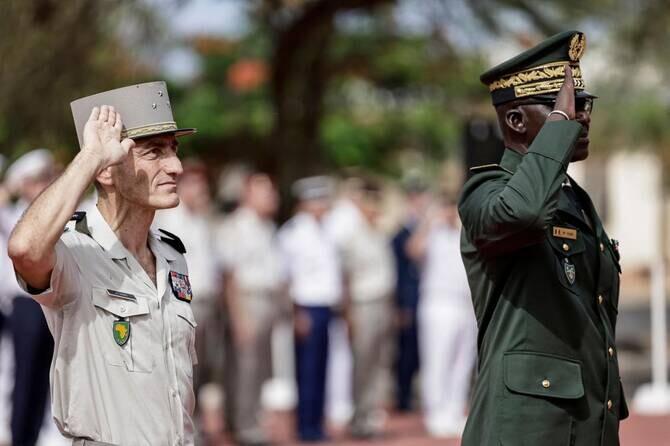
France has officially handed back its last two military bases in Senegal, marking the end of a 65-year military presence in the country. This strategic withdrawal is part of a broader pattern seen across Africa, where former colonies are increasingly redefining their partnerships with France, seeking arrangements that benefit both parties equitably.
The French pull-out from Senegal comes amidst escalating jihadist threats in the Sahel, a region fraught with conflict across Mali, Burkina Faso, and Niger. Despite these challenges, Senegal under President Bassirou Diomaye Faye is charting a new course. Unlike other nations that have severed ties with Paris, Faye emphasizes the importance of maintaining a cooperative relationship with France, underscoring that “France remains an important partner for Senegal.”
This decision reflects a broader strategy to leverage France’s expertise while safeguarding Senegalese sovereignty—a stance that African nations might consider as they navigate post-colonial relationships. By insisting on treating France like any other foreign partner, Faye is advocating for partnerships that prioritize national interests and mutual benefit over historical ties.
Expert commentary suggests that Senegal’s approach could serve as a model for other African nations. “The emphasis on balanced partnerships is crucial for sustainable development,” comments Dr. Amina Diop, a political analyst at the University of Dakar. “Senegal’s approach illustrates how African countries can utilize foreign expertise to bolster their own capabilities without compromising sovereignty.”
While Senegal embraces this new chapter, the geopolitical landscape in Africa remains complex. Former colonies like Mali and Burkina Faso have turned away from France, opting instead for Russian support amid ongoing insurgencies. Concurrently, France’s military footprint in Africa is shrinking, with Djibouti now hosting its only permanent base on the continent.
The French military’s reduced presence reflects a larger trend of reevaluating foreign military bases, urging African countries to assert greater control over their resources and territories. In this context, Djibouti’s role as France’s military headquarters for Africa highlights the strategic importance of the Horn of Africa, even as other regions pursue different alliances.
As Senegal and France redefine their relationship, this shift presents an opportunity for African nations to reassess foreign partnerships. By focusing on equitable cooperation, countries can harness international expertise while fostering self-reliance and growth. Senegal’s journey may inspire others to forge new paths, ensuring that the partnerships of tomorrow are built on mutual respect and shared prosperity.
