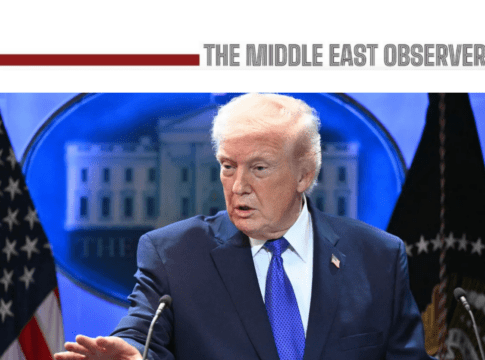
Washington – President Donald Trump has announced a sweeping increase in the baseline tariff on imports into the United States to 15 percent, escalating trade tensions a day after the U.S. Supreme Court curtailed key elements of his tariff authority.
In a statement published on his Truth Social platform, Trump said the administration had conducted a “thorough review” of what he described as an “extraordinarily anti-American decision” by the Supreme Court and would respond by raising import levies “to the fully allowed, and legally tested, 15% level.”
The move follows a 6–3 ruling by the Supreme Court that rejected the president’s reliance on a 1977 economic emergency statute as the legal basis for imposing broad tariffs. The judgment marked a rare and significant setback for an administration whose trade policy has been central to its economic agenda.
Shortly after the ruling, Trump initially introduced a new 10 percent global tariff under a different statutory authority. The subsequent increase to 15 percent signals a further tightening of his trade posture, as the administration seeks alternative legal pathways to sustain its tariff framework.
According to a White House fact sheet, the new duty is temporary by law and may remain in effect for up to 150 days. Exemptions will apply to certain sectors subject to separate investigations, including pharmaceuticals, as well as goods entering under the United States–Mexico–Canada Agreement (USMCA).
Notably, trading partners that have negotiated separate tariff arrangements with Washington are not excluded from the new baseline rate, underscoring the administration’s intent to standardize the measure across a broad spectrum of imports.
The Supreme Court’s ruling has introduced renewed legal uncertainty into the administration’s trade strategy, which over the past year has seen multiple tariff levels imposed, adjusted, or rescinded across different jurisdictions.
Global leaders responded cautiously. Brazilian President Luiz Inácio Lula da Silva called for equal treatment of all nations, warning against a drift toward geopolitical polarization.
German Chancellor Friedrich Merz said he would consult European allies to develop a coordinated position ahead of planned talks in Washington in early March.
The tariff hike is expected to reverberate through global supply chains and financial markets, particularly as it comes amid an already fragile international trade environment.
At home, the decision drew criticism from Democratic lawmakers and state officials. Pennsylvania Governor Josh Shapiro urged the president to “listen to the Supreme Court” and end what he described as disruptive tariff policies affecting farmers, small businesses, and consumers.
The administration, however, maintains that the measures are necessary to safeguard American economic interests and rebalance trade relationships it considers structurally unfair.
With the legal clock now ticking on the temporary tariff authority, further litigation and legislative debate are likely, setting the stage for a renewed confrontation between the executive branch and the judiciary over the scope of presidential trade powers.