The European Union and India have concluded a historic free trade agreement after nearly 20 years of negotiations, creating at full potential a combined market of almost 2 billion people, accounting for around a quarter of global GDP.
Under the deal, the EU expects to cut up to €4 billion in duties and double its exports to India by 2032, describing the agreement as the most ambitious trade terms India has ever granted to a partner. The pact is seen as a major strategic win for Europe as it seeks to strengthen economic resilience amid rising global trade volatility.
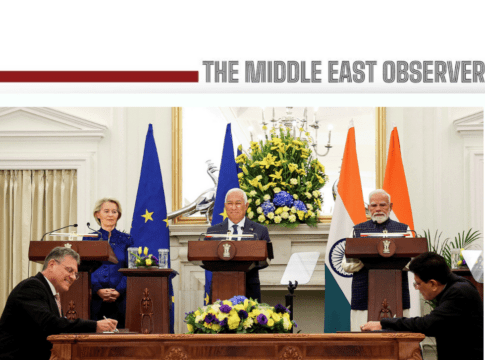
European Commission President Ursula von der Leyen hailed the agreement as the “mother of all deals,” calling it the start of a new chapter in EU–India relations. She joined António Costa and EU foreign policy chief Kaja Kallas at the signing ceremony during the 16th EU–India Summit.
Negotiations went down to the wire, with sensitive agri-food products—including beef, poultry, rice and sugar—excluded to address concerns among European farmers. However, India agreed to significant tariff reductions on EU wine and olive oil, while Europe’s automotive sector is expected to be among the key beneficiaries.
Beyond trade, the agreement includes a new security and defence partnership, opening the door for India to participate in European defence initiatives. The two sides will deepen cooperation on maritime security, counterterrorism, non-proliferation, space, cyber and hybrid threats, marking a notable expansion of strategic ties.
EU Trade Commissioner Maroš Šefčovič said the deal reflects a more pragmatic EU trade strategy, focused on concrete deliverables rather than prolonged political deadlock. The agreement follows the EU–Mercosur deal and forms part of Brussels’ broader effort to diversify trade partnerships and reduce exposure to geopolitical risk, including uncertainty in transatlantic trade relations.
The EU–India pact now moves into the implementation phase, with further legislative steps required on the European side. Once in force, it is expected to reshape trade flows between Europe and the world’s fastest-growing major economy while anchoring a deeper strategic partnership between the two blocs.