
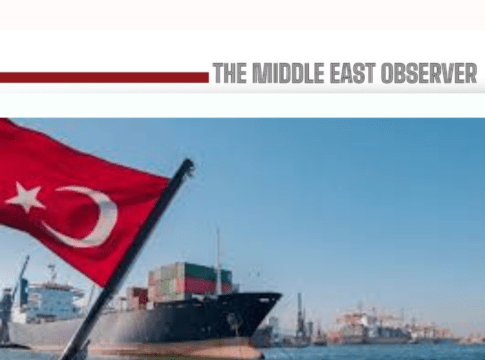
Turkey’s exports climbed to a record $273.4 billion in 2025, up 4.5% year on year, supported by a gradual stabilisation in manufacturing activity and sustained demand across key regional markets, President Recep Tayyip Erdoğan said at an event in Istanbul. Including services, Turkey’s total exports reached about $396.5 billion, underscoring the economy’s resilience despite a challenging global trade environment.
Export growth was led primarily by manufactured goods, notably automotive products, machinery, electrical equipment, iron and steel, chemicals, textiles and ready-made garments, sectors that remain the backbone of Turkey’s industrial base. Food products and agri-exports also contributed, benefiting from Turkey’s diversified production capacity and established logistics networks. Europe continued to be Turkey’s largest export destination, while shipments to the Middle East, North Africa and Central Asia provided additional momentum, helping offset softer demand in some advanced economies.
Signs of stabilisation in the manufacturing sector reinforced export performance toward year-end. A business survey by the Istanbul Chamber of Industry, compiled with S&P Global, showed Turkey’s manufacturing Purchasing Managers’ Index (PMI) rising to 48.9 in December, its highest level in 12 months. Although still below the 50 threshold that signals expansion, the reading pointed to a slower pace of contraction, with declines in output, new orders and employment easing compared with earlier months.
The survey indicated that export orders remained under pressure but fell at a more moderate rate, while production cuts were less severe and purchasing activity stabilised. Manufacturers faced renewed input cost pressures, driven by higher raw material prices, prompting firms to raise selling prices. Even so, analysts said the improving PMI trend suggests growing momentum as Turkey enters 2026.
Economists noted that Turkey’s export strength reflects a combination of competitive pricing, a flexible manufacturing base, diversified markets and strong transport links, allowing exporters to navigate global uncertainty and fluctuating demand. While inflation and cost pressures remain a constraint, the latest data point to a gradual recovery in industrial activity that could help sustain export growth in the year ahead.