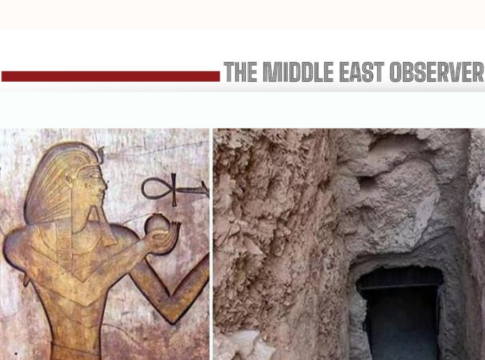
The recently identified tomb of King Thutmose II has been named one of the world’s 10 most important archaeological discoveries of 2025 by Archaeology magazine, a recognition that places the Luxor find alongside the year’s most consequential breakthroughs in global fieldwork.
Egypt’s Ministry of Tourism and Antiquities announced the discovery after a joint Egyptian–British mission—working under the Supreme Council of Antiquities in partnership with the New Kingdom Research Foundation—confirmed that a previously explored burial (in the western wadis on Luxor’s West Bank) belonged to Thutmose II, a key ruler of Egypt’s 18th Dynasty.
Thutmose II’s burial has long been considered the last “missing” tomb among the 18th Dynasty’s kings. The identification fills an important gap in the map of New Kingdom royal burials around Luxor.
Egyptian authorities described it as the first discovery of a royal tomb since Howard Carter’s discovery of Tutankhamun in 1922. In practice, the most defensible framing is that it is the first New Kingdom pharaoh tomb identified since Tutankhamun—one reason the announcement drew outsized international attention.
The team’s certainty rested on inscribed finds—most importantly fragments of alabaster vessels bearing Thutmose II’s royal name and titles, alongside evidence tied to Queen Hatshepsut (his queen and successor-regent), indicating a royal context for the burial and post-burial handling.
Although the tomb had suffered heavy damage from ancient flooding—one factor that appears to have led to the removal or relocation of many original contents—archaeologists recovered elements described as Thutmose II’s funerary equipment/furniture, material that had not previously been securely represented in museum collections under his name. The find therefore contributes not only a location on the archaeological map, but also physical data on the burial assemblage and funerary practices for a relatively shadowed reign within the 18th Dynasty.
The ranking by Archaeology magazine further underlines a broader point: even in one of the world’s most intensively studied archaeological landscapes, systematic excavation and reassessment can still produce discoveries capable of reshaping scholarly narratives—especially around early 18th Dynasty royal burial strategy and the evolution of tomb architecture and decoration.