
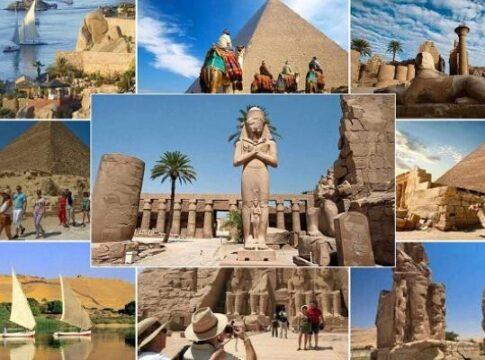
Egypt is enjoying its strongest tourism resurgence in over a decade. International arrivals grew by 21 percent in the first quarter of this year, signaling that the nation has reclaimed its status as a global powerhouse for leisure, culture, and investment. For Egypt, the revival is not just about visitors flocking to the pyramids—it’s about an ambitious strategy to turn the country’s coasts and cities into vibrant, year-round tourism hubs.
Tourism remains a cornerstone of Egypt’s economy, accounting for over 12% of GDP and employing millions both directly and indirectly. According to the World Travel & Tourism Council (WTTC), international visitor spending is set to surpass US$15 billion by 2025, a level that will exceed even pre-2011 projections.
What makes this surge especially significant is its spillover effect. Real estate, infrastructure, and small enterprises are booming in tandem with tourism growth. The North Coast’s luxury resorts have spurred a wave of investment in residential compounds and entertainment districts, while the Red Sea corridor has witnessed massive upgrades in airports, highways, and marinas to accommodate the influx.
Dr. Rania Al-Mashat, Egypt’s Minister of International Cooperation, emphasized that “the new wave of tourism growth is anchored in infrastructure-led development, ensuring sustainability and inclusion.
The North Coast (Sahel), once primarily a domestic summer escape, is evolving into an international attraction. Areas like El Alamein, Ras El Hekma, and Sidi Abdelrahman are being repositioned as luxury destinations comparable to Europe’s Mediterranean hotspots. The expansion of El Alamein International Airport and new highways have been pivotal in connecting the coast with global travelers. Investors describe Ras El Hekma as a “Mediterranean Dubai,” where resorts, marinas, and entertainment centers are designed to appeal to high-spending tourists from the Gulf, Europe, and beyond.
Hurghada, one of Egypt’s longest-standing tourism anchors, is experiencing revitalization through diversification. Beyond its beaches, the city is focusing on family-friendly attractions, water parks, and shopping complexes to capture a broader market. New five-star resorts and urban developments have also turned it into a hub for both leisure tourists and expatriates.
Further south, Marsa Alam has become the crown jewel of Egypt’s eco-tourism movement. With untouched coral reefs, diving havens like Elphinstone Reef, and the biodiversity of Wadi El-Gemal National Park, it has positioned itself as a magnet for sustainable tourism. International hotel chains are moving in, with at least five luxury properties due by 2026, while small-scale lodges attract adventure seekers.
Emerging areas such as Berenice—near the new Marsa Alam International Airport expansion—are being marketed as the “last frontier” of Egypt’s Red Sea tourism. Here, the focus is on exclusive, low-density resorts that emphasize privacy and natural landscapes, targeting luxury travelers looking for quieter alternatives.
After years of decline following security concerns and travel restrictions in the mid-2010s, Sharm El-Sheikh has made a strong comeback. The city’s hosting of the COP27 climate summit in 2022 was a turning point, projecting stability and sustainability to the world.
Since then, visitor arrivals have surged, aided by the expansion of Sharm El-Sheikh International Airport and increased direct flights from European capitals. The resort town has also rebranded itself with green tourism initiatives, including solar-powered hotels and eco-certified diving operations. Its nightlife, diving culture, and all-inclusive resorts continue to draw millions annually.
Egypt’s current boom is remarkable when compared to its 2010 peak, when the country welcomed around 14.7 million tourists. That year was hailed as a record, with projections that Egypt could hit 20 million arrivals by 2020. However, political instability and global shocks halted that trajectory, sending visitor numbers tumbling in the decade that followed.
Today, with arrivals growing at double-digit rates and a diversified tourism portfolio—from heritage to coastal luxury—Egypt is poised to not only surpass its 2010 record but potentially achieve the long-delayed 20 million milestone by 2025, according to estimates from the Ministry of Tourism and Antiquities.
Egypt’s tourism renaissance is more than a numbers game. It is a story of strategic reinvention, where ancient monuments coexist with cutting-edge resorts, and eco-tourism flourishes alongside luxury marinas. With the North Coast transforming the Mediterranean experience, the Red Sea reinventing leisure travel, and Sharm El-Sheikh reclaiming its global reputation, Egypt is no longer relying solely on the pyramids—it is building a multi-dimensional tourism industry that could redefine the region’s travel landscape for decades to come.