
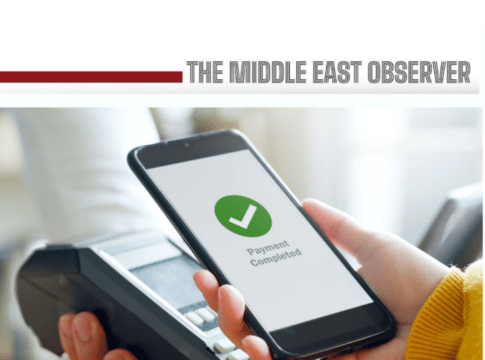
The Central Bank of Egypt has enabled the rollout of contactless electronic payment services through a Software Point of Sale (SoftPOS) framework, allowing merchants to accept card payments directly on smart devices such as mobile phones and tablets, without the need for traditional POS terminals.
Under the new framework, licensed banks and payment service providers can deploy SoftPOS applications that transform smartphones and tablets into electronic payment acceptance points, enabling merchants to receive payments from contactless cards and mobile wallets. The move forms part of the CBE’s broader strategy to advance Egypt’s transition toward a cashless economy and expand financial inclusion in line with Egypt Vision 2030.
The initiative is designed to reduce the cost of electronic payment acceptance by eliminating the need to purchase, install, and maintain conventional POS terminals. This is expected to accelerate the integration of small and micro enterprises into the formal digital payments ecosystem and expand acceptance points nationwide.
According to Hassan Abdalla, the CBE aims to strengthen the infrastructure for electronic payments and facilitate financial transactions for both citizens and merchants, supporting wider access to digital financial services anytime and anywhere.
A pilot phase of the SoftPOS service was launched in recent years through selected banks, with conservative transaction limits—around EGP 600 per transaction—as part of regulatory testing, with limits subject to periodic review.
The rollout comes amid rapid growth in Egypt’s digital payments market. The CBE reported that financial inclusion reached 76.3% of Egyptians aged 15 and above by June 2025, up from 74.8% in December 2024. Meanwhile, mobile wallet transactions surged in the second quarter of 2025, with transaction volumes rising 80% year-on-year to 718 million, while total transaction value climbed 72% to EGP 943 billion, supported by a growing base of 46.3 million active wallets.
Industry estimates project continued expansion in cashless transactions over the coming years, driven by wider adoption of contactless payments and mobile-based acceptance solutions.