
The mounting cancellations of arms contracts by Spain have sent shockwaves through Israel’s defense sector, exposing a deeper crisis that extends beyond lost sales. What was once considered a steady stream of multi-billion-dollar exports—vital to Israel’s technological edge and economic balance—now stands vulnerable to the shifting tides of politics and global outrage over the war in Gaza.
Spain’s Defense Ministry last week canceled a $218 million deal with Rafael Advanced Defense Systems for Litening 5 targeting pods, following its earlier withdrawal from a $272 million Spike missile contract. Added to the scrapping of a $763 million Puls rocket system agreement involving Elbit Systems, these suspensions now total more than $654 million.
Spanish Prime Minister Pedro Sánchez has been outspoken in his criticism of Israel, imposing an arms embargo, restricting raw material exports, and even barring Israeli-linked ships from docking in Spanish ports.
Spain’s actions may not remain isolated. Procurement officers across Europe, once reliable clients for Israeli defense systems, are now hesitant. Deals worth billions are frozen not because of technical shortcomings, but because of political sensitivities and a growing public backlash. Executives admit that while weapons like the Spike missile can be redirected to eager buyers elsewhere, the real danger lies in prolonged freezes that erode long-term trust.
A recent Manufacturers Association survey underscores the breadth of the issue: half of Israeli exporters report canceled contracts, 70% link these directly to political opposition, and the overwhelming majority point to EU countries as the main source of friction.
The pressure is no longer confined to governments. Microsoft confirmed it has suspended cloud services to Israel’s Unit 8200, the military intelligence division, after revelations that its Azure servers had been used to store and analyze intercepted Palestinian communications. The move highlights how even global technology companies, once silent partners, are now responding to internal dissent and reputational risk by distancing themselves from Israel’s military apparatus.
In an attempt to contain the damage, Economy Minister Nir Barkat made a “lightning trip” to Germany to dissuade Berlin from supporting EU trade sanctions. Although reassurances were offered, Chancellor Friedrich Merz had already suspended arms exports to Israel, reflecting how even Israel’s closest allies are recalibrating their stance. Germany now sits at a crossroads: whether to maintain its role as Israel’s last bastion in Europe or to bow to growing calls for accountability in supporting Genocide.
Perhaps most striking is the domestic rupture. Two of Israel’s most respected human rights organizations—B’Tselem and Physicians for Human Rights-Israel—declared in July that Israel’s campaign in Gaza constitutes genocide. Their reports mark the first such characterization from inside Israel itself, a development that strips away the government’s ability to dismiss criticism as merely foreign or hostile.
What is unfolding is not simply a trade dispute—it is a reckoning with the consequences of state policy. Israel’s defense industry, which posted record exports of $14.8 billion in 2024, half to Europe, is discovering that no amount of technological superiority can insulate it from moral and political judgment.
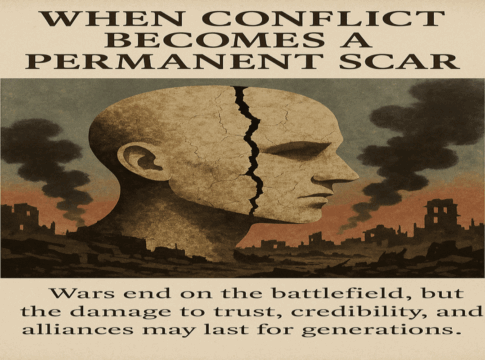
Spain’s cancellations may well be the first domino, but the true danger lies in the erosion of legitimacy. As global corporations, European governments, and even Israeli civil society raise alarms, the Netanyahu government’s choices are branding the nation for generations.
The weapons industry, once Israel’s crown jewel, risks becoming collateral damage in a war that has isolated the country diplomatically, morally, and economically.
The longer the war drags on, the deeper the costs will run & the deeper Israel digs into a mud-hole dragging those who remain to support its actions—not just in contracts lost, but in trust squandered.
Beyond the scale of the atrocity, historians stress that Hitler’s genocide left a permanent scar on global memory, reshaping international law, human rights norms, and the moral responsibilities of states in confronting and preventing mass atrocities. If Israel does not change course, it may find that its fiercest battlefield is not in Gaza but in the global arena where reputations, alliances, and markets are won or lost.