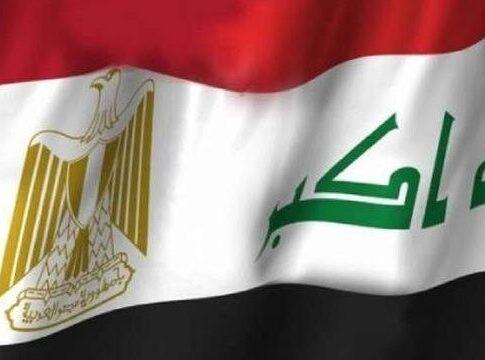
On 3 October 1932, Iraq declared independence from British rule and joined the League of Nations as the first Arab state to do so in the modern era. That day became etched as Iraq’s National Day—a celebration of sovereignty and resilience, not just for Baghdad but for the entire Arab world. In Cairo, the event resonated deeply: Egypt, which would host the Arab League’s founding in 1945, viewed Iraq’s independence as a signal that the Arab world was capable of charting its own course. The two nations have been intertwined ever since—first in the struggles of politics and liberation, and today in the work of trade, energy, and regional integration.
Long before the concept of “nation states,” Iraq and Egypt were the pillars of human civilization. Iraq’s Mesopotamia gave the world writing, law, and cities; Egypt’s Nile Valley gave the pyramids, papyrus, and dynasties that stretched millennia. Together they became the twin anchors of Arab and world heritage—the Tigris and Euphrates echoing the Nile’s ancient rhythm. This shared civilizational depth remains central to the pride of both peoples.
In the modern era, Cairo and Baghdad aligned early. Both were founding members of the Arab League (1945), advocates of sovereignty, and players in the Non-Aligned Movement. In the 1970s, Egyptian workers contributed to Iraq’s oil-driven growth, while Iraq backed Egypt diplomatically during its postcolonial transitions. Political upheavals sometimes strained ties, but the underlying partnership never broke: each understood that the other was a pillar of Arab stability.
The fall of Saddam Hussein in 2003 ushered in a turbulent period, but by the late 2010s Cairo and Baghdad were re-engaging with renewed seriousness. The launch of the “New Levant” Initiative in 2019—bringing together Egypt, Iraq, and Jordan—signaled a strategic choice: to build a corridor of cooperation linking North Africa with the Levant and the Gulf.
High-level summits in Baghdad (2021), Cairo (2022), and Amman (2023) produced agreements on energy, construction, oil supply, and electricity interconnection. Egypt pledged to supply Iraq with electricity via Jordan’s grid, while Iraq committed crude oil exports to Egypt under long-term “oil-for-reconstruction” frameworks.
Trade remains modest relative to scale, but momentum is clear. In 2024, Egypt–Iraq bilateral trade reached about $1.3bn, nearly doubling from early 2020s levels. Egyptian exports include construction materials, chemicals, textiles, and food products, while Iraqi crude dominates the reverse flow. Egyptian firms—Arab Contractors, Elsewedy Electric, Petrojet—have secured contracts in housing, energy, and petrochemical projects inside Iraq.
Meanwhile, Iraq’s reconstruction programs (estimated at $88bn in needs) are drawing Egyptian contractors, engineers, and service providers. In return, Iraq’s oil supplies underpin Egypt’s refining and petrochemical industries, offering Cairo flexible energy inputs in times of global volatility.
The Egypt–Iraq partnership now rests on three core pillars:
1. Energy and oil-for-reconstruction
Iraq supplies crude to Egypt under preferential terms, while Egyptian firms participate in Iraq’s rebuilding—from housing projects in Baghdad and Mosul to electricity network upgrades. This cycle transforms energy flows into visible infrastructure.
2. Electricity interconnection
The planned power link between Egypt and Iraq via Jordan could ease Iraq’s electricity shortages and allow Egypt to monetize its surplus power. It is both a technical project and a symbol of Arab energy integration.
3. Logistics and trade corridors
With Egypt’s Suez Canal Economic Zone and Iraq’s role as a land bridge to the Gulf, both countries are exploring integrated supply chains, industrial zones, and logistics hubs. Joint ventures in pharmaceuticals, fertilizers, and agriculture are already under discussion.
Beyond economics, the people-to-people bond remains strong. Egyptian universities continue to host Iraqi students, while Cairo’s hospitals treat Iraqi patients. Egyptian films and music remain popular in Iraq, while Iraqi poetry and literature enrich Egypt’s cultural scene. Religious tourism—linking Egypt’s Islamic heritage with Iraq’s holy cities of Najaf and Karbala—is a growing focus for both ministries.
As Iraq celebrates its 93rd National Day, the country looks forward to stabilisation, diversification, and youth-driven innovation. Egypt, pursuing its own economic reforms and regional partnerships, finds in Iraq a natural ally. Both nations share ambitions larger than themselves:
- Diversifying economies beyond oil.
- Becoming energy and logistics hubs for Europe, Africa, and Asia.
- Anchoring Arab cooperation through the New Levant Initiative and beyond.
Together, Cairo and Baghdad have the scale—nearly 120 million people combined, vast natural resources, and strategic geographies—to shape not only bilateral growth but also the future of Arab regional integration.
The Iraq–Egypt relationship is not just diplomacy; it is a tale of two civilizations walking side by side through history, adapting to wars and upheavals, and now turning toward reconstruction and opportunity. As Iraq raises its flag this National Day, Cairo raises its hand in partnership—not only to celebrate Iraq’s independence but to commit to a shared path of prosperity, resilience, and Arab renewal.