
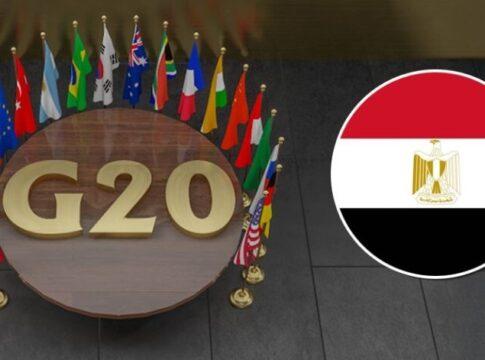
Egypt is set to host its first official G20 meeting this September, with a pivotal agenda centered on addressing global food security. This landmark event marks a significant milestone for Egypt, reflecting its rising influence in international economic diplomacy. The announcement came from the Ministry of Foreign Affairs, following fruitful discussions between Egypt’s Foreign Minister Badr Abdelatty and his South African counterpart, Ronald Lamola, during the recent G20 Sherpa meeting in South Africa.
Ragy El-Etreby, Egypt’s presidential representative and Assistant Foreign Minister for Regional and International Economic Affairs, highlighted the uniqueness of this event. “Hosting a G20 meeting in a non-member country is a rare privilege and a testament to Egypt’s proactive role in global economic circles,” El-Etreby stated.
The G20, established in 1999, comprises the world’s largest economies, accounting for about 80% of global GDP and 75% of international trade. Historically, it serves as a platform for addressing major global economic challenges, with past resolutions influencing financial regulation, climate action, and pandemic responses.
The upcoming Cairo meeting will focus primarily on food security challenges—a pressing issue exacerbated by climate change, conflicts, trade disputes and economic disparities. The discussions will delve into sustainable agriculture, trade, infrastructure, technology transfer, and financing—critical areas for Egypt and the broader developing world.
Egypt’s participation as a guest in G20 cycles under the presidencies of China, Japan, India, Brazil, and currently South Africa, underscores its ongoing commitment to these global discussions. The Cairo meeting aims to align regional priorities with global strategies, fostering collaboration to enhance food security.
The meeting is expected to see participation from several heads of state and high-level delegations from G20 member countries. Key topics expected to be tackled include AI integration and utilization, innovations in agricultural technology, enhancing trade frameworks to ensure food accessibility, and crafting financial solutions to support sustainable food systems.