From civilisational ties to strategic partnership, expanding trade, defence cooperation, and BRICS alignment underscore a shared Global South vision.
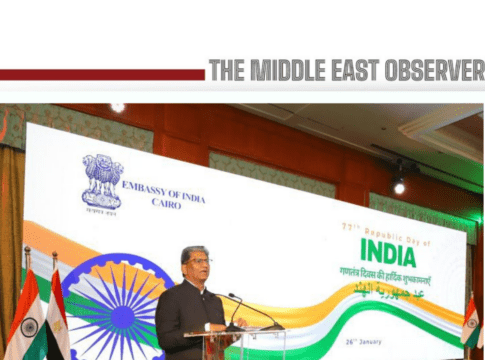
As India commemorates its 77th Republic Day on 26 January 2026, the anniversary offers a timely opportunity to reflect not only on India’s constitutional journey, but also on the evolution of its international partnerships—chief among them, its long-standing and steadily deepening relationship with Egypt.
Republic Day marks the entry into force of the Constitution of India on 26 January 1950, completing the country’s transition from colonial rule to a sovereign republic following independence in August 1947. Today, the occasion stands as a tribute to India’s emergence as one the world’s largest democracy, guided by constitutional governance, strategic autonomy, and inclusive development.
India–Egypt relations rest on centuries of mutual civilisational heritage and decades of modern political alignment. Ancient trade routes linked the Indian subcontinent to the Nile Valley through the Red Sea, facilitating the exchange of spices, textiles, and ideas. In the modern era, the relationship was shaped decisively in the mid-20th century, when leaders such as Jawaharlal Nehru and Gamal Abdel Nasser forged a close bond grounded in anti-colonial solidarity and strategic independence. Together, India and Egypt became founding pillars of the Non-Aligned Movement, positioning both countries as influential voices of the Global South—a legacy that continues to shape their cooperation today.
Economic cooperation has emerged as the most dynamic pillar of the bilateral relationship. According to UN COMTRADE, India’s exports to Egypt reached approximately USD 3.18 billion in 2024, underscoring Egypt’s position as one of India’s most important trading partners in North Africa. India’s export profile reflects a diversified industrial base, including petroleum products and mineral fuels, pharmaceuticals and medical inputs, organic and inorganic chemicals, vehicles and auto components, machinery and boilers, iron and steel products, cotton, and agricultural commodities.
In return, Egypt supplies India with energy resources, fertilisers, phosphates, and raw materials, while also serving as a strategic manufacturing and logistics hub. Anchored by the Suez Canal, which provides Indian companies with direct access to African, Middle Eastern, and European markets, reinforcing its role as a regional gateway for Indian trade and investment.
A significant institutional milestone was reached with the agreement to establish an Egypt–India Joint Business Chamber, concluded during meetings in New Delhi between Egyptian Foreign Minister Badr Abdelatty and leaders of India’s leading business federations. The chamber is expected to institutionalise private-sector engagement, facilitate industrial partnerships, and support sustained growth in bilateral trade and investment.
Beyond commerce, India and Egypt have steadily expanded defence and security cooperation, reflecting converging interests in regional stability. Military exchanges, officer training, and naval coordination near key maritime routes in the Red Sea and the Indian Ocean underscore shared priorities in maritime security, counter-terrorism, and the protection of global trade corridors. While often conducted away from the public spotlight, this cooperation adds strategic depth to the partnership and reinforces both countries’ roles as stabilising actors in their respective regions.
Egypt’s membership in BRICS has introduced a powerful multilateral dimension to India–Egypt relations. Within the grouping, both countries align closely on priorities including strengthening South–South trade, reforming global development finance, enhancing the voice of emerging economies, and promoting a more balanced and inclusive international economic order. Egypt’s participation strengthens BRICS’ representation across Africa and the Arab world, while India’s leadership within the bloc reinforces cooperation frameworks that complement bilateral initiatives.
As India marks its 77th Republic Day, relations with Egypt clearly reflect a transition from historic solidarity to a forward-looking strategic partnership. The next phase is likely to be defined by deeper industrial, technological and manufacturing cooperation, expanded defence and maritime engagement, energy collaboration—including renewables and green fuels—BRICS-enabled trade and financial mechanisms, and coordinated engagement across Africa and the Middle East.
As India marks its 77th Republic Day, its constitutional values continue to translate into outward-looking partnerships that balance principle with pragmatism, reflected in active new trade engagements across Europe and the United States. The India–Egypt relationship stands out as a uniquely stable and enduring partnership throughout its evolution—rooted in shared history, reinforced by expanding trade and security cooperation, and increasingly positioned to play a meaningful role in advancing a more balanced, inclusive, and representative Global South order.