
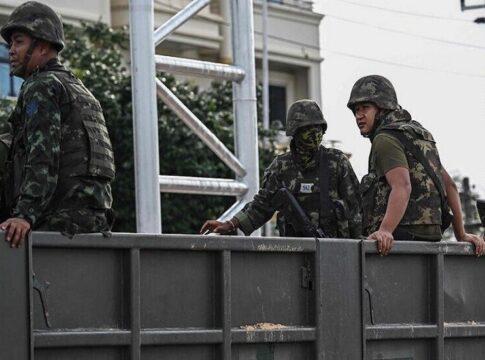
Following four days of intense border clashes, Thailand and Cambodia have agreed to engage in peace talks facilitated by Malaysia in an effort to de-escalate the ongoing conflict. This development comes after both countries faced mounting international pressure to find a peaceful resolution, with U.S. President Donald Trump actively mediating to encourage a ceasefire.
The recent hostilities, which erupted on July 24 near a disputed border area, have resulted in the deaths of at least 33 soldiers and civilians and displaced thousands of residents from both nations. Despite calls for peace, shelling continued over the weekend, highlighting the urgency of diplomatic intervention.
Acting Thai Prime Minister Phumtham Wechayachai will lead the Thai delegation in the upcoming talks, while Cambodian Prime Minister Hun Manet has confirmed his participation, according to communications with Malaysian officials. President Trump, who reached out to both leaders, emphasized the importance of an immediate ceasefire in a post on Truth Social, stating that both nations are committed to “quickly work out a Ceasefire and, ultimately, PEACE!”
The roots of the conflict trace back over a century, tied to historical territorial disputes from the colonial era when Cambodia’s borders were defined post-French occupation. Recent tensions flared over surveillance activities and territorial advances near a Khmer-Hindu temple, with both countries accusing the other of initiating the aggression.
Cambodia, facing significant military pressure, has expressed readiness for an unconditional ceasefire, as Prime Minister Hun Manet noted, citing Trump’s influence as pivotal in protecting lives. On the other hand, Thailand remains open to a ceasefire but insists on preliminary dialogue to ensure genuine intentions from the Cambodian side, according to a statement from the Thai foreign ministry.
In a parallel development, President Trump has linked the cessation of hostilities to future trade negotiations, highlighting the strategic importance of peace for economic relations. U.S. tariffs on goods from both countries are set to increase by 36% starting August 1, unless a resolution is achieved.
While Malaysian Prime Minister Anwar Ibrahim has offered to facilitate the talks, the international community watches closely, hoping for a swift resolution to prevent further escalation. As both nations prepare for the discussions, there is cautious optimism that dialogue can pave the way for lasting peace in a region historically fraught with tension.
Dr. Narin Chay, a Southeast Asia geopolitical analyst, commented on the situation, stating, “The willingness to come to the table is a positive step. However, the underlying issues are complex and require sustained diplomatic efforts. The involvement of a neutral party like Malaysia could be instrumental in bridging the gap.”