
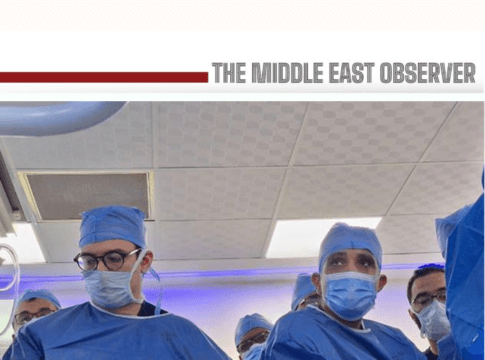
Egypt has marked a significant milestone in the decentralisation of advanced healthcare services after doctors successfully performed a series of complex catheter-based heart procedures for the first time in Aswan, expanding access to high-end cardiac care in Upper Egypt under the country’s Universal Health Insurance System. The Egypt Healthcare Authority said six advanced interventions were carried out at Nile Specialized Hospital without the need for open-heart surgery, including transcatheter aortic valve implantation and the treatment of chronic total coronary occlusions, procedures typically limited to major tertiary hospitals in Cairo or Alexandria.
The authority described the operations as among the most technically demanding forms of catheter-based cardiac intervention, requiring specialised equipment and highly trained medical teams. EHA Chairman Ahmed El-Sobky said the procedures were fully covered under the Universal Health Insurance System, with patients paying a symbolic co-payment of EGP 482, including hospitalisation. Outside the system, he noted, similar interventions often cost more than EGP 1 million, placing them beyond the reach of most households.
Health officials said the shift toward minimally invasive cardiac care reduces surgical risks, shortens recovery periods, and lowers long-term costs, while signalling a broader improvement in the quality of services available in Upper Egypt. Over the past year alone, the cardiac catheterisation unit at Nile Specialized Hospital has conducted more than 595 procedures, ranging from emergency and diagnostic interventions to vascular and neurovascular treatments, underscoring the growing clinical capacity of regional facilities.
Since joining the national insurance programme, the hospital has delivered more than 890,000 medical services across outpatient care, surgeries, and emergency treatment, according to EHA figures. These gains form part of a wider transformation driven by Egypt’s health reform agenda, which aims to close regional gaps in access to specialised care and reduce dependence on private-sector treatment for high-cost procedures.
The Universal Health Insurance System, established under Law No. 2 of 2018, is built on a solidarity-based model that separates financing, service provision, and regulation, while imposing fixed co-payments and mandatory accreditation standards on participating facilities. The first phase of the rollout began in Port Said in 2018 and was completed in July 2025, extending coverage to Luxor, Ismailia, South Sinai, Suez, and Aswan, with a strong focus on upgrading public hospitals, deploying digital health platforms, and expanding access to advanced medical services.
Phase II of the programme is now under way, extending coverage to Minya, Matrouh, Damietta, Kafr El-Sheikh, and North Sinai, and encompassing 69 hospitals with more than 11,400 beds, alongside hundreds of primary health care units, many of them linked to the Haya Karima rural development initiative. Planning standards cap private-sector participation at 30–40 percent of total beds and set public hospital capacity at one bed per 1,000 citizens.
According to official data, public spending on the system has exceeded EGP 48 billion to date, covering construction, medical equipment, digital infrastructure, and workforce training. With more than 6.2 million beneficiaries and over 250 million medical services delivered nationwide so far, the government has accelerated the rollout timetable, targeting full national coverage by 2030, two years ahead of its original schedule, as it seeks to embed equitable access to advanced healthcare as a cornerstone of Egypt’s social development strategy.